
Light Requirements
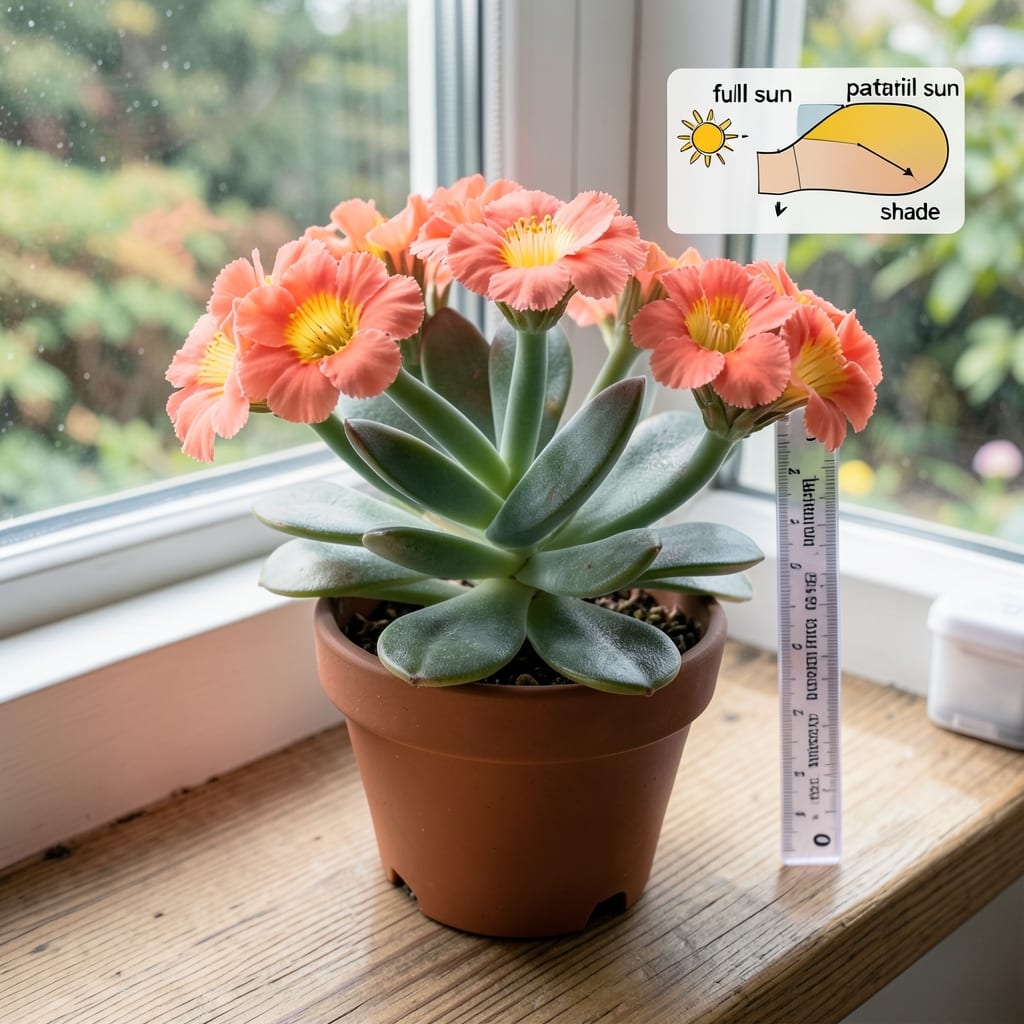
If you’re wondering how much light does a Kalanchoe plant need to thrive, the answer lies in striking the perfect balance—too little or too much can turn your vibrant succulent into a leggy, colorless shadow. This plant thrives under specific light conditions, and getting it right is the key to keeping it healthy and encouraging those stunning flowers.
Most gardeners assume bright light means direct sun, but Kalanchoes actually prefer bright indirect sunlight—think morning sun or filtered light through a sheer curtain. Understanding this distinction is the key to keeping your plant happy and blooming.
In this guide, I’ll break down exactly how much light your Kalanchoe needs, whether you’re growing it indoors or outdoors. You’ll learn how to spot signs of light stress and adjust your setup for year-round success.
Let’s dive into the secrets of lighting that will transform your Kalanchoe from struggling to showstopping.

Ideal light requirements for Kalanchoe blooms: bright indirect sunlight explained
Kalanchoe plants thrive under bright indirect sunlight, which mimics their natural habitat in dry, sunny regions. This means they need plenty of light, but not the harsh, direct midday sun that can scorch their leaves. Think of it as the perfect balance between morning sun exposure and afternoon shade.
The ideal light intensity for Kalanchoes falls between 4,000 to 6,000 foot-candles, which is roughly equivalent to the light you’d find near a south-facing window with sheer curtains. This level of light ensures your plant gets enough energy for photosynthesis while avoiding the stress of too much intensity.
For flowering varieties, 6 hours of bright light daily is crucial. Without sufficient light, your Kalanchoe may produce fewer blooms or none at all. This is because light triggers the plant’s natural blooming cycle, particularly during its short-day photoperiod requirements.
Seasonal adjustments are key. In summer, when the sun is strongest, your Kalanchoe may need to be moved to a spot with filtered sunlight or even a sheer curtain to protect it from leaf burn. In winter, when natural light is scarce, you might need to supplement with grow lights to maintain its health.
Here’s how to visualize the perfect light setup for your Kalanchoe:
| Light Condition | Ideal Duration | Best Time of Day | Seasonal Notes |
|---|---|---|---|
| Bright Indirect Sunlight | 6-8 hours daily | Morning to early afternoon | Spring & Fall ideal |
| Direct Morning Sun | 2-4 hours daily | Before 10 AM | Summer tolerance |
| Filtered Light (Sheer Curtain) | Full daylight hours | All day | Summer protection |
| Grow Lights (Supplement) | 12-14 hours daily | Morning & Evening | Winter supplement |
The light spectrum matters too. Kalanchoes benefit from a mix of blue and red light wavelengths, which promote healthy growth and flowering. If you’re using grow lights, opt for full-spectrum LEDs that mimic natural sunlight. These lights are energy-efficient and provide the right balance of colors for your plant’s needs.
Position your Kalanchoe within 3 feet of an east or west-facing window for the best natural light exposure. South-facing windows can work too, but you’ll need to shield your plant from the harsh afternoon sun with a sheer curtain or by moving it back slightly from the glass.
For indoor gardeners, rotate your Kalanchoe quarterly to ensure even light exposure on all sides. This prevents one side from becoming leggy or stretched toward the light source. Even growth is a sign your plant is happy and healthy.
Outdoor Kalanchoes should be acclimated gradually to direct sunlight. Start by placing them in partial shade for a few hours a day, then gradually increase their exposure over 1-2 weeks. This slow transition helps prevent sunburn and shock.
Remember, the goal is to keep your Kalanchoe in a consistently bright environment without exposing it to stress. With the right light conditions, you’ll be rewarded with vibrant blooms and lush foliage all year round.
Signs your Kalanchoe isn’t getting enough (or too much) light
Your Kalanchoe speaks volumes through its leaves and stems—pay attention to these visual cues that reveal its light struggles. If your plant is stretching toward the light with long, thin stems, it’s begging for more brightness. This etiolation happens when your plant searches for light, leading to weak growth and fewer blooms.
On the flip side, if the leaves develop brown or crispy edges, your Kalanchoe is suffering from too much direct sunlight. This is especially common in south-facing windows or hot summer afternoons. The edges turn brittle, and the plant may look sunburned—similar to how your skin reacts after too much time at the beach.
⚠️ Warning: Light Stress in Kalanchoes
Ignoring these signs can kill your plant! Here’s how to fix it:
- Leggy stems? Move to a brighter spot or use a grow light for 6 hours daily.
- Brown edges? Shift to indirect light or add a sheer curtain to filter harsh rays.
- Dropping buds? Reduce heat stress by moving away from hot windows or vents.
Act fast—these issues worsen quickly!
Another red flag is pale, yellowing leaves, which signal low light conditions. Your Kalanchoe isn’t getting enough energy to produce chlorophyll, so it starts shedding older leaves. This often happens in north-facing windows or deep indoor spaces far from natural light.
Finally, watch for bud drop—a classic sign of light stress. When your Kalanchoe can’t handle the conditions, it aborts flower buds to conserve energy. This is heartbreaking after months of waiting for blooms! To prevent it, ensure your plant gets consistent light exposure without drastic changes.
Pro tip: Rotate your Kalanchoe quarter-turns weekly to ensure even light exposure. This prevents lopsided growth and helps the plant develop uniformly. A happy Kalanchoe is a balanced Kalanchoe!
If you’re still unsure, observe your plant’s growth patterns for 2-3 weeks. Adjust its light exposure gradually—no sudden changes—and watch as it rebounds with vibrant new growth.