
Companion Plants
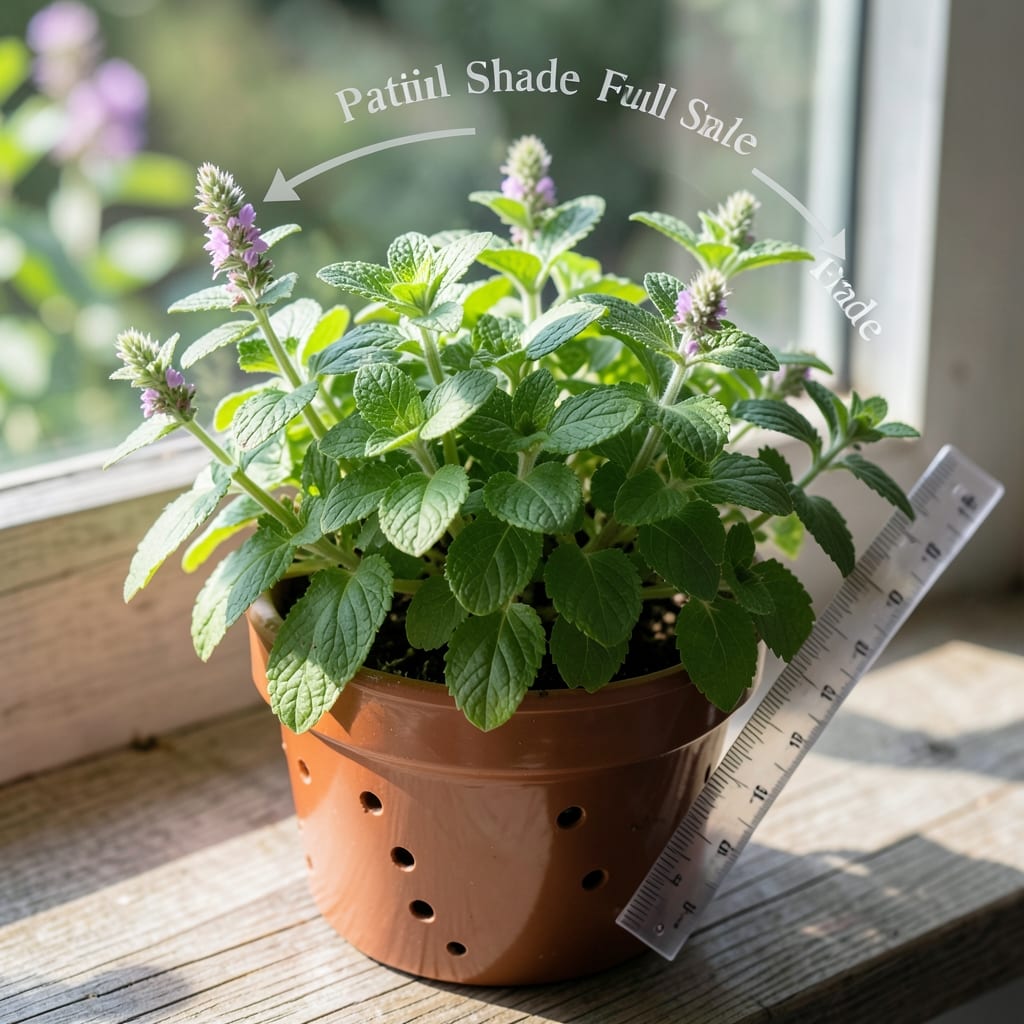
Optimal light requirements for mint plants: the 3-6 hour rule explained
Mint thrives with 4-6 hours of sunlight daily, making it a perfect herb for partial shade gardens. Unlike sun-hungry tomatoes, mint burns easily in intense afternoon sun, so morning light is ideal. This moderate light tolerance lets you grow it in spots where other herbs would fail.
Think of mint as a coffee drinker—it enjoys some sunlight but gets jittery with too much. South-facing windows can scorch leaves, while north-facing windows may leave it leggy. The east-facing window (6 AM–12 PM sun) is mint's sweet spot for indoor growth.
🌿
Seasonal adjustments are key. In summer's intense heat, mint may need afternoon shade cloth (30–50% coverage) to prevent leaf burn. Conversely, winter's weak sunlight means supplementing with a grow light 12 inches above for 6 hours daily if indoors.
Measure sunlight accurately by placing a white plate where your mint will grow. If it’s fully shaded by 12 PM, your spot gets less than 3 hours of sun—mint’s minimum. For outdoor gardens, pair mint with tall plants like sunflowers to naturally filter harsh afternoon rays.
Watch for yellowing leaves (too much sun) or stretched stems (too little sun). Both signal your mint is crying out for balance. A simple fix: rotate your pot quarter-turns weekly to ensure even light exposure.
Pro tip: Harvest leaves regularly—this encourages bushier growth and prevents mint from bolting (flowering), which weakens its flavor. Just snip 1/3 of the plant above a leaf node to keep it compact and vibrant.
🪴
For container gardeners, choose terracotta pots (they wick away excess moisture) and place mint where it gets morning sun and afternoon shade. If your balcony faces south, move the pot to a shadier corner after 10 AM to avoid leaf scorch.
Remember: Mint is a survivor, but it rewards precise light care with bold flavor and lush growth. Master this, and you’ll never buy store-bought mint again!
How to adjust light conditions for indoor vs. outdoor mint growth
Indoor mint thrives near an east-facing window where it gets gentle morning sun without harsh afternoon rays. If your space only has south-facing windows, use sheer curtains to diffuse light and prevent leaf scorch. I’ve found that placing mint 2-3 feet from the window gives it just enough brightness without overheating.
Outdoor mint, however, is more flexible. It handles partial shade gardens beautifully, especially in hot climates where afternoon sun can be brutal. For containers, rotate them weekly to ensure even growth—this prevents lopsided plants reaching for the light.
Indoor Mint Lighting Solutions
✅ Pros
- East window: Perfect morning light
- Sheer curtains: Softens harsh rays
- Grow lights: Reliable backup for winter
❌ Cons
- South window: Risk of leaf burn
- North window: Leads to leggy growth
- No natural light: Requires artificial setup
For artificial lighting, a 12-inch LED grow light (6,500K color temp) for 6 hours daily mimics ideal conditions. I recommend fluorescent bulbs for budget-friendly options, but they need to be within 6 inches of the plant. Test your setup by monitoring leaf color—dark green and glossy means you’ve nailed it!
Outdoor mint loves dappled shade under trees or near fences. If your yard gets full sun all day, provide 30-50% shade cloth during peak hours (11 AM–3 PM). I’ve seen mint grow 3x faster in these conditions compared to scorched plants in direct sun.
Pro tip: Mint spreads aggressively, so contain it in pots if space is limited. For container gardeners, choose 12-inch pots with drainage holes—this prevents root rot while keeping light exposure optimal. If your balcony faces west, move pots to shadier spots by noon to avoid afternoon heat stress.
🌱
Remember, mint is adaptable but particular about light. Whether indoors or out, the key is balance. Too little light? It stretches. Too much? It burns. Get it right, and you’ll have flavorful mint year-round, no matter where you grow!