
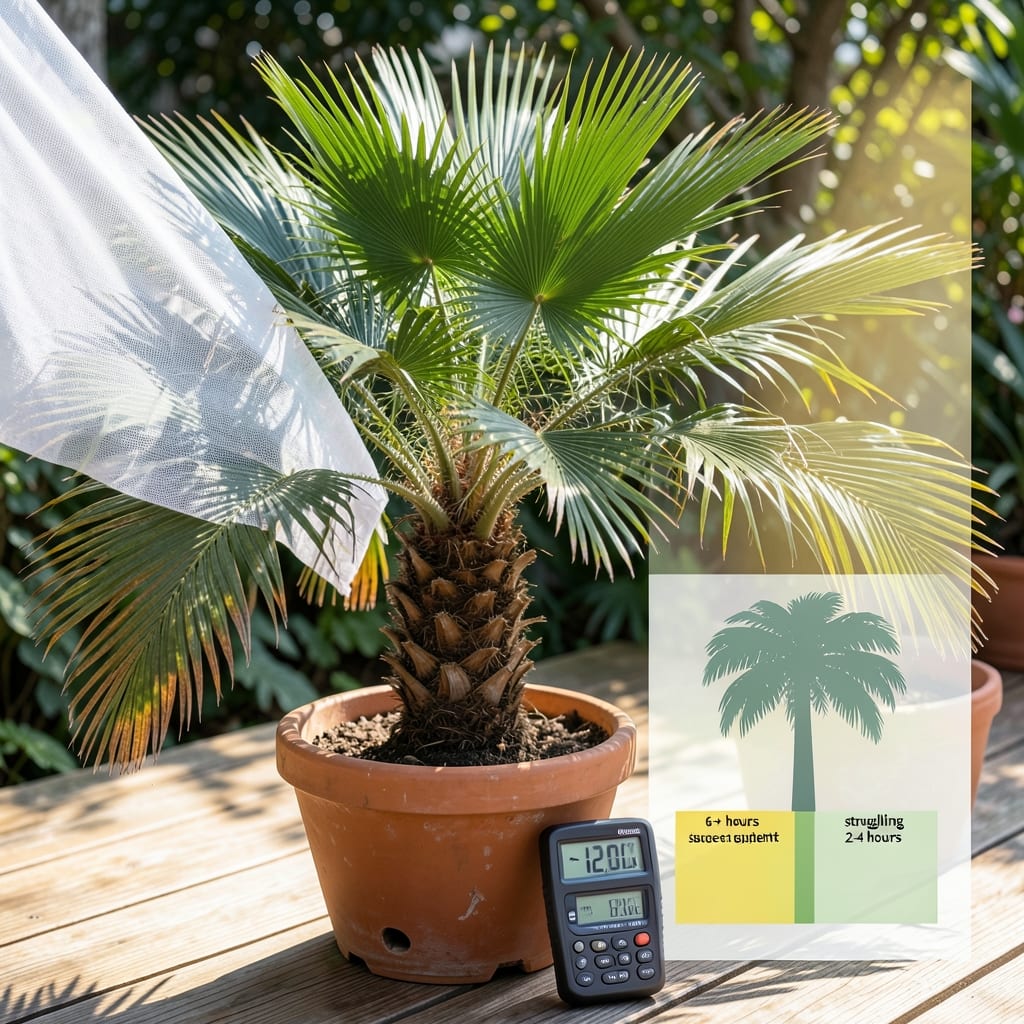
How Much Light Do Palm Plants Need: Sunlight Hours by Variety for Lush Growth

Light Requirements

How Much Light Do Palm Plants Need: Sunlight Hours by Variety for Lush Growth

If your 🌴 palm plant looks more like a sad, yellowing stalk than a lush tropical beauty, you’re probably guessing wrong about its light needs. The truth? Most palms need bright, indirect light—but too much direct sun can scorch them, while too little leaves them weak and leggy. Whether you're growing a dwarf parlor palm indoors or a towering outdoor species, getting the light balance right is the key to keeping those fronds vibrant and healthy.

Here’s the catch: different palm varieties have wildly different light preferences. Some thrive in full sun exposure for 6+ hours daily, while others prefer gentle, filtered light—like the kind you’d find under a canopy. Without the right conditions, even the hardiest palms can struggle, leading to slow growth or worse. The good news? With a few simple adjustments, you can transform your palm’s health overnight.

Let’s break down exactly how much light your palm needs—whether it’s basking in outdoor sunlight or perched by a south-facing window. You’ll learn which species crave direct rays, which prefer shade, and how to spot the warning signs when your plant is begging for more (or less) light. Ready to give your palm the perfect spot?

From indoor hacks to outdoor placement tips, I’ll show you how to create the ideal growing conditions—no guesswork required. Your palm’s future starts with the right light, and this guide will help you get it just right.

Best Window Placement
🧭
North
Low light
🌅
East
Morning sun
☀️
South
Brightest
BEST
🌇
West
Afternoon sun

Palm plant light requirements by variety: sun vs shade needs

Not all palms crave the same amount of sunlight—some thrive under bright indirect light while others bask in full sun exposure. The key is matching your palm variety to its natural habitat. For example, Canary Island date palms love 6+ hours of direct sun, while parlor palms prefer moderate indoor light. Getting this wrong can mean the difference between a vibrant, healthy palm and one struggling with yellow fronds or slow growth.

Let’s start with the basics: most palms need bright light conditions, but the exact amount varies dramatically. Outdoor palms typically require full sun to partial shade, while indoor palms often do best with filtered sunlight from east or south-facing windows. The goal is to mimic their native environments—whether that’s a tropical forest under a canopy or a sunny Mediterranean coastline.

Here’s where it gets tricky: even within a single species, light needs can shift based on climate, pot size, and season. A palm in a small container will dry out faster in direct sun than one planted in the ground. Meanwhile, a palm in a cooler climate might handle more sun than the same species in a hot, arid region. Always consider these factors when choosing a spot.

Below, I’ve broken down the light requirements for 12+ common palm varieties, including their ideal sunlight hours, shade tolerance, and growth indicators. Use this as your cheat sheet to place your palm in the perfect spot—whether it’s indoors or out.

🌴

Palm Variety Ideal Sunlight Hours Shade Tolerance Growth Indicators
Canary Island Date Palm 6-8 hours direct sun Low (scorches in deep shade) Fast frond growth, glossy green leaves
Parlor Palm (Chamaedorea) Bright indirect light (2-4 hours) High (avoid direct sun) Slow growth, dark green fronds
Areca Palm 4-6 hours indirect sun Moderate (tolerates low light) Feathery fronds, upright growth
Majesty Palm 6+ hours bright light Low (needs sun for color) Blue-green fronds, bold trunk
Bismarck Palm Full sun to partial shade Moderate (adapts well) Fan-shaped fronds, slow growth
Pygmy Date Palm Full sun (outdoor only)

Palm plant light requirements by variety: sun vs shade needs

Not all palms are created equal when it comes to light. Some varieties, like the Canary Island date palm, crave full sun exposure for 8+ hours daily, while others, such as the parlor palm, thrive in low to bright indirect light. Understanding these differences is crucial—misjudging light needs can lead to stunted growth or even plant death. For example, placing a Majesty palm in deep shade will leave it weak, while exposing a Bismarck palm to harsh afternoon sun can scorch its fronds.

Let’s start with the basics: most palms need bright light, but the type and intensity vary. Outdoor palms generally need more direct sunlight, especially in cooler climates, while indoor palms often prefer filtered light. The key is observing your palm’s natural behavior—healthy fronds should be vibrant green and upright. If they’re turning yellow or brown, your light balance is likely off.

Below, I’ve broken down the light needs for 12+ common palm varieties, including their ideal sunlight hours, shade tolerance, and growth indicators. Use this as your guide to placing your palm in the perfect spot—whether it’s basking in morning sun or thriving under artificial grow lights.

Palm Variety Ideal Sunlight Hours Shade Tolerance Growth Indicators
Canary Island Date Palm 8+ hours (full sun) Low (needs direct sun) Vibrant fronds, rapid growth
Parlor Palm 4-6 hours (bright indirect) High (avoid direct sun) Slow growth, leggy stems
Majesty Palm 6-8 hours (partial sun) Moderate (tolerates shade) Bright green fronds, bushy
Bismarck Palm 6-8 hours (morning sun) Moderate (avoid afternoon sun) Fan-shaped fronds, slow growth
Areca Palm 6-8 hours (bright indirect) Moderate (tolerates low light) Feathery fronds, upright growth
Pygmy Date Palm 6-8 hours (full sun) Low (needs sunlight) Compact size, slow growth
Kentia Palm 4-6 hours (low light) High (avoid direct sun) Slow growth, delicate fronds

If you’re growing palms indoors, prioritize placing them near south-facing windows for the most consistent light. For outdoor palms, morning sun is ideal—it’s less intense than afternoon rays, which can burn fronds. In hot climates, provide afternoon shade to prevent stress. For example, a Mexican fan palm in Arizona will need afternoon shade to avoid browning tips, while a Windmill palm in Florida can handle full sun year-round.

Pro tip: Rotate your palm quarter-turn weekly to ensure even light exposure. This prevents fronds from leaning toward the light source, which can make your palm look lopsided. Even a low-light palm like the Kentia will benefit from occasional rotation to maintain balanced growth.

Remember, the goal is vibrant, healthy fronds. If your palm’s leaves are turning yellow or brown, it’s time

★★★★★4.5(11 reviews)
Categories Light Requirements