
Light Requirements
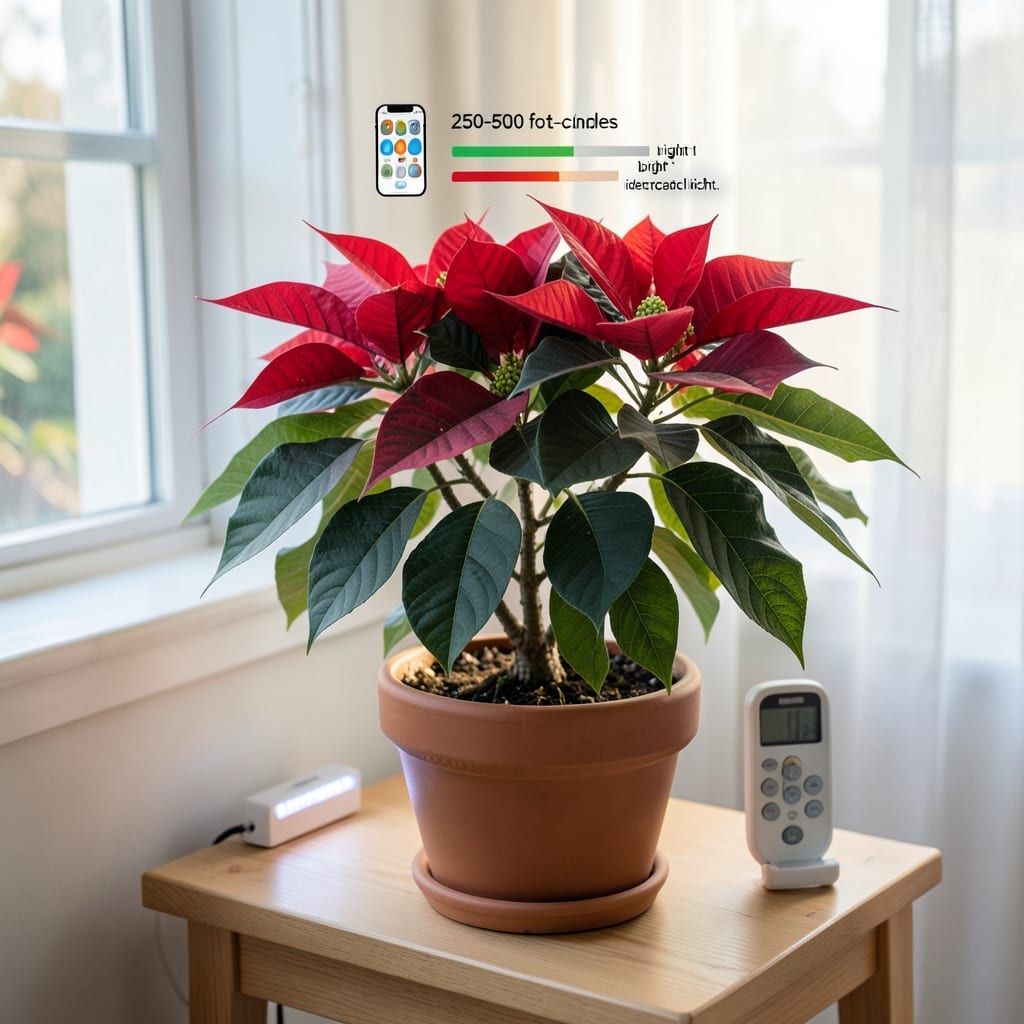
If how much light does a poinsettia plant need to thrive is your question, you’re probably dealing with a light puzzle. Too little brightness and it stretches out like a sleepy cat; too much sun, and those gorgeous leaves scorch. The sweet spot? Bright, indirect light—think morning sun through a sheer curtain, not a harsh afternoon glare.
Most people assume poinsettias thrive in direct sunlight, but that’s a common mistake. These fall favorites actually prefer gentle light that mimics their natural tropical habitat. Without the right conditions, you’ll miss out on those vibrant red bracts and lush growth. Let’s fix that—because your poinsettia deserves to shine.
Here’s the game-changer: 4-6 hours of bright, indirect light daily is the magic number. Place it near an east or west window, or use a grow light if your space is dim. I’ll show you exactly how to spot light problems and adjust before it’s too late.
Whether you’re a seasoned plant parent or a first-timer, getting the light right is the key to a poinsettia that blooms year after year. Ready to transform your plant’s future? Let’s dive in.

Optimal light requirements for poinsettia growth and blooming
Poinsettias thrive in bright indirect light, mimicking their natural tropical understory habitat. The ideal setup provides 4-6 hours of filtered sunlight daily—think morning sun through sheer curtains or dappled shade from trees. Direct sunlight, especially harsh afternoon rays, can scorch those vibrant bracts and cause leaf burn, ruining your plant’s festive look.
During the vegetative growth stage (spring to summer), poinsettias tolerate slightly more light—up to 12-14 hours of bright indirect exposure—to build energy for flowering. However, once you trigger blooming in fall (with 12+ hours of darkness), reduce light to 6-8 hours daily to maintain color and prevent early bud drop.
Light intensity matters too: aim for 2,000–10,000 lux (measured with a light meter). A north-facing window typically provides 2,000–5,000 lux, while an east or west window delivers 5,000–10,000 lux. South-facing windows can exceed 10,000 lux, risking leaf scorch unless you diffuse the light with a sheer curtain.
| Growth Stage | Light Needs | Duration | Intensity (Lux) | Best Window |
|---|---|---|---|---|
| Vegetative (Spring-Summer) | Bright indirect | 12-14 hours | 5,000–10,000 | East or west |
| Flowering (Fall-Winter) | Bright indirect | 6-8 hours | 2,000–5,000 | North or filtered south |
| Dormancy (Late Winter) | Low light | 4-6 hours | 1,000–3,000 | Any window |
Winter poses the biggest challenge for indoor poinsettias. Short daylight hours (6-8 hours) and weak winter sun (1,000–3,000 lux) often lead to leggy growth and poor blooming. If your plant stretches toward the light with bare stems, it’s begging for more brightness. Rotate the pot weekly so all sides get even exposure, and consider supplementing with a grow light for 14 hours daily to maintain energy reserves.
Outdoor poinsettias (in USDA Zone 9+) handle more light but still prefer partial shade during peak summer heat. Plant them where they receive morning sun and afternoon shade, like under a patio umbrella or near a building’s east side. Mulch the base to retain moisture and protect roots from temperature swings.
Pro tip: Test your light setup with a lux meter or the "shadow test." Hold your hand between the plant and light source—if you can’t see your shadow clearly, the light is too diffuse. Adjust by moving closer to the window or adding a reflective surface (like a white wall or aluminum foil behind the pot) to bounce light onto the leaves.
Remember, poinsettias are light-sensitive during blooming. If you notice the bracts fading or buds dropping, it’s a sign of insufficient light or temperature stress. Keep them in a cool (60–70°F) spot with consistent light, and you’ll enjoy those show-stopping colors for weeks.
For apartment dwellers, east-facing windows are ideal—they provide gentle morning light without the harsh afternoon sun. If your space lacks natural light, invest in a full-spectrum LED grow light (more on this in the next section!). The key is consistency: poinsettias reward steady, moderate light with vibrant blooms and lush foliage.
🌱
Signs your poinsettia isn’t getting the right light (and how to fix it)
Your poinsettia might be silently screaming for help—literally. If those vibrant bracts are looking dull or the stems are stretching like overcooked spaghetti, your plant’s light needs aren’t being met. The first clue? Leggy growth means it’s reaching for more light, while crispy edges signal sunburn from too much intensity. These visual cues are your plant’s way of saying, “Adjust me now!”
Let’s start with the most obvious warning signs. A poinsettia starved for light will develop pale, yellowing leaves and stems that grow tall and weak, almost like a marathon runner who skipped training. On the flip side, too much direct sunlight causes brown patches or white spots on the leaves—like a sunburn you’d get at the beach. Both extremes spell trouble for your plant’s health and blooming potential.
🚨 CRITICAL FIX: Move your poinsettia to an east-facing window for gentle morning light or a west-facing window for afternoon glow. If your space lacks natural light, rotate the pot quarter-turns weekly to ensure even growth. This prevents lopsided development and keeps those bracts vibrant.
🚨 Warning: Light Overload!
Symptoms: Brown crispy edges, white/yellow patches, stunted growth
Cause: Direct sunlight (especially afternoon rays) or artificial light too close
Fix: Move to indirect light immediately. Use a sheer curtain to diffuse harsh light.
Winter is the biggest challenge for poinsettia light needs, thanks to shorter days. If your plant is failing to bloom or the bracts stay green, it’s likely not getting enough light. Supplement with a grow light (more on this later!) to maintain 12-14 hours of light daily. Without this, your poinsettia won’t trigger the dark period it needs to produce those signature colors.
Pro tip: Check the underside of leaves. If they’re dark green and sparse, your plant is stretching toward light. If they’re pale and sparse, it’s getting too much heat from a nearby window. Both scenarios require immediate adjustments. For indoor growers, a south-facing window with a sheer curtain is often the gold standard—bright but diffused.
Don’t wait until your poinsettia throws in the towel. Act now by monitoring leaf color, stem strength, and bloom development. With these fixes, your plant will bounce back faster than you’d expect—just give it the right light, and it’ll reward you with show-stopping bracts all season long.