
Light Requirements
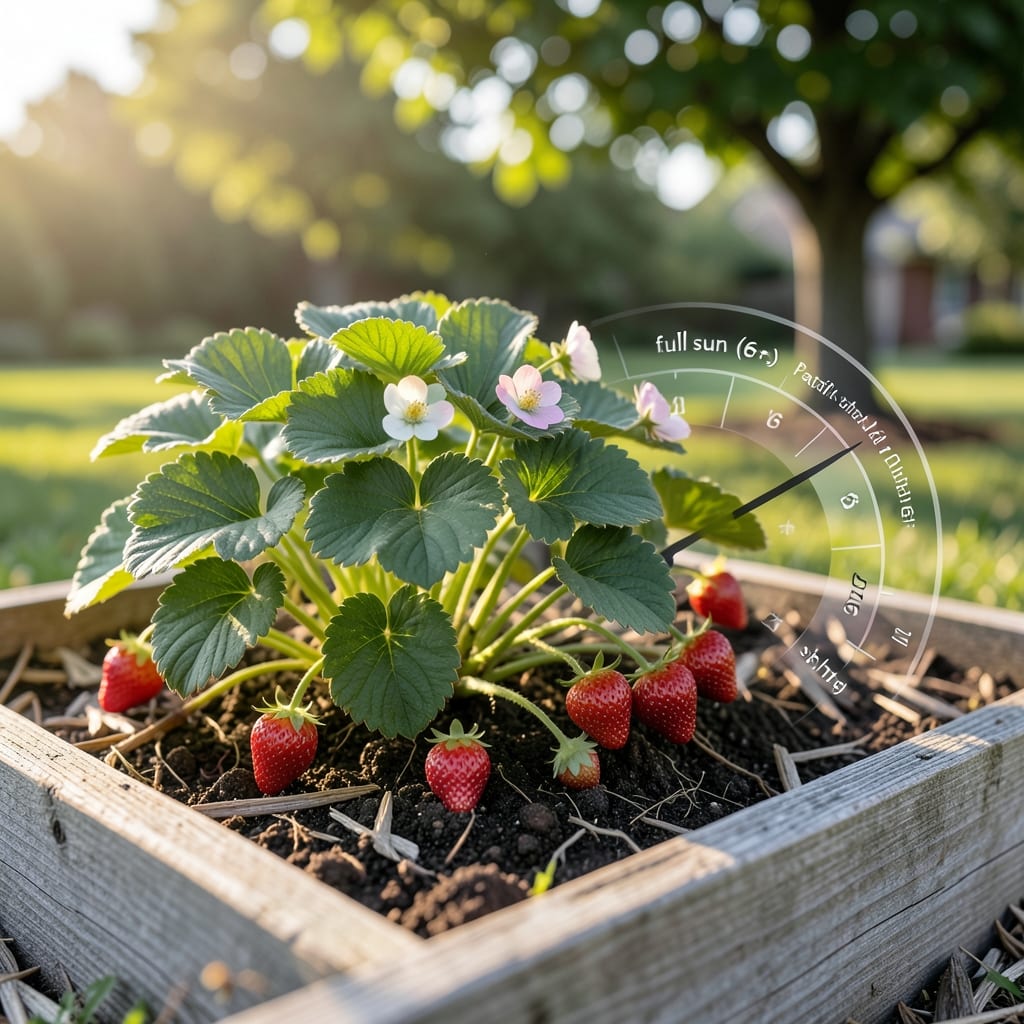
If you’re wondering how much light does a strawberry plant need to produce sweet, juicy berries, the answer might surprise you—it’s not just about full sun. While strawberries love light, too much or too little can turn your garden dreams into disappointment.
Most gardeners in USDA Zone 6a assume strawberries thrive in full sun, but the truth is more nuanced. While 6-10 hours of sunlight is ideal, not all varieties handle heat the same way. June-bearing types, for example, need consistent light to set fruit, while everbearing varieties can tolerate slightly less—if you know the tricks.
In this guide, I’ll break down exactly how much light your strawberries need, how to spot when they’re getting it wrong, and simple adjustments to maximize your harvest. Whether you’re dealing with shade from trees or scorching afternoon sun, you’ll learn how to create the perfect light conditions for your plants.
Ready to turn those pale, underperforming strawberries into a bountiful, sun-kissed harvest? Let’s get started with the light requirements that make all the difference.

Optimal sunlight hours for strawberry plants: the science behind 6-10 hours daily
Strawberries are sun-worshippers, but not all varieties crave the same amount of light. The ideal sunlight range for strawberry plants is 6-10 hours daily, though some types can adapt to slightly less. This range isn’t arbitrary—it’s tied directly to how strawberries convert light into energy through photosynthesis, which fuels both leaf growth and fruit production.
Think of sunlight as the fuel for sweetness. The more light your plants receive, the more sugars they produce, leading to those juicy, flavorful berries we all love. However, too much direct sun—especially in hot climates—can stress plants, causing leaf scorch or even stunted growth. Balancing light exposure is key to a thriving strawberry patch.
| Variety Type | Minimum Sunlight Hours | Ideal Sunlight Range | Best Light Conditions | Growth Impact |
|---|---|---|---|---|
| June-Bearing | 6 hours | 8-10 hours | Full sun with afternoon shade in hot climates | Maximizes fruit set; needs consistent light for blooms |
| Everbearing | 5 hours | 6-8 hours | Partial shade in peak afternoon sun | Produces fruit in multiple flushes; tolerates slight shade |
| Day-Neutral | 4 hours | 6-9 hours | Morning sun + afternoon shade or dappled light | Continuous fruiting; adapts to varied light conditions |
| Alpine (Dwarf) | 3 hours | 4-6 hours | Partial shade or filtered light | Small berries; thrives in cooler, shadier microclimates |
| Wild/Foraging | 2 hours | 3-5 hours | Dappled shade or woodland edges | Survival-focused; minimal fruit production |
Seasonal adjustments are critical, especially in regions with intense summer heat or long winter days. For example, in USDA Zone 6a, strawberries planted in early spring benefit from morning sun and afternoon shade during July and August to prevent heat stress. Conversely, in cooler climates like the Pacific Northwest, extended daylight hours in summer can push strawberries to produce more fruit than they can ripen—leading to smaller berries.
If you’re growing strawberries in containers or raised beds, light requirements remain the same, but mobility gives you an advantage. Simply move pots to follow the sun’s arc throughout the day. For greenhouse growers, supplemental lighting (like LED grow lights) can extend the effective daylight to 12-14 hours, boosting production year-round.
Pro tip: Pay attention to the angle of the sun. In early spring or late fall, when the sun sits lower in the sky, strawberries can still get 6+ hours of indirect light even if the sun isn’t directly overhead. Use this to your advantage by positioning plants near south-facing walls or fences to maximize reflected light.
Now that you know the ideal light ranges, let’s tackle the real-world challenges: What if your garden gets too much shade or scorching sun? The next section will show you how to tweak your setup for perfect light—no matter your space.
How to adjust light for strawberry plants in shady or overly sunny gardens
Not all gardens are created equal—and neither are all light conditions. If your strawberry patch sits under partial shade from towering trees or bakes under intense afternoon sun, you’re not alone. The key is adapting without sacrificing those sweet, juicy berries. Let’s tackle both scenarios with practical fixes that actually work.
For gardens with partial shade (think dappled sunlight or north-facing plots), strawberries can still thrive—but they’ll need a little help. The goal is to maximize the light they do receive while protecting them from harsh midday rays. Everbearing varieties handle shade slightly better than June-bearing types, but all will benefit from strategic adjustments.
Here’s how to balance light for your strawberries, whether you’re dealing with too little or too much sun:
Partial Shade Solutions
- ✅ Increases light penetration by 20-30%
- ✅ Reduces competition for nutrients
- ⚠️ Temporary fix (regrowth fills gaps)
- ⚠️ May harm tree health if overdone
Excessive Sun Solutions
- ✅ Protects from afternoon heat
- ✅ Extends growing season in hot climates
- ⚠️ Reduces light if overused
- ⚠️ Requires proper ventilation
If your strawberries are in overly sunny conditions, especially in desert climates or southern exposures, the solution isn’t just shade—it’s timing. Strawberries can handle 6-8 hours of direct sun but struggle with the intense heat of 10+ hours. Use shade cloth (30-50% coverage) during peak afternoon hours (12 PM–4 PM) to lower leaf temperatures without cutting off all light.
For containers or small gardens, reflective mulch (like white gravel or aluminum foil) can bounce extra light onto plants, boosting growth by up to 30%. It’s a game-changer for north-facing gardens where sunlight is scarce. Just avoid placing it too close to the plants—keep it 6-12 inches away to prevent overheating.
Remember: The goal isn’t perfection—it’s balance. Even a few tweaks can turn your struggling strawberries into a thriving patch. Start with one adjustment (like pruning or shade cloth) and monitor the results. Your future harvest will thank you! 🌱