
Light Requirements
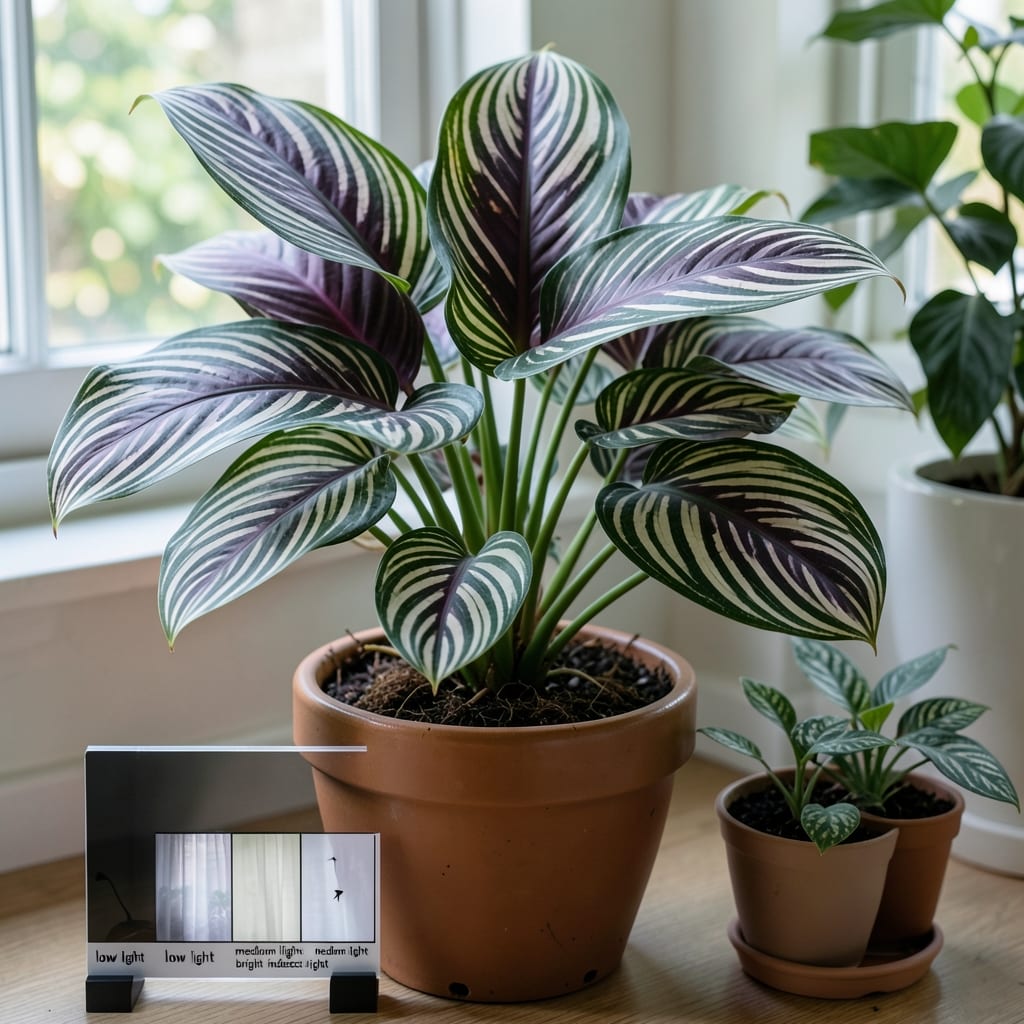
Optimal light requirements for zebra plant growth: low to medium indirect light explained
Your zebra plant (Aphelandra squarrosa) thrives in bright indirect light, making it perfect for homes with filtered sunlight. Unlike sun-loving succulents, this tropical beauty hates direct sun, which can bleach its striking foliage patterns and cause leaf burn. Think of it as a plant that enjoys a gentle morning glow rather than harsh afternoon rays.
Ideally, place your zebra plant within 2-3 feet of an east-facing window, where it gets 4-6 hours of morning sunlight without the intense heat of midday. North-facing windows also work well, offering consistent soft, diffused light throughout the day. If your home lacks natural light, don’t worry—we’ll cover artificial light solutions later in this guide.
The key to success is mimicking its natural understory habitat. In the wild, zebra plants grow beneath taller trees, where they receive dappled sunlight and protection from harsh elements. Recreating this environment indoors ensures your plant stays compact, vibrant, and healthy.
During summer months, watch for signs of too much light, like brown crispy edges or faded foliage. In winter, when daylight is shorter, your zebra plant may become leggy or pale—a clear signal it needs supplemental light. Adjusting its position or using a grow light can prevent these issues.
Here’s a quick rule of thumb: if you can read a book comfortably near your zebra plant’s spot, the light is likely too dim. If the leaves feel warm to the touch after a few hours, it’s getting too much direct sun. Finding that golden middle keeps your plant thriving year-round.
If your zebra plant is in a south-facing window, create a DIY light filter using a sheer white curtain or a light-colored sheer fabric. This diffuses the harsh rays while still allowing plenty of bright indirect light to reach the leaves. For west-facing windows, consider placing the plant 3-4 feet away to avoid the hot afternoon sun.
Seasonal adjustments are crucial. In spring and summer, your zebra plant can handle slightly brighter conditions, but always monitor for signs of stress. During fall and winter, supplement with a 12-inch LED grow light for 8-10 hours daily to maintain its bold foliage colors. Rotate the pot quarter-turn weekly to ensure even light exposure on all sides.
Pro tip: Group your zebra plant with other low-to-medium light plants, like
Optimal light requirements for zebra plant growth: low to medium indirect light explained
The zebra plant (Aphelandra squarrosa) thrives in bright indirect light, making it perfect for homes with east or north-facing windows. Too much direct sun causes leaf scorch, while too little light dulls its striking foliage patterns. Aim for 4-6 hours of filtered light daily, especially during peak growing months.
This tropical beauty mimics its native understory habitat, where dappled sunlight filters through canopies. Place your zebra plant 2-3 feet from a window to avoid harsh afternoon rays. South-facing windows may require sheer curtains to diffuse intensity, while west-facing windows should be avoided entirely during summer.
🌿
| Light Condition | Ideal Hours | Window Placement | Seasonal Adjustments |
|---|---|---|---|
| Bright Indirect | 4-6 hours | East/West window, 2-3 ft away | Spring/Summer: Sheer curtain |
| Low Light | 2-4 hours | North-facing window | Winter: Rotate plant weekly |
| Direct Sun | 0 hours | Avoid south/west windows | Year-round: Move to indirect light |
In winter months, when natural light dims, supplement with a 12-hour photoperiod using a grow light if needed. Rotate your plant quarter-turn weekly to ensure even growth, as zebra plants lean toward light sources. If you notice stretched stems or pale leaves, it’s a clear sign of insufficient light.
For outdoor growers in USDA Zone 6a, bring your zebra plant inside before temperatures drop below 60°F. These plants cannot tolerate frost and prefer consistent warmth (65-75°F). A heat mat can help maintain root warmth during cooler indoor seasons.
Monitor your plant’s foliage color—vibrant zebra patterns indicate perfect light conditions. If the leaves lose their contrast, increase light gradually over 1-2 weeks to avoid shocking the plant. A humidity tray nearby can also help mimic tropical conditions, especially in dry indoor environments.
🪴