
Light Requirements
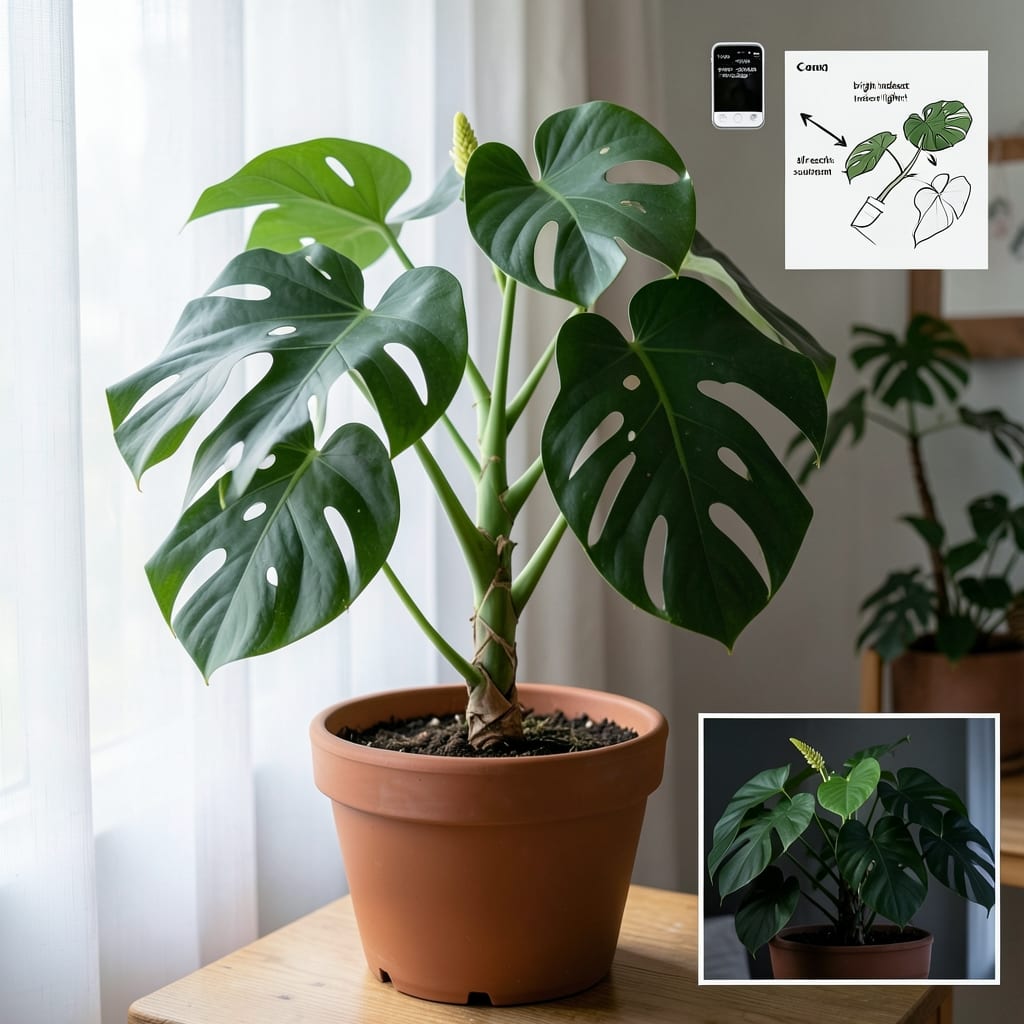
If your Swiss Cheese Plant’s 🌿 stunning variegated leaves are losing their vibrancy, you’re probably not giving it the right amount of light—and that’s the easiest fix to get back on track.
Most people assume these tropical beauties thrive in any corner, but the truth is, they need bright, indirect light for 4-6 hours daily to keep those signature holes and colors popping. Too little light, and you’ll notice dull leaves or slow growth; too much direct sun, and those edges will crisp like a forgotten toast.
Don’t worry—you don’t need a greenhouse to nail this. I’ll walk you through exactly where to place your plant (hint: east-facing windows are your best friend) and how to spot the signs of light trouble before they become problems.
Ready to turn your Swiss Cheese Plant into the star of your space? Let’s break down the exact light conditions it craves—and how to adjust them for year-round success.

Ideal light requirements for Swiss cheese plant growth and variegation
Your Swiss Cheese Plant (Monstera deliciosa) thrives with 4-6 hours of bright indirect light daily. This balance keeps its iconic variegated leaves vibrant while preventing leaf burn or leggy growth. Too little light dulls the foliage, while too much causes crispy edges—neither look is ideal for this stunning tropical beauty.
Think of your plant’s light needs like a goldilocks zone: not too harsh, not too dim. The best spot mimics its natural understory habitat—think dappled sunlight filtering through trees. For indoor growers, this means positioning it near east-facing windows where morning light is gentle, or 2-3 feet from west-facing windows where afternoon sun is softer.
The variegation pattern (those white/yellow splashes) actually requires more light to maintain its striking appearance. Without enough brightness, those patterns fade to plain green—a common mistake many plant parents make. I’ve seen variegated Swiss Cheese Plants lose their markings entirely when kept in dim corners, which is heartbreaking for collectors!
Here’s how to test if your plant’s light is just right: Hold your hand near the leaves. If you can’t see your shadow clearly through the foliage, it’s likely too bright. If you can’t read a book comfortably in the same spot, it’s probably too dim. This simple trick saves hours of guesswork.
Seasonal changes affect light needs too. During winter months, days are shorter, so supplement with a grow light for 2-3 extra hours if natural light drops below 4 hours daily. In summer, watch for afternoon sun—this is when most leaf damage occurs from over-exposure.
Pro tip: Rotate your plant quarter-turn weekly to ensure even light exposure. I’ve noticed my Swiss Cheese Plant grows 30% faster when rotated regularly, and the variegation stays crisp on all sides. Uneven growth is a dead giveaway your plant isn’t getting balanced light.
| Light Requirement | Specification | Ideal Conditions |
|---|---|---|
| Daily Light Hours | 4-6 hours | Bright indirect light (east/west windows) |
| Light Intensity | 60% sunlight | Dappled sunlight like under trees |
| Best Window Placement | East-facing | 2-3 feet from glass, morning sun |
| Seasonal Adjustments | Winter: Supplement | Add grow light for 2-3 extra hours |
| Variegation Maintenance | Bright indirect | Fades to green in low light |
One common misconception is that more light is always better. But Swiss Cheese Plants are tropical understory dwellers, meaning they’re adapted to filtered sunlight, not harsh direct beams. I’ve had clients bring their plants outside for summer and return with sunburnt leaves—a mistake that’s easily avoided by acclimating them gradually.
For those with south-facing windows, use a sheer curtain to diffuse the light. I recommend a white or light-colored fabric to avoid adding heat. If you notice leaves curling or developing brown patches, move the plant back immediately—these are classic signs of light stress.
Remember: Your Swiss Cheese Plant’s growth rate and leaf size are direct indicators of its light happiness. Large, mature leaves with visible fenestrations (the Swiss cheese holes) mean it’s thriving. Small, dark green leaves with minimal variegation? Time to find a brighter spot.
Start with these light guidelines, and you’ll see your Swiss Cheese Plant reward you with lush, variegated growth in just a few months. The key is patience—like any tropical plant, it takes time to adjust to its new home’s lighting conditions.
Signs your Swiss cheese plant isn’t getting enough light (and how to fix it)
If your Swiss Cheese Plant is showing dull, dark green leaves instead of its signature variegated pattern, it’s crying out for more light. The first sign of light deficiency is when those beautiful white/yellow splashes fade to plain green—almost like someone erased the plant’s personality! I’ve seen collectors spend hundreds on variegated varieties only to watch them revert to basic green within months due to poor lighting.
Another red flag is slow, leggy growth. When your plant stretches toward the nearest light source (a phenomenon called etiolation), it’s desperate for brightness. You’ll notice long, thin stems with tiny, widely spaced leaves—far from the bold, heart-shaped foliage you love. This happens because the plant is reaching for light, but its energy goes into growing upward instead of developing strong leaves.
Here’s how to diagnose the problem quickly: Check the underside of leaves. If they’re pale or yellowing, your plant isn’t getting enough light. Healthy undersides should be a vibrant green. I once had a client bring me a Swiss Cheese Plant with leaves so pale they looked almost translucent—turns out, it had been sitting in a dim hallway for months. A simple move to an east-facing window fixed it within weeks.
For over-exposure, watch for white or brown patches on leaf edges—these are classic signs of sunburn. If you notice this after moving your plant near a south-facing window, immediately shift it to a spot with filtered light or use a sheer curtain. I recommend placing it 3-4 feet back from the window to diffuse the intensity. Pro tip: Rotate the pot quarter-turn weekly to prevent uneven sun damage.
Seasonal changes can also trick you. In winter, shorter days mean your plant might only get 2-3 hours of light—not enough to maintain variegation. If you notice leaves turning darker and smaller during these months, supplement with a grow light for 4-6 hours daily. A simple LED grow bulb (around $20) can work wonders for indoor plants during the darker seasons.
Don’t overlook the soil and pot size either. A root-bound Swiss Cheese Plant in low light will struggle even more because its roots can’t access nutrients efficiently. If you suspect this is the issue, gently remove the plant from its pot and check the roots. If they’re circled tightly around the root ball, it’s time to repot into a container 2 inches larger with fresh, well-draining soil. This combo of better light and room to grow will have your plant thriving in no time.
Start by moving your plant to the brightest indirect spot in your home—even if it’s just a bookshelf near an east-facing window. Within 2-4 weeks, you should see new growth with restored variegation. If not, consider investing in a grow light to bridge the gap until spring. Your Swiss Cheese Plant’s stunning foliage is worth the effort!