
Orchid Care
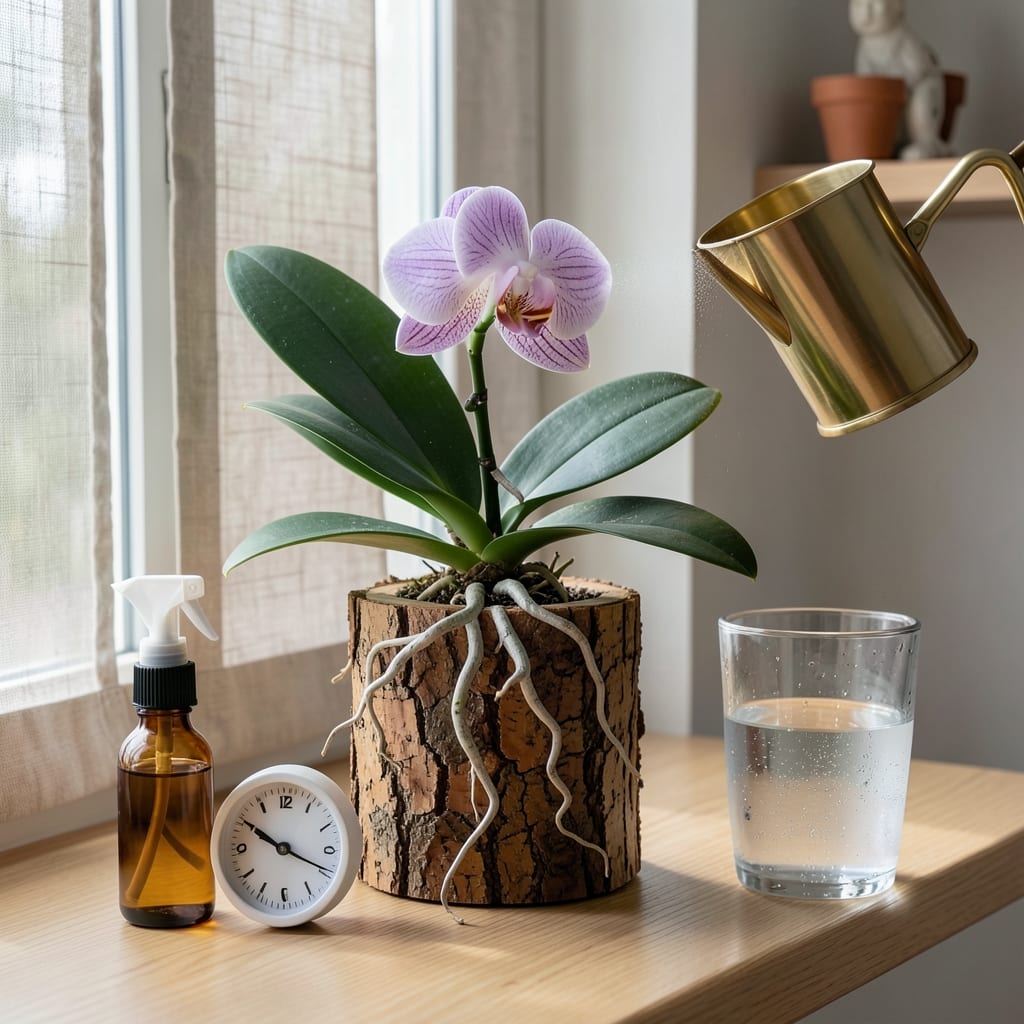
Figuring out how often to water mounted orchids can feel like walking a tightrope—too much, and you drown their delicate roots; too little, and they shrivel up. The key isn’t just following a schedule but understanding your orchid’s unique needs, especially when they’re mounted on bark or cork where moisture escapes differently than in pots.
I’ve watched my own 🌸 mounted orchids transform from struggling survivors to thriving showstoppers once I cracked the code on their hydration. The 7-day rule isn’t arbitrary—it’s about giving their roots time to breathe between soakings while keeping them plump enough to absorb nutrients. But here’s the catch: your orchid’s rhythm might need tweaking based on whether you’re in a steamy bathroom or a dry winter room.
What if I told you the secret isn’t just counting days but learning to read your orchid’s signals? From the telltale wrinkles of thirsty roots to the soggy warnings of overwatering, we’ll break down how to adjust your routine like a pro. No more guesswork—just lush, blooming orchids that reward your attention with stunning 🌸 displays year-round.
Ready to master the art of hydration? Let’s dive into the science behind the 7-day rule, plus three foolproof ways to test if your orchid is truly thirsty—or just begging for a break from the watering can.
The 7-Day watering rule for mounted orchids: when, how, and why it works
Mounted orchids rely on a 7-day watering cycle because their roots need time to absorb moisture while preventing stagnation. Unlike potted orchids, mounted varieties lack soil to regulate hydration, making consistency critical. The morning watering rule ensures excess water evaporates by afternoon, reducing root rot risk. Think of it as a hydration schedule—like a Phalaenopsis or Dendrobium thrives on routine, not guesswork.
Your orchid’s root system is the key to nailing this rhythm. Healthy roots should be silver-green when dry and green when hydrated. Overwatering turns them mushy, while underwatering makes them brittle. The 7-day rule balances this by mimicking natural rainfall patterns—just enough to keep roots plump without drowning them. For example, in summer heat, I reduce the cycle to 5-6 days to compensate for faster evaporation.
Environmental factors like humidity and temperature dictate your adjustments. In dry climates (below 40% humidity), stick to the weekly schedule. But in humid areas (above 60% humidity), extend it to 10 days to avoid soggy roots. I test humidity with a hygrometer near my orchids—it’s a game-changer for fine-tuning care.
Seasonal shifts demand flexibility. During spring and fall, when orchids bloom, water every 7 days to support flower production. In winter dormancy, cut back to bi-weekly watering unless your home stays warm and dry. My Phalaenopsis blooms in February, so I increase humidity slightly during this time to mimic its tropical origins.
Morning watering is non-negotiable. Wet roots in the evening invite fungal infections like black rot. I set a timer for 8 AM to soak my mounted orchids until water drips from the bottom. For bark-mounted orchids, a 10-minute soak suffices; cork slabs need 5 minutes. Always let them dry completely before the next cycle—this prevents the dreaded root suffocation.
| Factor | Adjustment | Example |
|---|---|---|
| Humidity | Low (<40%) | Water every 5-6 days |
| Humidity | High (>60%) | Water every 10 days |
| Season | Spring/Fall | Weekly (7 days) |
| Season | Winter | Bi-weekly (14 days) |
| Mounting Surface | Bark | 10-minute soak |
| Mounting Surface | Cork | 5-minute soak |
Signs of overwatering include yellowing leaves and mushy roots, while underwatering reveals wrinkled pseudobulbs and silver roots. I once killed a Cattleya by ignoring these cues—now I inspect roots every 2 weeks. If roots smell foul or feel slimy, flush them with room-temperature water and repot on dry bark to reset their hydration.
Rainwater or distilled water is ideal, but if you use tap water, let it sit 24 hours to off-gas chlorine. I fill a spray bottle with water and mist my orchids until moisture drips through. This mimics natural rainfall without saturating the mounting surface. For large orchids (like Vandas), I use a shower method: place them under lukewarm water for 3-5 minutes, then let them drip dry.
Pro tip: Group your mounted orchids by type and size to streamline care. My Phalaenopsis cluster gets watered together on Mondays, while my Dendrobiums follow on Thursdays. This system prevents mix-ups and ensures each orchid gets the right attention. Consistency is the secret—once you master the 7-day rhythm, your orchids will reward you with longer blooms and healthier roots.
Remember, orchids are resilient but particular. If you miss a watering day, don’t panic—just check the roots. A light misting on day 8 can save an underwatered orchid, while a dry day can rescue an overwatered one. Trust your observations,
How to test your orchid’s hydration: 3 simple methods beyond the calendar
Counting days is just the start—truly mastering mounted orchid care means learning to read your plant’s hydration signals. Unlike potted orchids, mounted varieties don’t have soil to hide moisture clues, so you’ll need to get hands-on. I’ve perfected three no-guesswork methods to check hydration: the finger test, the weight check, and root inspection. Each gives you real-time data to adjust your 7-day watering rule before problems arise.
The finger test works best for bark-mounted orchids. Gently press your fingertip into the mounting surface near the roots—about 1 inch deep. If it feels dry like sandpaper, it’s time to water. If it’s damp but not soggy, wait 2-3 more days. I do this every Monday and Thursday to catch early signs of thirst. Pro tip: Use your index finger—it’s more sensitive than your thumb for detecting subtle moisture changes.
For the weight check, hold your mounted orchid in one hand and compare its feel to its usual weight. A properly hydrated orchid feels light but not brittle, like a slightly damp sponge. If it feels heavy and dense, it’s overwatered; if it’s light as a feather, it’s desperate for water. I weigh my Phalaenopsis cluster after watering to set a baseline—any dip below that means it’s time to hydrate. This method works especially well for cork-mounted orchids, which dry out faster.
- Finger Test: Press 1" into mounting surface. Dry = water now; damp = wait 2-3 days.
- Weight Check: Compare to baseline. Heavy = overwatered; light = thirsty.
- Root Inspection: Green roots = hydrated; silver = dry; mushy = emergency!
"Trust your touch—orchids don’t lie about their hydration needs."
Visual root inspection is the most revealing method. Healthy roots should be green when hydrated and silver-gray when dry. Never assume wrinkled pseudobulbs mean thirst—sometimes they’re just shrinking from low humidity. I inspect roots every 2 weeks with a magnifying glass to spot early signs of root rot (black, mushy patches) or drought stress (brittle, hollow roots). For sphagnum moss mounts, I gently pull back the moss to check moisture levels deeper in the cluster.
Common mistakes derail even experienced growers. I once thought my Dendrobium’s wrinkled leaves meant it needed water—until I realized it was overwatered because the mounting bark was still damp. Always check the mounting surface, not just the leaves. Another pitfall? Assuming mistings count as watering. A light mist hydrates leaves but doesn’t reach roots—use it only as a supplemental humidifier, not a replacement for soaking.
Adjust your watering based on the mounting surface. Bark holds moisture longer than cork, so bark-mounted orchids may need water every 8-10 days in humid climates, while cork-mounted varieties might need it weekly. I keep a watering journal to track what works for each orchid type. For example, my Vandas on cork need shorter soaks (3-5 minutes) compared to Cattleyas on bark (8-10 minutes). Small adjustments make all the difference.
When in doubt, underwater slightly. Orchids are drought-tolerant but not flood-tolerant. If you’re unsure whether to water, wait 2 more days and recheck. My Phalaenopsis once recovered from 3 weeks of underwatering with just two deep soaks and increased humidity. The key is consistency over perfection—your orchids will thank you with longer blooms and stronger roots.