
Orchid Care
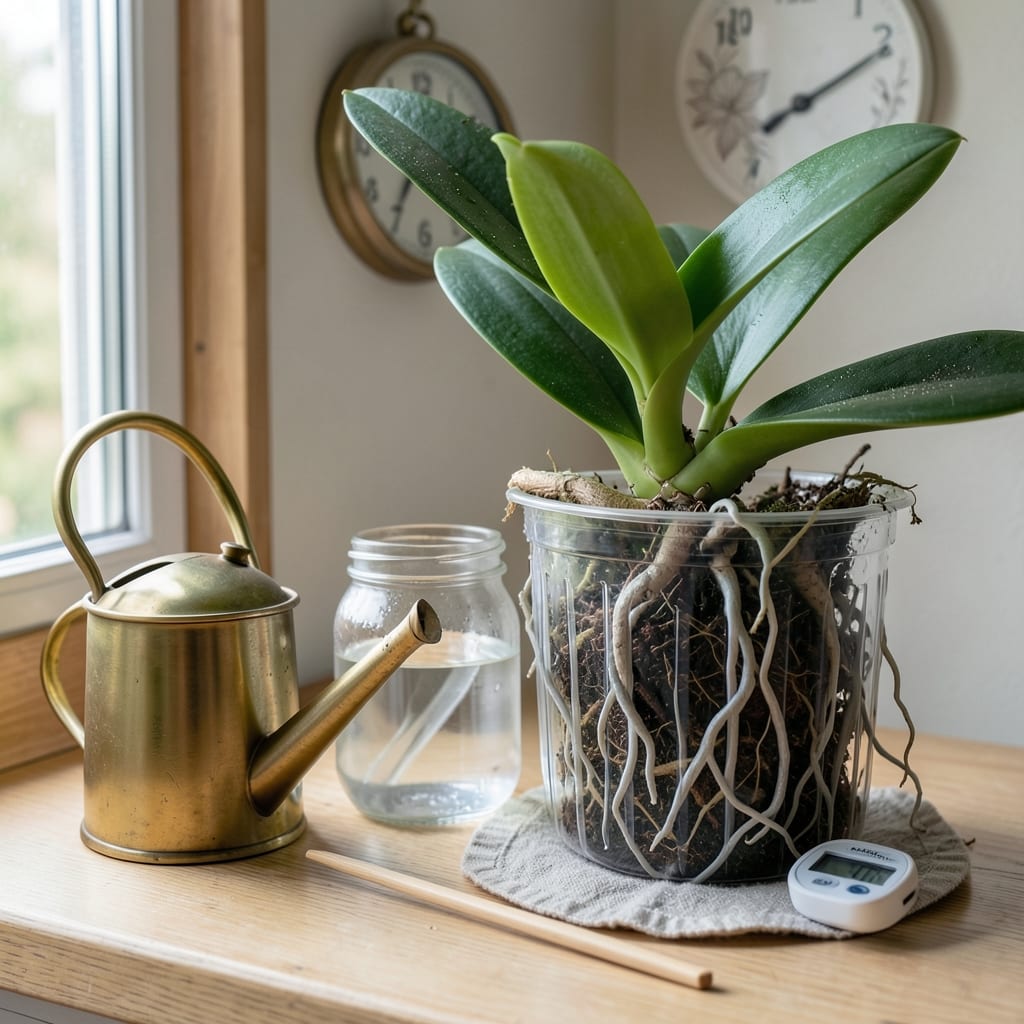
Mastering how often to water orchids in summer isn't about following a rigid schedule—it's about reading your plant's signals and adapting to the heat. Your 🌸 orchid’s roots thrive when they’re moist but never soggy, yet summer’s humidity and temperature swings can turn watering into a guessing game. One misstep, and you’re either drowning delicate roots or watching leaves shrivel from thirst.
Here’s the game-changer: most orchid owners overwater in summer, thinking more moisture equals happier plants. But the truth is, your orchid’s watering needs shift dramatically when temperatures rise. Whether you’re dealing with 90°F heatwaves or sticky humidity, the key is checking moisture levels—not just days on the calendar. I’ll show you exactly how to tell when it’s time to water (and when to hold back).
We’ll break down the science behind summer watering, from the finger test to adjusting for different orchid types like Phalaenopsis vs. Cattleya. You’ll also learn how to spot the subtle signs of overwatering—yellowing leaves, mushy roots—or underwatering—wrinkled pseudobulbs and drooping blooms—before it’s too late.
Ready to keep your orchids thriving all summer long? Let’s dive into the proven methods that’ll save you from both root rot and parched plants—no more second-guessing, just confident care.
Orchid watering schedule by summer heat zones: exact days between waterings
Summer’s heat turns orchid care into a balancing act—too much water and your roots suffocate; too little, and your plant wilts. The key? Adjusting your watering schedule based on your local heat zone and humidity levels. Unlike spring or fall, summer demands a more flexible approach. For example, a Phalaenopsis orchid in 90°F+ heat may need watering every 3-4 days, while the same plant in 70-80°F with high humidity might only need water every 7-10 days.
Most orchid owners make one critical mistake: they water on a fixed schedule instead of checking moisture levels. Your orchid’s pot material (clay vs. plastic) and bark mix composition also play a role. Clay pots dry out faster, while plastic traps moisture longer. The solution? Use the finger test or weight method to gauge when it’s time to water—never rely on days alone.
Below, I’ve broken down the ideal watering frequency by temperature and humidity, so you can tailor your routine to your orchid’s exact needs. Pro tip: Always water in the morning to prevent fungal growth from overnight moisture. This schedule assumes your orchid is in bright, indirect light—direct sun increases evaporation, so you may need to water more frequently.
🌸
For Cattleya orchids, which store water in their pseudobulbs, you’ll water even less frequently—every 10-14 days in high heat. These plants are drought-tolerant and signal thirst by wrinkling their bulbs. Meanwhile, Vanda orchids, which grow in bark and need high humidity, may require daily misting in extreme heat combined with a weekly soak.
One more critical tip: if your orchid is in a plastic grow tray with water, check it daily in summer. Stagnant water in the tray can rot roots faster than you think. Empty it after watering to prevent this common summer pitfall.
💧
Remember, these are guidelines. Always prioritize your orchid’s signals over the clock. If your plant’s leaves are plump and green but the pot feels light, it’s time to water—regardless of what the schedule says. The goal is to keep your orchid’s roots moist but never soggy, so they can absorb nutrients and oxygen efficiently.
Next, we’ll cover the 5 signs your orchid is thirsty (or drowning) in summer heat—so you can catch problems before they become irreversible. Stay tuned!
Orchid watering schedule by summer heat zones: exact days between waterings
Summer’s heat turns orchid care into a balancing act. Your Phalaenopsis or Cattleya needs more frequent watering than usual, but the exact schedule depends on your local climate. In 70-80°F zones, orchids typically need water every 5-7 days, while 90°F+ heat zones may require watering every 3-5 days. Humidity also plays a role—dry air means more frequent watering, while high humidity can stretch those intervals.
The key isn’t sticking to a calendar but checking moisture levels. I use the finger test: stick your finger 1 inch deep into the mix. If it feels dry, it’s time to water. For bark mix (common for Cattleyas), this might mean watering every 4-5 days in peak heat. If your mix stays damp longer, like sphagnum moss, you can wait 7-10 days between waterings.
Here’s how to adjust your schedule based on your summer conditions:
| Heat Zone (°F) | Humidity Level | Watering Frequency | Best Method |
|---|---|---|---|
| 70-80°F | Low (20-40%) | Every 5-7 days | Finger test (1 inch deep) |
| 70-80°F | High (60%+) | Every 7-10 days | Weight method (lift pot) |
| 90-100°F | Low (20-40%) | Every 3-5 days | Morning watering only |
| 90-100°F | High (60%+) | Every 5-7 days | Misting + tray method |
For Phalaenopsis orchids (the most common type), I’ve found that morning watering is critical. Watering in the morning gives roots time to dry out during the day, reducing the risk of root rot. If you’re using a plastic pot, water every 4-5 days—plastic retains moisture longer than clay. Clay pots dry out faster, so you might water every 5-7 days in the same conditions.
Pro tip: Bottom watering is your best friend in summer. Place your orchid pot in a tray of water for 10-15 minutes, then drain completely. This ensures roots get hydrated without over-saturating the mix. Avoid ice cube watering—it can shock the roots and lead to cold stress, especially in hot climates.
Watch for leaf color changes as a final check. Healthy leaves should be firm and bright green. If they start yellowing or feel mushy, you’re overwatering. If they wrinkle or feel dry to the touch, it’s time to hydrate. Adjust your schedule weekly based on these signs—your orchid will thank you with longer blooms all summer long. 🌸