
Trees
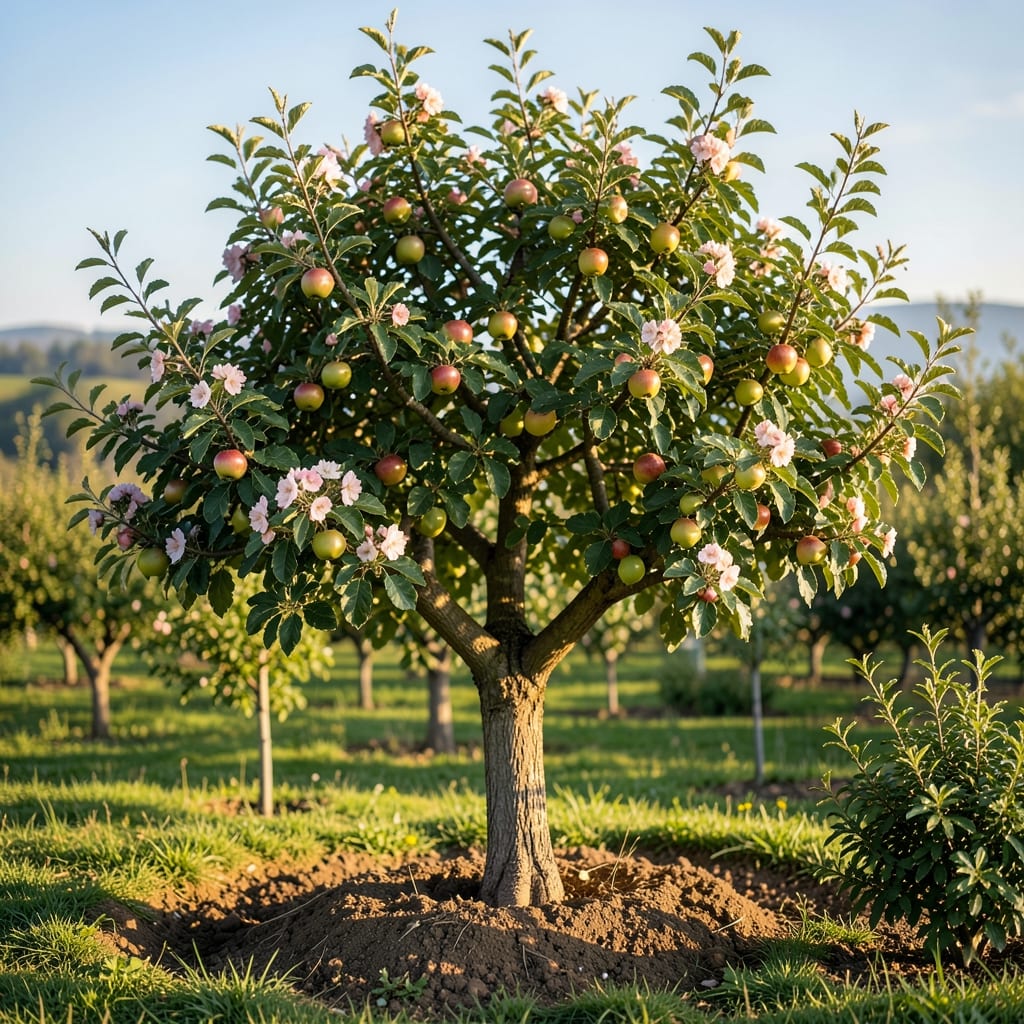
If you’ve ever wondered how tall apple trees grow and whether your backyard can handle one, the answer depends more on the variety than you might think. A standard 🍎 apple tree can reach towering heights of 20-30 feet, while dwarf varieties stay compact at just 8-12 feet—making them perfect for small spaces or containers.
Choosing the right size isn’t just about aesthetics; it directly impacts how much fruit you’ll harvest and how easy it is to maintain. Some popular varieties like Gala or Fuji come in both dwarf and standard forms, so you can match your tree to your space without sacrificing flavor or yield.
But here’s the game-changer: pruning and care play a huge role in controlling growth. Even a standard tree can be trained to stay manageable with the right techniques, while dwarf trees need proper support to thrive. Let’s break down the best options for your garden and how to keep your tree at the perfect height.
Whether you’re dreaming of a backyard orchard or just want a few apples for fresh cider, understanding these growth patterns will help you plant with confidence. Ready to turn your space into an apple haven? Let’s get started.


Apple tree height by variety: dwarf to standard sizes explained
Apple trees aren’t one-size-fits-all—some stay compact enough for small backyards, while others reach towering heights that require careful planning. The variety you choose directly impacts how tall your tree will grow, with dwarf options perfect for containers and standard varieties dominating large orchards. Understanding these differences helps you select the right tree for your space and sunlight conditions.
Most apple trees fall into three height categories: dwarf (6-12 ft), semi-dwarf (12-18 ft), and standard (20-30 ft). Dwarf varieties like 'Columnar' apples grow vertically like a pole, while semi-dwarf trees offer a balance between manageable size and productivity. Standard trees, like the classic 'Granny Smith', need ample room but produce larger fruit yields.
Here’s how popular varieties compare in terms of mature height and growth habits, along with their ideal spacing for optimal sunlight and airflow:
Dwarf varieties like 'Gala' or 'Columnar' apples are ideal for urban gardens or small patios, while semi-dwarf trees like 'Fuji' strike a balance for suburban yards. Standard trees, such as 'Granny Smith', need ample space but reward you with larger fruit and higher yields. Always check the rootstock—this determines the tree’s ultimate size more than the variety itself.
For example, a 'Gala' apple tree grafted onto M.9 rootstock will stay under 10 feet tall, but the same variety on MM.106 rootstock could reach 16 feet. This is why nurseries often label trees as "dwarf," "semi-dwarf," or "standard"—it’s a clue about the rootstock, not just the fruit type.
Spacing is critical for airflow and sunlight exposure. A 6-foot-tall dwarf tree needs at least 6 feet of space around it, while a 25-foot standard tree requires 20-25 feet between trunks. Crowding leads to disease, poor fruit quality, and competition for nutrients. Always plant trees in a grid pattern to maximize sunlight exposure for all branches.
If you’re working with limited space, consider espalier training—a technique that flattens trees against a fence or wall, reducing their footprint by up to 70%. This method is perfect for dwarf varieties and even some semi-dwarf trees, allowing you to grow apples in narrow spaces like balconies or along property lines.
Another factor influencing height is the climate. Trees in warmer zones (USDA 8-10) may grow slightly faster and taller than those in cooler climates (USDA 4-6). For instance, a 'Honeycrisp' in California might reach maturity 1-2 years earlier than one in Maine. Always adjust your expectations based on your local growing conditions.
For container growing, choose dwarf or columnar varieties with shallow root systems. A 15-gallon pot can support a 6-foot-tall tree for a few years, but you’ll need to repot every 2-3 years to accommodate root growth. Use a well-draining potting mix with added compost to prevent root rot.
Remember, even dwarf trees can grow taller if not pruned properly. Regular summer pruning keeps them in check while encouraging fruit production. In my own backyard, I’ve seen a 'Gala' on M.9 rootstock reach 12 feet in
Space-saving pruning techniques to control apple tree height
Pruning isn’t just about shaping your apple tree—it’s the secret weapon for controlling height and boosting fruit production. With the right techniques, you can keep even a standard apple tree at a manageable height while improving airflow and reducing disease risk. The key is timing, tools, and method. Let’s explore proven pruning strategies to keep your tree at your desired height.
Most gardeners make the mistake of pruning only in winter, but summer pruning is equally important for height control. During the growing season, you can trim suckers (shoots growing from the base) and water sprouts (vertical shoots) that encourage upward growth. This keeps your tree compact while directing energy toward fruit production instead of unnecessary height.
Here’s a step-by-step guide to the most effective pruning methods for height control, including when to prune and which tools to use:
- Central Leader Pruning – Ideal for dwarf and semi-dwarf trees. Maintain one strong central stem and remove competing branches to keep the tree upright and compact. Prune in late winter before buds swell.
- Open-Center (Vase) Shape – Encourages a rounded canopy with 4-6 main branches. Perfect for semi-dwarf trees in suburban yards. Prune in late winter and summer to remove crossing branches.
- Espalier Training – Flattens trees against a fence or wall, reducing height by up to 70%. Use horizontal branches trained along wires. Prune in late winter and summer to maintain shape.
- Pollarding – Involves cutting back main branches to a stub each year. Best for standard trees in large spaces. Prune in late winter to control height aggressively.
- Thinning Out – Remove weak or crowded branches to improve airflow. Do this in late winter or early spring before new growth begins.
For dwarf varieties, focus on removing suckers and water sprouts regularly to prevent them from overtaking the tree’s structure. In my own garden, I’ve used espalier training on a 'Gala' apple tree to keep it under 8 feet tall while still producing 50+ apples per year. The secret? Pruning in summer to control vertical growth and winter to shape the tree.
Never skip summer pruning—it’s when you can correct mistakes from winter cuts and keep the tree in check. Use sharp, clean pruners to avoid damaging branches, and always make cuts just above a bud or branch collar. Disinfect your tools with rubbing alcohol between cuts to prevent spreading disease.
If your tree is already too tall, don’t panic. You can gradually reduce height by pruning 1/3 of the canopy each year over 3 years. This prevents shock and allows the tree to recover. For example, a 15-foot tree can be reduced to 10 feet in three seasons with careful pruning.
Remember, pruning stimulates new growth, so the more you cut, the more energy the tree puts into filling out its canopy rather than shooting upward. Combine pruning with proper fertilization and watering to ensure your tree stays healthy and productive at your desired height.