
Size
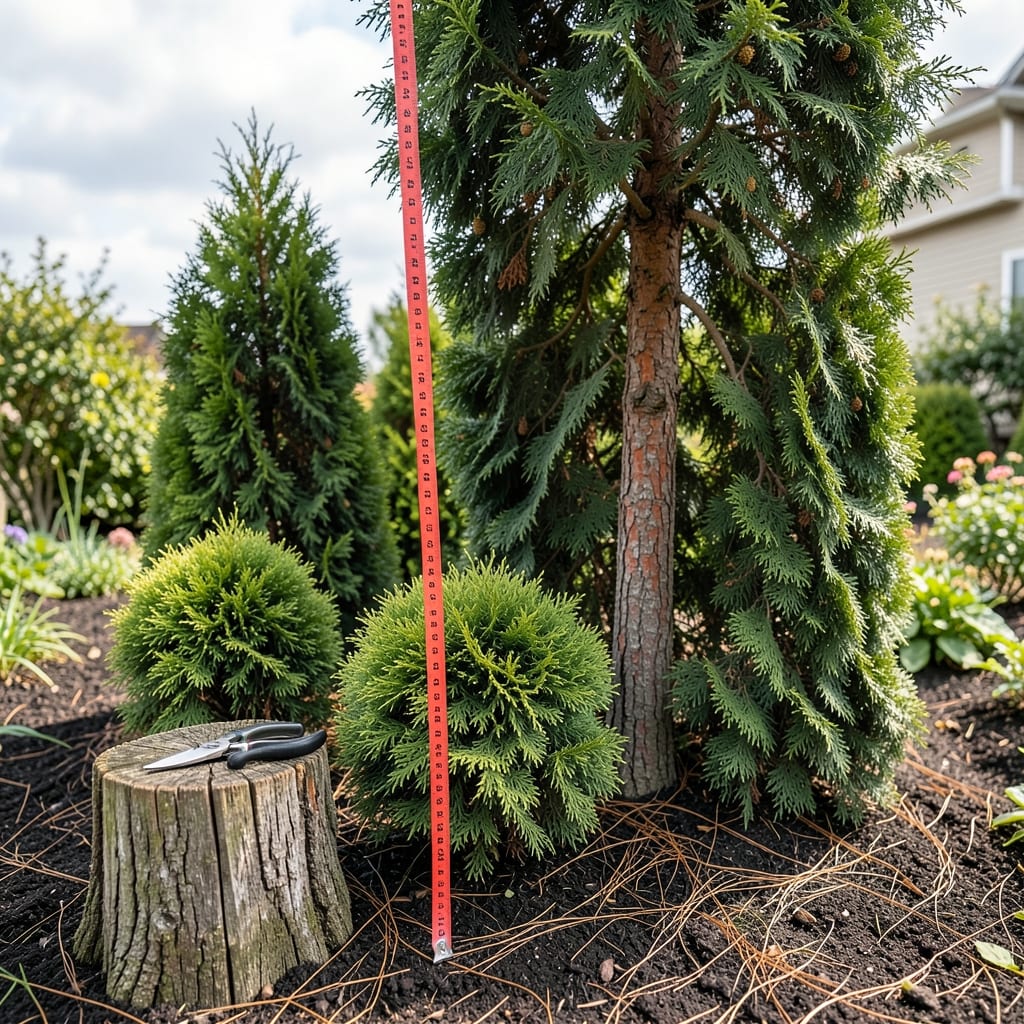
If you’ve ever wondered how tall arborvitae grow—whether they’ll stretch toward the sky like a towering giant or stay neatly contained as a compact hedge—the answer depends entirely on the variety—and how you prune it. Some arborvitae varieties barely reach waist height, while others can dwarf two-story homes, making the difference between a cozy privacy screen and an unruly green monster.
You’re not alone in this question—many gardeners struggle to predict how tall their arborvitae will grow, especially when comparing dwarf cultivars like 'Emerald Green' to towering standards like Thuja plicata. The good news? With the right variety and a little maintenance, you can control their height and shape to fit your space perfectly.
In this guide, I’ll break down the exact mature heights for popular arborvitae types, explain how growth rates vary by climate and care, and share pruning secrets to keep them at your desired size. Whether you’re planting for a low hedge or a sky-high screen, you’ll leave here knowing exactly what to expect—and how to shape it.
Ready to stop guessing and start growing with confidence? Let’s dive into the heights, habits, and pruning tricks that will transform your arborvitae from a wild unknown into your landscape’s star feature.

Arborvitae height by variety: from dwarf to sky-high giants
Arborvitae trees are famous for their versatile heights, ranging from compact hedges to towering privacy giants. The American arborvitae (Thuja occidentalis) and Western redcedar (Thuja plicata) lead this diversity, with some varieties staying under 5 feet while others reach 60 feet—yes, taller than a two-story house! Your choice of cultivar determines whether you’ll need a ladder or just a step stool for maintenance.
Let’s break down the height spectrum so you can pick the perfect arborvitae for your space—whether you want a low-maintenance hedge or a statement evergreen. From dwarf varieties like 'Emerald Green' to standard giants like 'Brabant', here’s what to expect at maturity, plus ideal spacing to avoid overcrowding.
🌲 Pro Tip: Always check the mature height label before buying! A 3-foot hedge planted too close can quickly become a 10-foot wall—and that’s not the privacy screen you bargained for.
| Variety | Mature Height | Growth Rate | Ideal Spacing | Best For |
|---|---|---|---|---|
| 'Emerald Green' | 12–15 ft | 1–2 ft/year | 3–4 ft apart | Hedges, privacy screens |
| 'Teddy' | 3–5 ft | 6–12 in/year | 2–3 ft apart | Borders, containers |
| 'American Arborvitae' | 30–40 ft | 2–3 ft/year | 15–20 ft apart | Specimen trees, windbreaks |
| 'Brabant' | 15–20 ft | 1–2 ft/year | 5–6 ft apart | Screening, foundation plantings |
| 'Western Redcedar' | 40–60 ft | 3–4 ft/year | 20–30 ft apart | Large landscapes, privacy |
| 'Little Giant' | 10–12 ft | 1 ft/year | 3–4 ft apart | Small yards, containers |
Notice how 'Teddy' and 'Little Giant' stay under 12 feet, making them ideal for urban gardens or balcony planters. Meanwhile, the Western redcedar is a forest giant—plant it only if you have ample backyard space and a long-term vision for your landscape.
For hedge lovers, 'Emerald Green' is a classic choice—it grows tight and dense, perfect for year-round privacy. But if you want faster results, 'Green Giant' shoots up 3–5 feet per year and hits 30–50 feet in 10–15 years. That’s privacy in record time—just be ready for the <
How pruning affects arborvitae height: when and how to control growth
Pruning is the secret weapon for controlling arborvitae height—whether you want a neat 6-foot hedge or a towering privacy screen. The key? Timing and technique. Prune at the wrong time, and you’ll encourage vertical growth spikes. Get it right, and you’ll shape your arborvitae into a bushier, denser plant that stays at your desired height. Let’s dive into the pruning calendar and tools that keep your arborvitae from becoming a green skyscraper.
Most arborvitae grow best when pruned in late winter or early spring, just as new growth begins. This timing stops upward energy from fueling height and redirects it to side branches. Avoid pruning in fall, as late-season cuts can stimulate tender new growth that won’t survive winter frost—leaving you with brown, dead tips instead of lush foliage.
✂️ Pro Tip: Use sharp, clean pruners to make precise cuts just above a leaf bud or branch junction. Ragged cuts slow healing and invite pests and disease. For large branches, use loppers or a handsaw—never tear the wood, or you’ll damage the vascular system.
- 🌱 Step 1: Choose the Right Season
Prune in late winter (Feb–March) or early spring (April) to promote bushier growth and limit vertical shoots. - 🪴 Step 2: Assess the Shape
Look for overly tall branches or sparse areas. Focus cuts on new vertical growth to encourage width. - ✂️ Step 3: Make Clean Cuts
Cut just above a leaf bud at a 45-degree angle to prevent water pooling and speed up healing. - 🌿 Step 4: Thin Out, Don’t Just Top
Avoid shearing the top like a hedge—this encourages taller growth. Instead, remove entire branches from the bottom up to open up the center. - 📅 Step 5: Repeat Annually
Light pruning every 1–2 years keeps arborvitae dense and healthy. Over-pruning stresses the plant and can stunt overall growth.
For young arborvitae (under 3 years old), focus on shape and structure—remove competing leader branches to encourage a single strong trunk if you want a tree-like form. For mature trees, prioritize removing dead or crossing branches first, then thin out the interior to improve airflow and reduce disease risk.
If your arborvitae is already too tall, don’t panic—you can gradually reduce height over 2–3 years by cutting back no more than 1/3 of the height per year. This avoids shock and gives the plant time to adapt and regenerate. For extreme height control, consider topping (cutting the top flat), but be warned: this can lead to a bushy, less structured look.
Remember, pruning is an investment in your arborvitae’s long-term health. A little effort now saves you from wrestling with a 40-foot monster later—and keeps your privacy screen looking neat, green, and manageable for decades. 🌲