
Trees
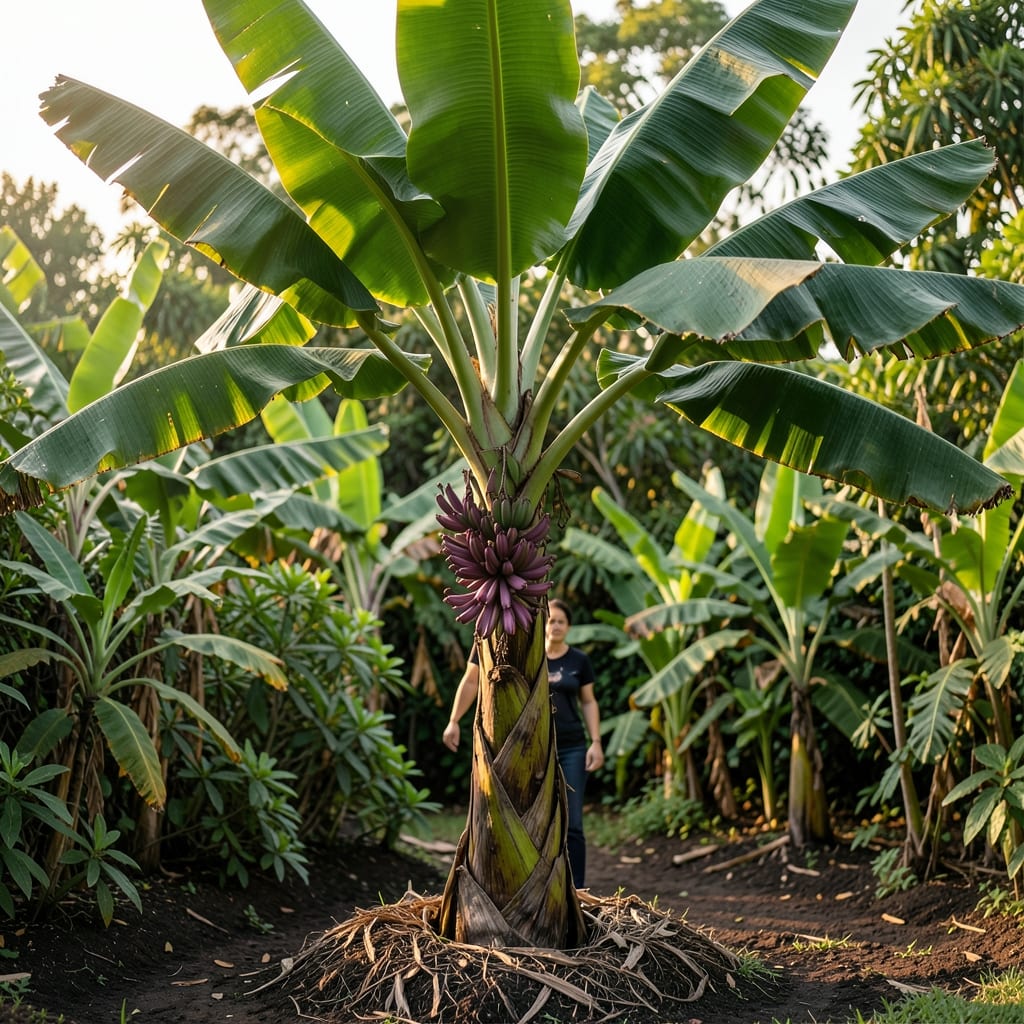
If you’ve ever wondered just how tall your 🍌 banana tree could grow—or whether that towering tropical giant is right for your yard—you’re in the right place. The answer might surprise you: some varieties stretch toward the sky like skyscrapers, while others stay compact enough for even small gardens.
Picture this: a dwarf banana tree sipping cocktails on your patio, or a commercial giant reaching heights that dwarf your two-story house. The difference comes down to the variety, your climate, and a little bit of care. Whether you’re dreaming of a tropical oasis or just want a few bananas to snack on, knowing the height potential helps you plan for success.
I’ve grown banana trees in everything from USDA Zones 10-12 to cozy greenhouses, and I’ll share exactly what to expect—from the 5-foot dwarf that fits in a pot to the 30-foot monsters that need serious space. Let’s break down the heights, the factors that shape them, and how to keep your banana tree happy (and manageable) no matter its size.
Ready to pick the perfect variety for your space? You’ll learn how to choose wisely, troubleshoot stunted growth, and even work with giant trees in small yards. Here’s how to make your banana tree dreams a reality—without sacrificing your sanity (or your backyard).


Banana tree height by variety: from dwarf to giant species
Choosing the right banana tree variety is the first step to controlling its height. Some banana trees grow as tall as a three-story building, while others stay compact enough for container growing on patios. The height difference comes down to genetics—each variety has a built-in growth ceiling. For example, the Dwarf Cavendish, a popular home garden choice, typically reaches 10–15 feet, making it ideal for smaller yards. On the other end of the spectrum, the Gros Michel variety can soar to 25–30 feet, requiring serious space and maintenance.
Understanding these height ranges helps you pick a variety that fits your garden layout and climate zone. If you live in a USDA Zone 10–12, you can grow almost any variety outdoors. But in cooler zones, even dwarf varieties may need container growing or greenhouse protection. The key is matching the plant’s mature height to your available space—whether that’s a backyard corner or a sunny balcony.
Here’s a quick breakdown of the most common banana tree varieties and their typical heights:
| Variety | Height Range | Growth Habit | Best For |
|---|---|---|---|
| Dwarf Cavendish | 10–15 ft | Compact, bushy | Containers, small yards, urban gardens |
| Lady Finger (Dwarf Red) | 12–18 ft | Upright, moderate spread | Patios, tropical landscapes, indoor-outdoor spaces |
| Ice Cream Banana (Dwarf Blue Java) | 10–14 ft | Dense, slow-growing | Containers, cold-hardy zones (with protection) |
| Semi-Dwarf Cavendish | 15–20 ft | Tall but manageable | Medium yards, tropical climates |
| Gros Michel | 25–30 ft | Very tall, fast-growing | Large estates, tropical farms, warm climates |
| Red Dacca | 18–25 ft | Tall, spreading | Landscaping, tropical gardens |
The Dwarf Cavendish and Lady Finger varieties are my top recommendations for beginners. They’re forgiving, produce abundant fruit, and fit well in containers or small gardens. If you’re aiming for a dramatic tropical look, the Red Dacca or Gros Michel will deliver—but be prepared for regular pruning and space management. Even these giants can be tamed with the right techniques, which we’ll cover in the next section.
Height isn’t the only factor to consider. Some varieties, like the Ice Cream Banana, are prized for their sweet, creamy fruit and cold tolerance, making them a great choice for Zone 9 gardens. Others, like the Saba banana, grow to 15–20 feet but produce smaller, starchy fruits perfect for cooking. Always check the fruit type and growth rate when selecting a variety, as these influence both height and yield.
For urban gardeners or those with limited space, I recommend starting with a dwarf variety in a large container. A 5-gallon pot can support a Dwarf Cavendish for 1–2 years before upgrading to a 15-gallon container. This approach lets you enjoy bananas without committing to a permanent garden bed. Just ensure the container has drainage holes and you’re using a well-draining potting mix.
One common mistake is assuming all banana trees grow to 30 feet. In reality, most home gardeners grow dwarf or semi-dwarf varieties, which stay under 20 feet. The Gros Michel and similar giants are rare in home gardens due to their space requirements and aggressive growth. If you’re set on a taller variety, plan for regular pruning to control height and redirect energy into fruit production.
Another pro tip: Banana trees are not true trees—they’re giant herbs! This means they don’t have a woody trunk like an oak or maple. Instead, their "trunk" is made of
Factors that influence how tall your banana tree will grow
Your banana tree’s height isn’t just about the variety you choose—it’s also shaped by environmental factors and your care routine. Even a dwarf variety can grow taller than expected if given ideal conditions, while a giant like the Gros Michel might stay stunted without proper care. The right combination of sunlight, soil quality, and watering habits can push a banana tree to its full potential, while neglect can leave it struggling to reach even half its expected height.
One of the biggest factors is climate and growing zone. Banana trees thrive in USDA Zones 10–12, where they can grow year-round without frost damage. In cooler zones (like Zone 9 or below), even dwarf varieties may only reach 50–70% of their expected height without protection. For example, a Dwarf Cavendish might max out at 8–10 feet in Zone 8 if grown in a greenhouse or container that can be moved indoors during winter.
Here’s how key factors influence your banana tree’s height:
Key Factors Affecting Banana Tree Height
- Sunlight: 6+ hours daily = full height; less than 4 hours = stunted growth
- Soil: Rich, well-draining = faster growth; clay or compacted = slower height gain
- Water: Consistent moisture = taller growth; drought stress = reduced height
- Pruning: Regular trimming = controlled height; no pruning = unchecked growth
- Fertilizer: Balanced NPK = optimal growth; lack of nutrients = stunted height
Sunlight exposure is critical—banana trees need full sun (6+ hours daily) to reach their full height. In shadier conditions, even a Gros Michel might only grow to 15–20 feet instead of its full 25–30 feet. If you’re growing bananas in a container or urban setting, place them near a south-facing window or use grow lights for 12–14 hours daily to compensate.
Another often-overlooked factor is soil quality. Banana trees love well-draining, slightly acidic soil (pH 5.5–7.0). Poor soil—like heavy clay or sandy loam—can stunt growth by 30–50%. Amend your soil with compost or organic matter to improve drainage and nutrient availability. In containers, use a lightweight potting mix with perlite or coconut coir to prevent root rot, which can slow height growth.
Watering habits play a surprising role in height. While banana trees love moisture, overwatering or drought stress can both limit growth. Deep, infrequent watering (1–2 gallons per tree, 2–3 times weekly) encourages strong root development and taller growth. In contrast, shallow watering leads to weak roots and stunted height. Mulching around the base with straw or wood chips helps retain moisture and keeps roots cool, promoting healthier growth.
Finally, pruning and maintenance directly impact height. Banana trees grow from a pseudostem (a cluster of leaf sheaths), and removing old leaves redirects energy to new growth. Regular pruning (removing dead or yellowing leaves) can keep a Gros Michel at a manageable 15–20 feet instead of letting it shoot up to 30 feet. For dwarf varieties, pruning encourages bushier growth and more fruit production. Just avoid over-pruning—leave at least half the leaves to maintain photosynthesis.
One last tip: Fertilizer type and timing matter. Banana trees need a balanced NPK fertilizer (10-10-10 or 8-3-9) with extra potassium for fruiting. Apply fertilizer every 4–6 weeks during growing season (spring through fall) to support rapid height growth. In winter, reduce or stop fertilizing in cold zones to avoid stressing the plant.