
Trees
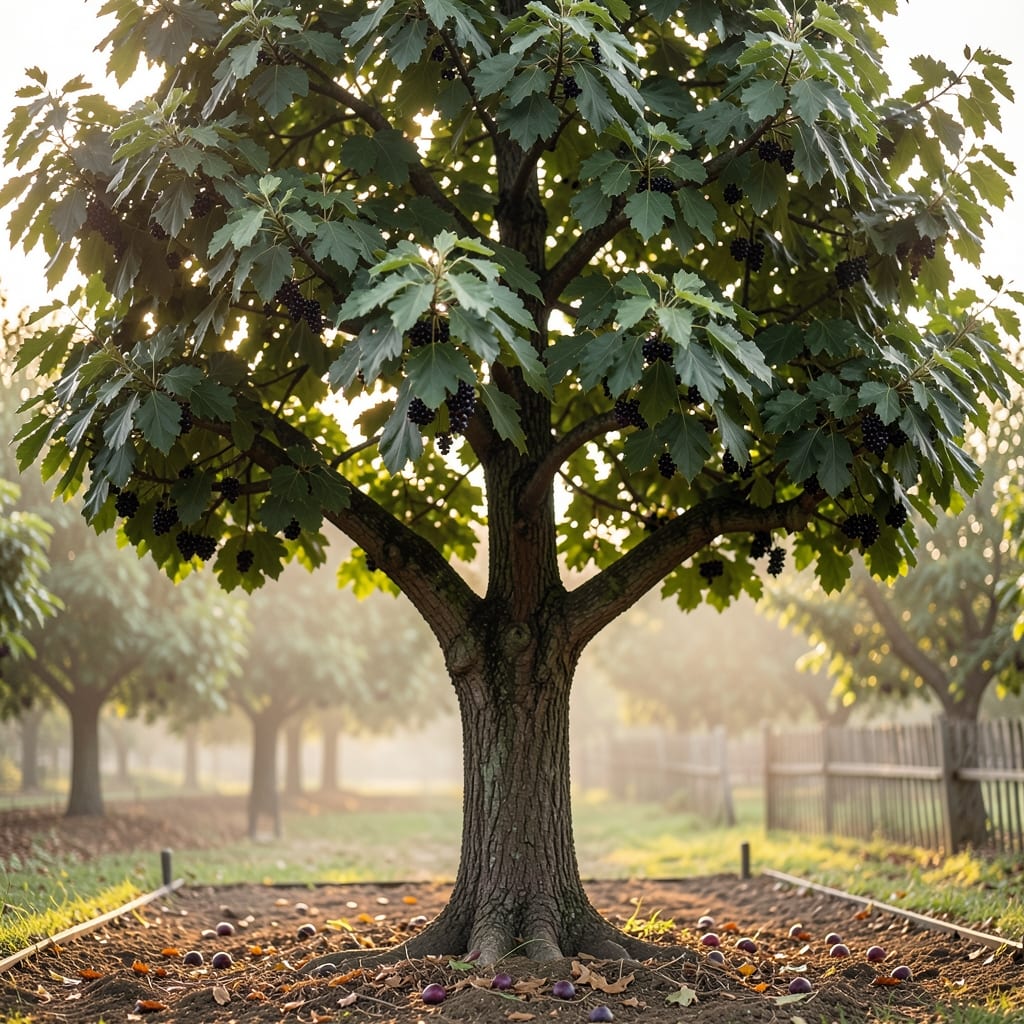
If you're wondering how tall mulberry trees can grow, the answer might surprise you—these fast-growing giants can stretch from waist-high dwarfs to towering 60-foot skyscrapers! Whether you're eyeing a shade tree for your backyard or a compact variety for a small garden, the height potential varies wildly by species and growing conditions.
The Morus nigra (black mulberry) often reaches 40-60 feet at maturity, while the Morus alba (white mulberry) typically stays between 30-50 feet. But here's the twist: with the right pruning techniques, you can keep even the tallest varieties manageable. I'll show you how to control their growth—whether you want a 10-foot ornamental tree or a full-sized fruit-bearing giant.
Growth rates are another game-changer. Mulberry trees can shoot up 3-5 feet per year in ideal conditions, but soil quality, sunlight, and water play huge roles. In USDA Zone 6a, proper planting in spring (April-May) sets the stage for rapid growth, while drought or poor soil can stunt their height. Let's break down the factors that determine just how tall your 🌳 mulberry tree will become.
Ready to plan your perfect mulberry? You'll discover which species fit your space, how to prune for control, and the secrets to maximizing growth. Let's get started!


Mulberry tree height by species: from dwarf varieties to giant trees
Mulberry trees are famous for their dramatic height variations—some stay small enough for city gardens while others become towering giants. The Morus nigra (black mulberry) leads the pack, often reaching 40-60 feet at maturity, while the Morus alba (white mulberry) typically grows 30-50 feet. But don't assume all mulberries are giants—dwarf varieties like 'Illinois Everbearing' max out at just 10-15 feet!
Even within species, growth habits vary. For example, Morus rubra (red mulberry) usually tops out at 40 feet, but its growth rate is slower than its black mulberry cousin. Meanwhile, 'Chaparral' (a white mulberry cultivar) stays compact at 15-20 feet, making it perfect for urban landscapes where space is tight.
🌱
| Species | Mature Height | Growth Rate | Best For |
|---|---|---|---|
| Morus nigra (Black Mulberry) | 40-60 ft | 3-5 ft/year | Large properties, shade trees |
| Morus alba (White Mulberry) | 30-50 ft | 2-4 ft/year | Fruit production, urban areas |
| Morus rubra (Red Mulberry) | 30-40 ft | 2-3 ft/year | Native landscapes, wildlife habitats |
| 'Illinois Everbearing' (Dwarf) | 10-15 ft | 1-2 ft/year | Small gardens, containers |
| 'Chaparral' (White Mulberry) | 15-20 ft | 1.5-2.5 ft/year | Urban yards, low-maintenance |
| 'Purple Leaf' (Ornamental) | 20-30 ft | 2-3 ft/year | Landscaping, color accents |
If you're planting in USDA Zone 6a, expect faster growth during warm springs (April-May). The 'Illinois Everbearing' dwarf variety is my top pick for small spaces—it produces fruit early and stays manageable. For shade lovers, the black mulberry delivers the most dramatic height, but its aggressive roots require careful placement.
Growth rates also depend on soil type. Mulberries thrive in well-draining, slightly acidic soil (pH 6.0-7.0), but they adapt to clay or sandy soils if given extra water. In poor soil conditions, their height can be cut by 30-50%, so amending with compost before planting makes a huge difference.
🌿
One surprising fact: mulberry trees can live for 100+ years, continuing to grow slowly even in maturity. This means a 20-foot tree today could reach 40 feet in 30 years if unpruned. For fruit production, the 'Chaparral' variety is a standout—it balances size and productivity, yielding sweet berries at 15-20 feet tall.
For urban gardeners, consider container-growing dwarf varieties. With proper root pruning, you can keep even standard mulberries under 15 feet for 5+ years before they outgrow their pots. Just ensure containers are at least 24 inches deep and use fast-draining mixes to prevent root rot.
🪴
What determines a mulberry tree’s height: climate, soil, and pruning secrets
Mulberry trees don't grow to their full 40-60 foot potential by accident—their height depends on a mix of climate, soil quality, and sunlight exposure. In USDA Zone 6a, where I garden, mulberries thrive with 6-8 hours of full sun daily, but even then, their growth can vary wildly. For example, a black mulberry in Southern California might hit 60 feet with year-round warmth, while the same tree in New England could max out at 30 feet due to shorter growing seasons.
The soil type plays an even bigger role. Mulberries love well-draining, slightly acidic soil (pH 6.0-7.0), but they'll grow in clay or sandy soils if you amend them with compost and organic matter. I've seen white mulberries in heavy clay soils grow just 20 feet tall because their roots struggle to expand, while the same variety in loamy soil reaches 40 feet. Always test your soil before planting—poor drainage can stunt growth by 40% or more.
🌡️
Key Factors Affecting Mulberry Height
- 🌡️ Climate: Warmer zones = faster growth (up to 5 ft/year)
- 💧 Water: Drought stunts growth by 30-50%; overwatering causes root rot
- 🌱 Soil: Well-draining soil = 2x faster growth than poor soil
- ☀️ Sunlight: 6+ hours of sun = maximum height potential
- ✂️ Pruning: Annual pruning can reduce height by 50% if done aggressively
Water availability is another game-changer. Mulberries are drought-tolerant once established, but young trees need deep watering every 5-7 days during their first year. I once saw a red mulberry sapling in arid conditions grow just 3 feet in two years, while an identical sapling with drip irrigation hit 12 feet. The key is consistent moisture—never let the soil dry out completely, but avoid waterlogged roots.
Pruning isn't just for shaping—it's a height control tool. If you prune a black mulberry aggressively in late winter, you can keep it under 20 feet even when it's naturally a 60-foot giant. I recommend selective pruning to remove 1/3 of the canopy annually, focusing on vertical branches that encourage upward growth. Just time it right—prune in late winter (February-March) before new growth begins.
Even the root system affects height. Mulberries have aggressive, shallow roots that spread widely. In urban settings, I've seen their height reduced by 25% when planted in root-restrictive containers (like 24-inch deep pots). For container growing, use fast-draining mixes with perlite or sand to prevent root-bound stress, which can stunt growth.
🪴
One final secret: grafting can drastically alter height. By grafting a dwarf rootstock (like 'Illinois Everbearing') onto a standard mulberry, you can create a 15-foot tree that would otherwise reach 40 feet. This technique is perfect for small gardens where you want fruit production without the towering height. Just work with a certified nursery—grafting requires precision to avoid disease.