
Vegetables
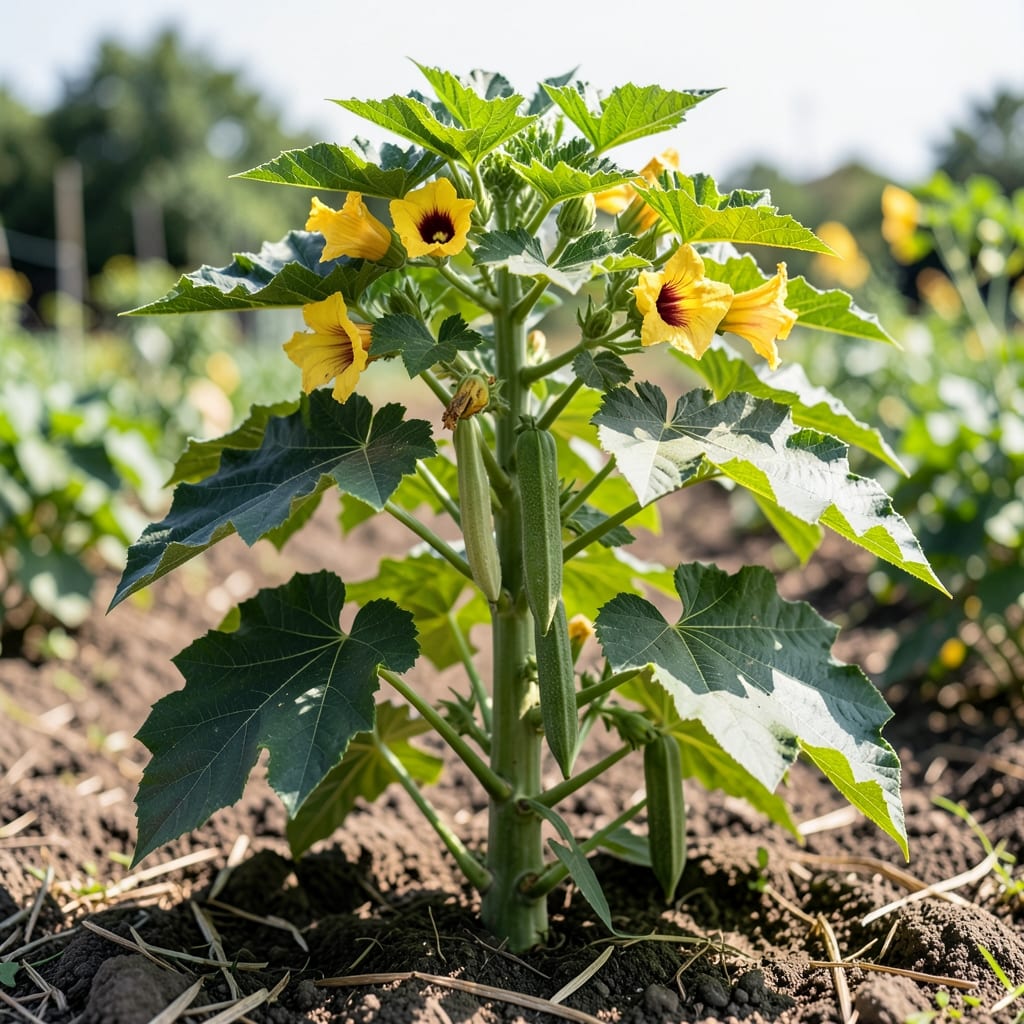
If you’ve ever wondered how tall can okra plants grow, the answer might just change how you plan your garden this year—because these fast-growing 🌱 powerhouses can stretch from waist-high to towering giants, depending on the variety and care you give them.
Picture this: one day you’re planting tiny seeds, and before you know it, your okra is reaching heights that make even your tallest neighbors jealous. Some varieties climb up to 10 feet, while others stay compact at just 3-4 feet, making them perfect for small spaces or containers.
But here’s the catch: without the right support, those 6-foot monsters can topple over, snapping pods and wasting your hard work. The good news? With a few simple trellising tricks, you can harness their vertical growth and keep your harvest thriving all season long.
In this guide, I’ll break down exactly which varieties hit which heights, how to support them like a pro, and when to harvest for the best flavor—so you can grow okra that’s both impressive and productive. Let’s get started!


Okra plant height by variety: from dwarf to giant types
Okra plants are famous for their rapid growth, but did you know their mature height can vary dramatically? Some varieties stay as short as 3 feet, perfect for containers, while others shoot up to 10 feet, requiring serious support. The height you get depends entirely on the variety you choose and how you care for it.
I’ve grown several varieties in my garden, and the differences are night and day. For example, the ‘Emerald’ variety tops out around 4-5 feet, making it ideal for small gardens, while ‘Clemson Spineless’ can easily reach 8-10 feet if left unchecked. Even within the same species, genetics play a huge role in determining how tall your okra will grow.
Here’s the kicker: okra’s height isn’t just about aesthetics—it directly impacts your harvest. Taller varieties produce more pods, but they also need more space and support. If you’re working with limited room, dwarf varieties are a game-changer, while larger varieties reward patience with bigger yields.
Let’s break down the most popular okra varieties by height so you can pick the perfect fit for your garden.
| Variety | Mature Height | Growth Habit | Best For |
|---|---|---|---|
| ‘Emerald’ | 3–4 ft | Compact, bushy | Containers, small gardens |
| ‘Burgundy’ | 4–6 ft | Medium, upright | Balconies, raised beds |
| ‘Clemson Spineless’ | 6–10 ft | Tall, vigorous | Large gardens, trellises |
| ‘Jumbo Green’ | 5–8 ft | Semi-dwarf, sprawling | Backyard plots, warm climates |
| ‘Arkansas Little Light’ | 3–5 ft | Dwarf, bushy | Small spaces, urban gardens |
If you’re growing okra in containers, stick to dwarf varieties like ‘Emerald’ or ‘Arkansas Little Light’. These stay under 4 feet and thrive in 5-gallon buckets with proper drainage. For larger gardens, taller varieties like ‘Clemson Spineless’ are worth the space—they produce pods for weeks longer than shorter types.
One thing I’ve learned? Okra’s height isn’t set in stone. With the right care—like pruning and support—you can influence how tall your plants grow. For example, pinching back the top growth can encourage bushier, shorter plants, while leaving them be lets them stretch to their full potential.
Now, here’s a pro tip: if you’re growing okra in warmer climates, like zones 8-10, expect even taller growth. Heat accelerates their vertical expansion, so plan for extra support if you’re in a southern garden. In cooler regions, like zones 6-7, growth slows slightly, but you can still hit those 6-8 foot marks with the right variety.
Ready to pick your perfect okra? Choose based on your space, climate, and how much you’re willing to invest in support. And remember: the taller the plant, the bigger the harvest—just make sure it doesn’t topple over! 🌿
How to support tall okra plants: trellising and staking techniques
Tall okra plants can reach 8-10 feet, but without proper support, they’ll flop over like overgrown weeds, snapping pods and wasting your harvest. I’ve seen firsthand how a 6-foot okra plant can topple in a single storm if it’s not secured—so don’t skip this step! The key is to provide support early, before the plants get too heavy.
Most gardeners use one of three methods: trellises, stakes, or cages. I prefer DIY trellises made from bamboo stakes and twine because they’re cheap, sturdy, and blend into the garden. For smaller varieties, 5-foot bamboo stakes work perfectly, while taller types need 8-foot metal cages or wooden lattice frames.
Here’s the step-by-step process I follow to keep my okra upright and productive:
- Install supports at planting time—don’t wait until the plants are already top-heavy.
- Use 3-4 stakes per plant for tall varieties, spaced evenly around the base.
- Tie stems to supports with soft garden twine or old t-shirts (avoid wire—it can cut the stems).
- For trellises, weave horizontal strings every 12 inches to guide vertical growth.
- Prune side shoots to encourage upward growth if your plant starts sprawling.
One mistake I see often? Using metal cages that are too small. A 5-foot cage won’t hold a 9-foot okra plant—it’ll just bend and break. Instead, opt for 6-foot cages or build a wooden trellis with 2x4s for heavy varieties like ‘Clemson Spineless’.
If you’re growing okra in containers, skip the trellis and use individual stakes instead. The roots won’t anchor as well in pots, so extra support is critical. I’ve had 4-foot ‘Emerald’ plants tip over in windy conditions—even dwarf varieties need help when potted!
Pro tip: Mulch around the base of your supported okra to keep the soil moist and stable. Dry soil weakens stems, making them more prone to snapping. And if you notice pods hanging too low, gently weave them onto the trellis strings to keep them off the ground and reduce pest risks.
With the right support, your okra won’t just stand tall—it’ll thrive and produce pods for weeks longer than unsupported plants. Just remember: the taller the variety, the stronger the support system needs to be! 🌿