
Trees
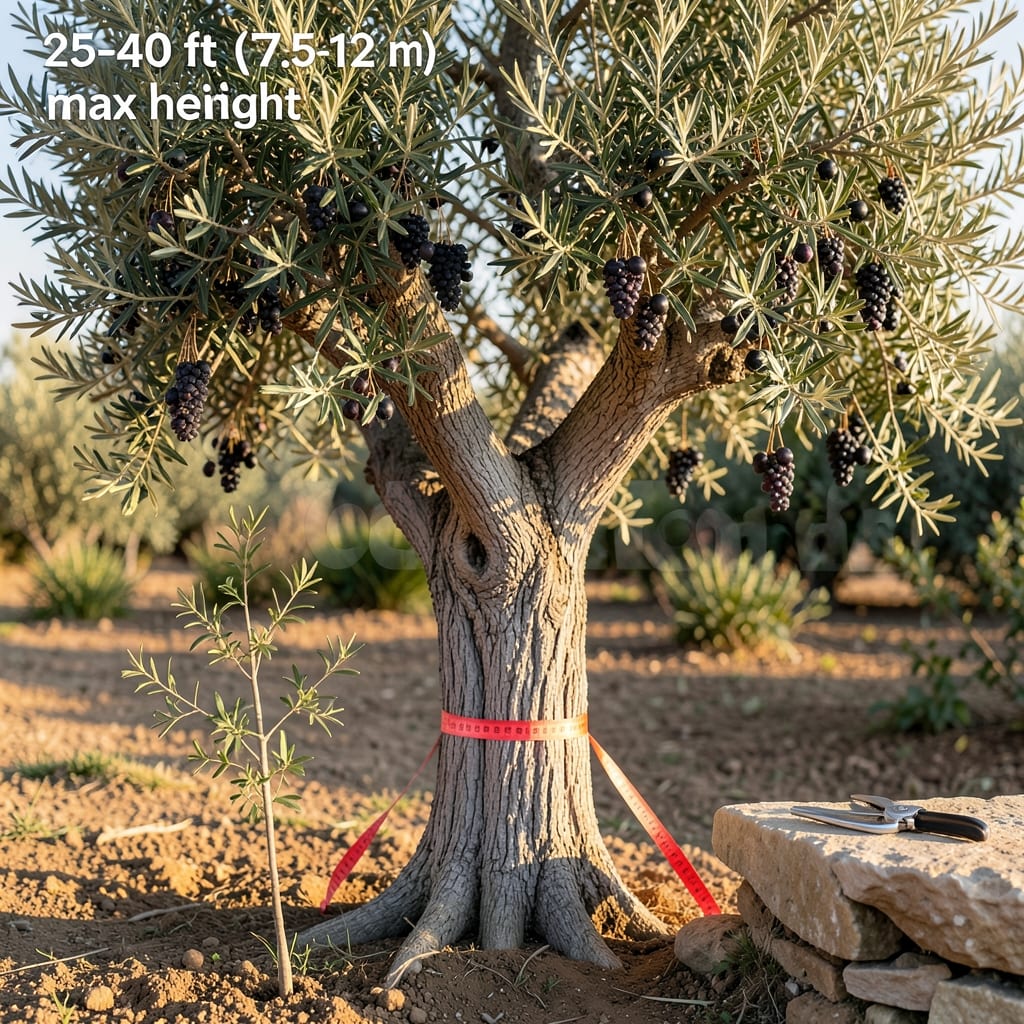
If you’ve ever wondered how tall can olive trees grow, you’re not alone. The height of olive trees can vary wildly—from compact dwarf varieties that fit perfectly on a patio to towering giants that need acres of space. For home gardeners, understanding these differences is the key to choosing the right tree for your landscape.
With the right variety, you can enjoy the beauty and benefits of an olive tree—🫒—without sacrificing precious garden space. Some types mature at just 6 to 12 feet, making them ideal for small yards or even large containers, while others can soar to 40 feet or more in ideal Mediterranean climates. The good news? Pruning and care play a huge role in controlling growth, so you have more options than you might think.
Whether you're planning a cozy backyard grove or a single statement tree, knowing how tall your olive tree can grow helps you make the best choice. I'll break down the most popular varieties, their mature heights, and how to keep them at your desired size—so you can enjoy fresh olives and lush foliage without the worry.
Ready to find the perfect olive tree for your space? Let’s explore the options and discover how easy it is to grow one that fits your needs—no matter how big or small your yard may be.


Olive tree height by variety: from dwarf to giant sizes
Olive trees (Olea europaea) are incredibly versatile, with heights ranging from compact patio dwarfs to towering landscape giants. The variety you choose determines whether your tree will stay under 10 feet or stretch toward the sky at 40+ feet. Understanding these differences helps you pick the perfect olive tree for your space—whether it's a small urban balcony or a sprawling rural estate.
Standard olive trees, like the classic Manzanillo or Mission, can reach 20-50 feet when grown in ideal Mediterranean climates. These giants need plenty of space and regular pruning to manage their size. On the other hand, dwarf varieties like 'Little Ollie' or 'Arbequina' stay between 6-12 feet, making them perfect for containers, small yards, or even indoor growing with sufficient light.
🌱 Fun fact: Some olive trees, like the Arbequina, grow slower but produce higher-quality olives for oil, while faster-growing varieties like Frantoio may yield more fruit but require more space.
| Variety | Mature Height (ft) | Growth Rate | Best For |
|---|---|---|---|
| Little Ollie | 6-10 ft | Slow to moderate | Containers, small yards, urban patios |
| Arbequina | 8-12 ft | Moderate | Oil production, small spaces, Mediterranean climates |
| Frantoio | 20-30 ft | Fast | Large landscapes, high fruit yield |
| Manzanillo | 25-40 ft | Moderate to fast | Traditional orchards, dual-purpose (oil/table olives) |
| Mission | 30-50 ft | Fast | Large estates, table olives, warm climates |
| Leccino | 20-35 ft | Moderate | Oil production, Mediterranean regions |
| Sorrento | 15-25 ft | Slow to moderate | Small orchards, dual-purpose varieties |
🌿 Note: Heights vary based on pruning, soil, and climate. Container-grown trees stay 20-30% shorter than in-ground varieties.
If you're growing olive trees in containers, expect heights to be 20-30% shorter than their in-ground counterparts. For example, a Mission olive tree in a large pot might max out at 25-30 feet instead of its full 50-foot potential. Container-growing also slows growth rates, giving you more control over size but requiring regular repotting as the tree matures.
For fastest growth, prioritize well-draining soil, full sun exposure, and minimal pruning in the early years. Olive trees planted in USDA zones 8-10 (their ideal range) will grow 2-4 feet per year in their first decade, while those in cooler zones (6-7) may grow more slowly due to seasonal dormancy. In zone 10, some varieties like Mission can grow 3-5 feet per year under perfect conditions.
💡 Pro tip: If you want a taller olive tree for shade or aesthetics, avoid heavy pruning. If you prefer a compact, manageable size, prune annually in late winter to shape the tree and control height. Just remember—over-pruning reduces fruit production, so balance form and function based on your goals.
Some gardeners make the mistake of assuming all olive trees grow into giants. In reality, dwarf varieties like 'Little Ollie' are bred specifically for small spaces and can thrive in 5-gallon containers for decades. These varieties also produce smaller olives, which are perfect for homemade oil or gourmet table olives but may not yield as much as larger trees.
When choosing a variety, consider your climate and intended use. For example, Arbequina olives are prized for their high oil content and work well in small gardens, while Mission olives are larger and better suited for commercial table olive production in warm climates. If you live in zone 9 or higher, you can grow nearly any variety successfully, but cooler climates may limit your options to hardier types like Frantoio or Leccino.
🌳 Visualize it: A 20-foot olive tree (like a mature Frantoio) provides ample shade for a patio, while a 10-foot dwarf fits neatly in a large planter on a balcony. Measure your space before buying—some varieties can double in height within a decade if left unpruned!
For those with limited space, consider espalier training, a technique where you grow olive trees flat against a wall or fence. This method can keep even standard varieties under 10 feet while maximizing fruit production in small areas. It’s a fantastic way to enjoy olives without sacrificing yard space.
How to control olive tree height: pruning and care tips
Pruning is the most effective way to control olive tree height and shape. Unlike many trees, olive trees respond well to structured pruning, allowing you to keep them at 6 feet or let them grow to 40 feet—it’s all about timing and technique. The key is to prune at the right time of year and use the right tools for clean cuts that heal quickly.
For dwarf varieties like 'Little Ollie' or 'Arbequina', I recommend light pruning annually in late winter (February-March) to encourage bushier growth. Remove 1/3 of new growth each year to maintain compact size. Avoid heavy pruning in the first 3 years, as this can stunt root development and reduce fruit production later.
If you're growing a standard variety like 'Mission' or 'Manzanillo', you’ll need a more structured approach. Start by establishing a central leader (main vertical stem) and 3-4 main branches in the first year. This framework prevents uncontrolled height growth while allowing the tree to develop a strong structure. Use hand pruners for small branches and a pruning saw for thicker stems.
For container-grown olive trees, pruning becomes even more critical. Since root space is limited, the tree focuses its energy on vertical growth. To keep a container olive tree under 10 feet, prune the top 1/3 of new growth every spring. This technique, called tip pruning, encourages lateral branching and a fuller, bushier shape—perfect for small spaces.
💡 Pro tip: Always sterilize your pruning tools with rubbing alcohol before and after use. Olive trees are prone to bacterial canker, a serious disease spread through contaminated tools. Clean cuts heal faster and reduce the risk of infection, keeping your tree healthy and productive.
One common mistake I see is over-pruning to control height. While it might seem logical to cut back heavily, this can reduce olive production by up to 50% in the first year. Instead, focus on selective pruning—removing only water sprouts (shoots growing straight up) and crossing branches that compete for sunlight. This maintains height while preserving fruit yield.
For espaliered olive trees, prune differently to keep them flat against a wall or fence. Train the tree along a horizontal wire framework and prune to encourage horizontal branches. This method can keep even standard varieties under 8 feet while maximizing fruit exposure to sunlight. It’s a fantastic solution for urban gardens with limited vertical space.
🌳 Visualize your goal: A 10-foot olive tree in a large pot on your patio provides shade and beauty without overwhelming your space. A 25-foot tree in your backyard offers ample shade for outdoor dining. Measure your space and prune accordingly—your olive tree’s height is entirely in your hands!