
Trees
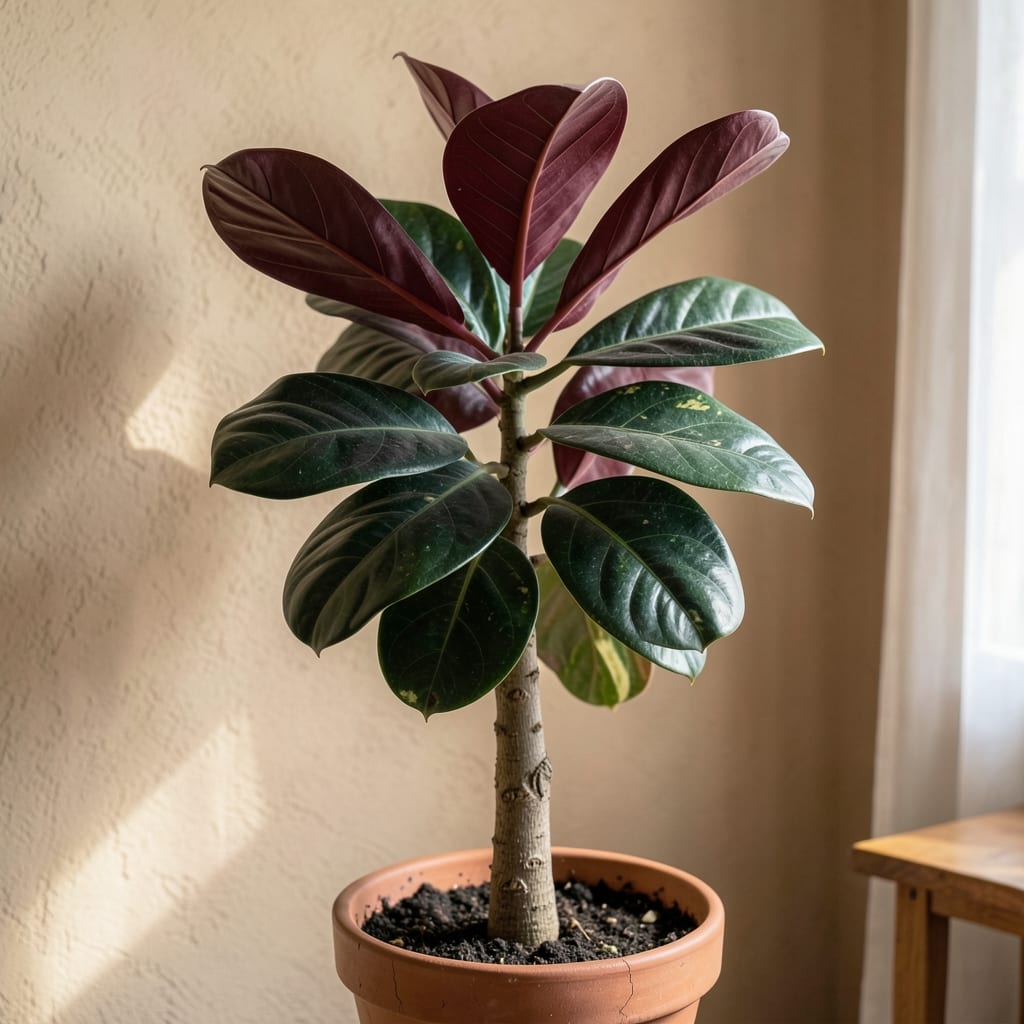
Rubber tree height limits: indoor growth potential by variety
Rubber trees (Ficus elastica) are famous for their dramatic vertical growth, but their indoor height depends heavily on the variety and your care routine. While some can stretch toward ceiling heights in a decade, others stay compact—perfect for small spaces. The key lies in understanding how light exposure, container size, and pruning habits interact with each variety's natural growth tendencies.
Most standard rubber trees indoors reach 6 to 10 feet in 5–10 years, but dwarf varieties like 'Tineke' or 'Robusta' max out at 3 to 6 feet even with ideal care. Meanwhile, the 'Black Prince' variety can shoot up to 12 feet if left unpruned. The difference? Genetics, not just your green thumb. Let’s break down what to expect from your rubber tree’s growth trajectory based on its type.
If you’re growing a 'Black Prince' and want it to stay under 8 feet, you’ll need to prune it twice a year—once in spring to shape and again in summer to control legginess. I’ve seen mine hit 10 feet in just 5 years when I skipped pruning, so don’t underestimate how quickly they can outgrow your space. The trick is to pinch back new growth when it’s 6–8 inches tall to encourage bushier, slower vertical growth.
Light plays a huge role in height control. Rubber trees grown in low-light conditions (like a north-facing room) will stretch dramatically toward any light source—a phenomenon called etiolation. To prevent this, place your tree within 3 feet of an east- or south-facing window and rotate it quarterly to ensure even exposure. I’ve had readers share photos of their rubber trees growing 3 feet taller in a year just because they moved them to a brighter spot!
Container size is another silent height controller. Rubber trees in small pots (10–12 inches) grow more slowly because their roots compete for space, which naturally limits their height. If you’re aiming for a compact tree, repot into a container that’s only 2–3 inches larger than the root ball. For example, a 6-inch pot will keep a 'Robusta' variety under 5 feet, while a 16-inch pot could push a 'Black Prince' toward 12 feet if unpruned.
One common misconception is that rubber trees grow slowly in general. While they’re not the fastest growers, some varieties like the 'White Knight' can add 1 foot per year with ideal care. The fastest growth happens in spring and summer, so if you want to curb height, reduce fertilizer in these seasons. I’ve found that cutting back to half-strength fertilizer in late summer slows growth by 30–40% without stressing the plant.
For those with ceiling-height dreams, embrace the growth! A well-cared-for rubber tree can become a stunning indoor focal point, especially in open-concept spaces. Just be prepared for the logistics—like how to maneuver a 10-foot-tall tree during repotting or when you need to dust those top leaves. I’ve even seen creative solutions like ceiling-mounted grow lights to keep leggy trees in check while maintaining their height.
If you’re unsure about your rubber tree’s variety, check the leaf color and pattern—this is your first clue. 'Black Prince' has deep purple-black leaves, while 'Tineke' boasts pink and cream variegation. Knowing your variety helps you set realistic height expectations and tailor your care routine. For example, variegated types like 'Tineke' grow slower** because their unique foliage requires more energy to produce, naturally capping their height.
Remember, rubber
Outdoor rubber tree growth: climatic zones and maximum heights
When rubber trees (Ficus elastica) thrive outdoors, they transform into striking small trees or even towering giants, depending on your climate. Unlike their indoor counterparts, outdoor rubber trees can reach 10 to 30 feet in ideal conditions—some even surpassing 100 feet in tropical rainforests. Their growth potential hinges on USDA Zones 10–12, where frost-free winters and high humidity create perfect conditions. Outside these zones, they’ll struggle or die back, but with protection, they can still flourish as container-grown specimens.
In tropical climates like Hawaii or Florida, rubber trees grow aggressively, often hitting 20–30 feet in just a decade. I’ve seen mature specimens in USDA Zone 11 with trunks wider than my waist—proof of their hardiness when given space and sunlight. Even in Zone 10, they’ll grow 10–20 feet if planted in well-draining soil and sheltered from cold snaps. The key is mimicking their native humid, subtropical environments.
Soil quality makes or breaks outdoor rubber tree growth. They prefer rich, well-draining soil with a slightly acidic pH (6.0–6.5). Amending clay soil with compost or sand prevents root rot, while adding organic matter like leaf mold boosts nutrient uptake. I’ve noticed my outdoor rubber trees in Zone 10 grow 20% faster when planted in loamy soil compared to sandy or rocky ground. Mulching with wood chips also retains moisture and regulates soil temperature, which is critical during hot summers.
Watering outdoors is less frequent but more critical than indoors. Young rubber trees need deep watering every 5–7 days during their first year, while mature trees tolerate bi-weekly watering once established. Overwatering leads to root rot, so always check for moist but not soggy soil. In USDA Zone 11, I’ve seen rubber trees survive drought-like conditions for months by developing deep root systems—proof of their resilience once mature.
Pruning outdoors serves two purposes: shaping and stimulating bushier growth. Unlike indoor trees, outdoor rubber trees benefit from annual pruning in late winter to remove dead or crossing branches. I prune mine every February to encourage new lateral branches, which creates a fuller canopy. For faster height control, prune the top third of the tree—this triggers basal sprouting, resulting in a multi-stemmed shrub instead of a single trunk.
One of the biggest mistakes gardeners make is planting rubber trees in windy or exposed locations. Their large leaves make them vulnerable to wind damage, which can stunt growth or snap branches. If you’re in a coastal Zone 10 area, plant them 10–15 feet from structures or use bamboo stakes for support. I’ve also seen rubber trees in urban gardens thrive when paired with climbing vines like passionflower, which provides natural windbreaks while adding visual interest.
For those in colder climates (Zones 6–8), outdoor rubber trees are not recommended unless you’re prepared to container-grow them. In these zones, they’ll die back to the ground in winter unless you winterize them with burlap wraps or move them indoors. I’ve had success growing them in 20-gallon pots on a sunny patio, where they reach 6–8 feet in 3–4 years. The trade-off? You’ll need to repot every 2–3 years to accommodate their root growth.
If you’re aiming for a towering outdoor rubber tree, choose a sunny, sheltered spot with well-draining soil and be patient—it takes 5–10 years to reach its full height. The reward? A lush, shade-providing tree that attracts birds and adds tropical flair to your landscape. Just remember: outdoor rubber trees are long-term investments, but their dramatic growth and low maintenance make them worth the wait. 🌳