
Trees
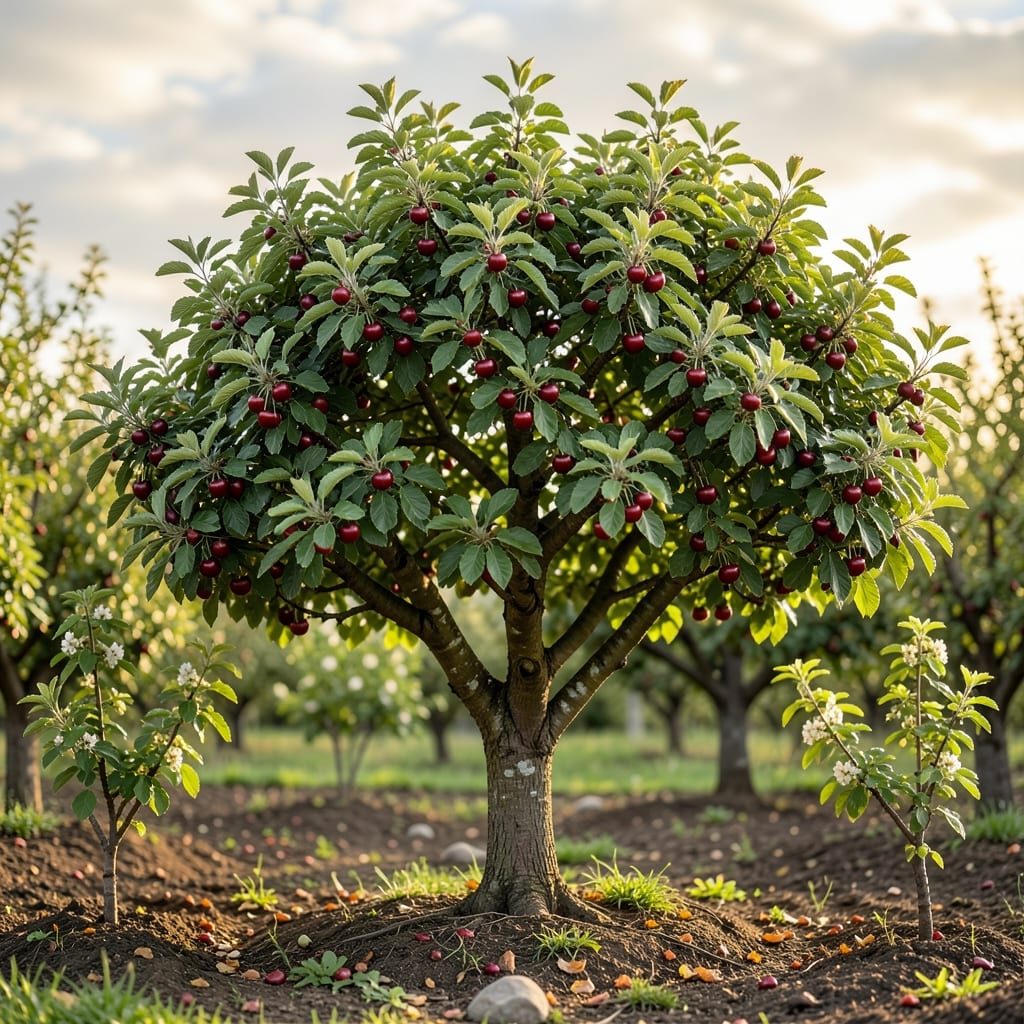
Ever wondered how tall your 🍒 cherry tree could grow—or how to control its height if space is limited? The answer depends more on the variety you choose than you might think, with some reaching skyscraper heights while others stay perfectly manageable for small yards.
If you're planning to plant one this spring in USDA Zone 6a, knowing the right size matters for everything from fruit picking to pruning. A standard cherry tree can soar to 40 feet, while dwarf varieties stay under 12 feet, making them ideal for containers or tight spaces.
But here's the game-changer: pruning techniques can adjust growth by 30-50%, giving you control over whether your tree becomes a towering centerpiece or a compact backyard gem. Let's break down the exact heights by variety and how to shape your tree for success.
Whether you're dreaming of a 10-foot patio tree or a 30-foot shade provider, this guide will help you pick the perfect size—and keep it thriving for years of sweet harvests.


Cherry tree height by variety: dwarf to giant sizes explained
When choosing a cherry tree for your garden, height isn’t just about aesthetics—it determines your harvesting ease, pruning needs, and even whether it fits in your yard. Standard varieties can reach 40 feet tall, while dwarf types stay under 12 feet, making them perfect for containers or small spaces.
The height of your cherry tree depends on three key factors: its genetic variety, growing conditions, and pruning habits. For example, a 'Bing' sweet cherry will naturally grow taller than a 'Stella' dwarf cherry, even with identical care. Let’s break down the exact mature heights by category so you can plan accordingly.
🌱
| Variety Type | Mature Height | Spacing Needs | Best For |
|---|---|---|---|
| Dwarf Cherries | 8-12 ft | 6-8 ft apart | Containers, patios, small yards |
| Semi-Dwarf Cherries | 12-18 ft | 10-12 ft apart | Backyard gardens, urban landscapes |
| Standard Sweet Cherries | 20-30 ft | 15-20 ft apart | Large properties, orchards |
| Standard Sour Cherries | 25-40 ft | 20-25 ft apart | Rural areas, large estates |
| Ornamental Cherries | 15-25 ft | 10-15 ft apart | Landscape focal points, spring blooms |
Note: Heights are approximate and can vary based on soil quality, sunlight exposure, and pruning practices.
If you’re planting in USDA Zone 6a, where winters can be harsh, choose varieties bred for cold tolerance—like 'Montmorency' sour cherries or 'Stella' sweet cherries—to ensure healthy growth despite size constraints.
For small gardens, dwarf varieties like 'Compact Stella' or 'Black Tartarian' are game-changers. They produce full-sized fruit but stay under 10 feet, making them ideal for container growing or tight spaces. Just ensure they get 6-8 hours of sun daily for optimal fruit set.
On the other hand, if you’re aiming for a shade tree or orchard-style planting, standard varieties like 'Rainier' or 'Lambert' will give you that 30-40 foot height—but be prepared for regular pruning to manage branches and ensure safety around structures.
🌳
One common misconception is that sour cherries (like 'Montmorency') grow taller than sweet cherries. While they can reach 40 feet, their spreading habit often makes them feel larger in the landscape. Sweet cherries, like 'Bing', tend to have a more upright growth pattern, which can be easier to manage in smaller yards.
Pro tip: Always check the mature height on the nursery tag or plant description. Some "dwarf" varieties are actually semi-dwarf and may grow taller than expected. For example, 'Compact Stella' stays under 10 feet, while 'Stella' can reach 12 feet—a critical difference for tight spaces.
🪴
Finally, remember that pruning can adjust a tree’s height by up to 50% over time. If you start with a 15-foot semi-dwarf but want it shorter, aggressive pruning in early years can keep it under 10 feet. We’ll cover pruning techniques in detail in the next section, but for now, plan your spacing based on the unpruned mature height listed above.
Now that you know the height ranges, let’s explore how to control cherry tree growth through pruning—because even the tallest tree can be tamed with the right techniques!
How pruning affects cherry tree height: step-by-step control techniques
Pruning isn’t just about shaping your 🍒 cherry tree—it’s the secret weapon for controlling its height. With the right cuts, you can keep a 20-foot giant at a manageable 10 feet or encourage a dwarf variety to reach its full potential. The key lies in timing, technique, and knowing which branches to target.
Start with structural pruning in late winter or early spring before buds swell. This removes dead, crossing, or weak branches while the tree is dormant, preventing disease spread. For height control, focus on the central leader—the main upward-growing branch—by cutting it back by 1/3 each year.
🌱
Cut back winter or early spring to shape growth before new shoots form. Avoid pruning after June to prevent late-season growth that won’t harden off before winter.
Remove 10-20% of branches annually to improve airflow. Focus on suckers at the base and vertical shoots growing inward.
Cut 1/3 off tall branches to redirect energy to lateral growth. Make cuts just above a bud facing outward for best results.
Never remove more than 25% of foliage in one season. Over-pruning stresses the tree and reduces fruit production.
Remove dead wood anytime and water sprouts (fast-growing vertical shoots) to maintain shape.
For dwarf varieties, prune lightly to encourage bushier growth. In contrast, standard trees benefit from aggressive pruning to control their towering height. Always use sterilized tools to prevent bacterial canker, a common cherry tree disease.
Timing is everything: Late winter pruning promotes strong spring growth, while summer pruning can stimulate new shoots that may not survive winter. Avoid heavy pruning in fall, as it leaves wounds vulnerable to disease.
Pro tip: If your tree is already too tall, gradual reduction is safer than drastic cuts. Over time, you’ll train it to stay at your desired height—whether that’s a 6-foot patio tree or a 15-foot shade provider. 🪴