
Vegetables
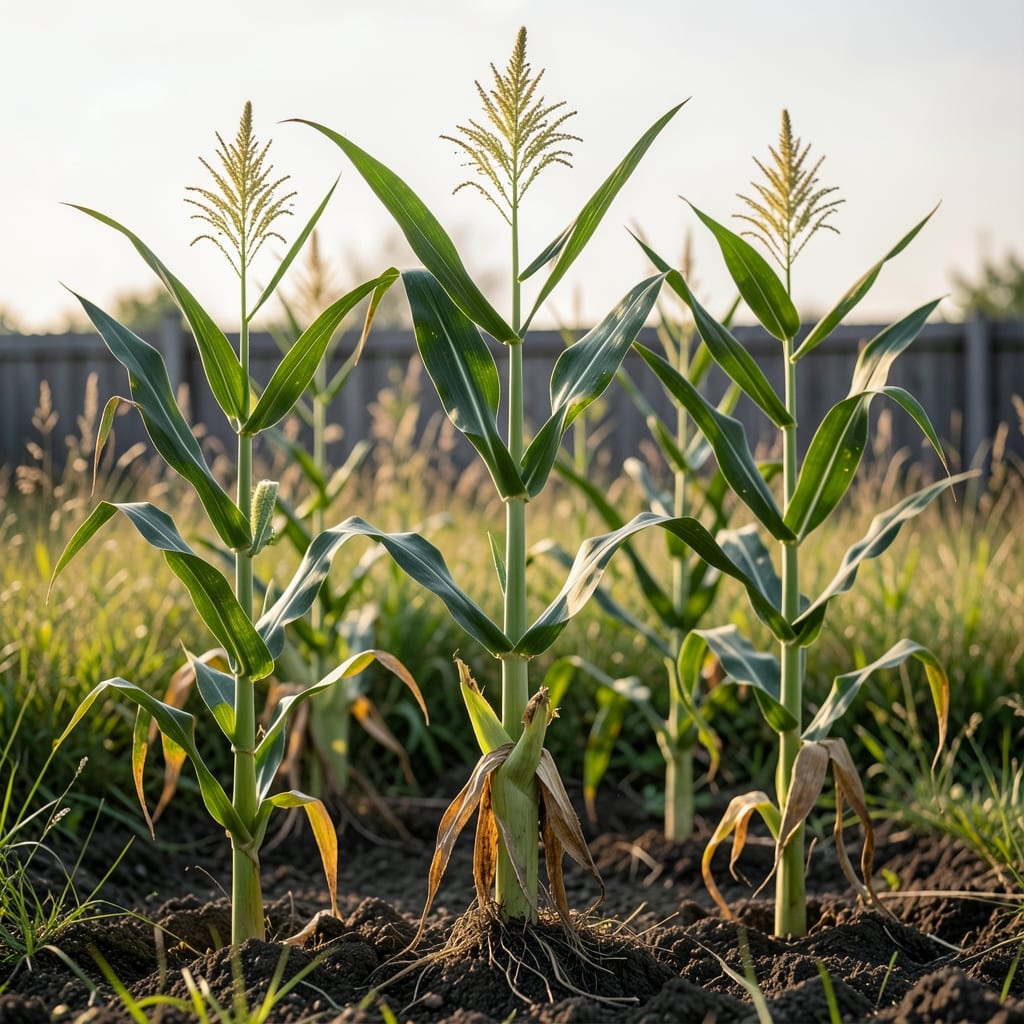
Want to know how tall corn grow in your garden? The answer might surprise you—some varieties stretch toward the sky like nature’s skyscrapers, while others stay compact enough for small spaces. Whether you’re dreaming of ears towering over your fence or just need a manageable 🌽 patch, the right variety and care make all the difference.
Picture this: a 12-foot corn stalk reaching for the clouds or a neat 4-foot dwarf variety perfect for containers. The height of your corn depends on genetics, sunlight, soil, and even how much you water it. I’ll break down the key factors so you can choose the perfect type for your space and climate—no guesswork needed.
From sweet corn that stays waist-high to field corn that rivals a basketball hoop, each variety has its own growth story. You’ll also learn how to give your plants the best shot at reaching their potential (or keeping them in check if space is tight). Let’s dig into the secrets of corn height—so you can grow the perfect stalk for your garden.
Ready to turn your plot into a corn tower—or a neat little patch? Stick around, and I’ll share the exact steps to maximize (or manage) height, plus troubleshooting tips for when things don’t grow as expected. Your tallest (or shortest) corn yet awaits!

Corn height by variety: from dwarf to giant varieties explained
If you've ever planted corn and been surprised by how tall (or short) your stalks grew, the variety you choose is the biggest factor. Corn heights range dramatically—from dwarf varieties barely reaching your knees to giant field corn that could block your view of the neighbor's fence. Let's break down the most common types and their mature heights so you can pick the perfect one for your garden space and goals.
Most gardeners grow sweet corn, which typically matures between 5 and 10 feet tall. However, within this category, you'll find dwarf varieties (3-5 feet) designed for containers or small spaces, and standard varieties (8-12 feet) that need plenty of room. Field corn, often grown for animal feed or ethanol, can reach even more impressive heights—some varieties surpassing 12 feet in ideal conditions.
Here's the key: genetics determine height more than anything else. Even with perfect care, a dwarf variety like 'Tom Thumb' won't grow taller than 4 feet, while a standard variety like 'Country Gentleman' will reliably hit 10 feet. The good news? You can control height to some degree by choosing the right variety for your garden's layout and your personal preferences.
For example, if you're growing corn in containers or raised beds, dwarf varieties save space while still producing sweet, tender ears. Meanwhile, if you have a large backyard and want that classic "cornfield" experience, standard or tall varieties deliver the dramatic height and lush foliage you're looking for.
| Variety Type | Popular Examples | Mature Height | Best For |
|---|---|---|---|
| Dwarf Sweet Corn | 'Tom Thumb', 'Golden Bantam' | 3-5 feet | Containers, small gardens, kids' gardens |
| Semi-Dwarf Sweet Corn | 'Silver Queen', 'Peaches and Cream' | 5-7 feet | Home gardens, backyard plots |
| Standard Sweet Corn | 'Country Gentleman', 'Golden Cross Bantam' | 8-12 feet | Large gardens, traditional cornfields |
| Field Corn | 'Mira', 'Pioneer Brand' | 10-14 feet | Animal feed, ethanol production, large-scale farming |
| Super-Tall Hybrids | 'Illini Chief', 'Golden Jubilee' | 12-16 feet | Specialty gardens, dramatic visual impact |
I always recommend checking seed packets for exact height expectations, as even within categories there can be variation. For instance, while 'Silver Queen' is generally considered a semi-dwarf at 5-7 feet, some gardeners report heights up to 8 feet in perfect conditions. The same goes for super-tall varieties—while they're bred to reach incredible heights, factors like soil quality and sunlight can push them even taller.
One variety that often surprises gardeners is 'Peaches and Cream', which is technically a semi-dwarf but can stretch toward 8 feet if given ideal growing conditions. This is why I always suggest planting a few extra seeds when trying a new variety—you might end up with a few extra-tall stalks that make your garden the talk of the neighborhood!
If you're growing corn for ornamental purposes or just love the dramatic look of a cornfield, consider field corn varieties. These aren't edible like sweet corn, but their towering stalks (often 12 feet or more) create stunning visual impact. They also provide excellent wildlife habitat, attracting birds and other creatures to your garden as the stalks dry out in fall.
For urban gardeners or those with limited space, dwarf varieties are a game-changer. They produce sweet, tender ears on compact plants that fit perfectly in 5-gallon containers or small raised beds. Plus, their shorter stature makes harvesting easier—no need to bend over as much! Just be sure to choose a variety specifically labeled as "dwarf" or "bush-type" to avoid disappointment.
No matter which variety you choose, remember that height isn't everything. The most important factor is selecting a variety that matures quickly enough for your growing season. A tall variety that takes 120 days to mature won't do you much good if your first frost comes after only 90 days. Always check the days to maturity on seed packets and match it to your local climate zone.
🌽
How growing conditions affect corn height: sunlight, soil, and water
While choosing the right corn variety sets the foundation for height, your growing conditions can push those stalks even taller—or keep them short. Think of it like this: a super-tall hybrid won’t reach its full potential without the right sunlight, soil, and water. Even dwarf varieties might stretch unexpectedly if given ideal care. Let’s explore how these three factors directly impact how tall your corn grows.
Sunlight is the most critical factor for corn height. These plants are sun-hungry and need a minimum of 6-8 hours of direct sunlight daily. When sunlight is limited—say, to 4-5 hours—corn stalks will grow 20-30% shorter than their potential. This is because photosynthesis fuels growth, and less light means less energy for the plant to develop its stalk and ears. If you’re growing corn in partial shade (like under trees), expect heights to drop by at least 1-2 feet compared to full-sun conditions.
Here’s the kicker: intense sunlight in hot climates can actually stunt growth if the soil dries out too quickly. Corn thrives in warm temperatures (70-85°F), but too much heat without proper watering causes stress, leading to shorter stalks. In cooler climates, corn may grow taller but take longer to mature, which can be a problem if your growing season is short. Always match your variety to your climate zone—for example, early-maturing dwarf varieties work better in Zone 5 than tall varieties that need 120 days to grow.
- Pale leaves = Not enough sunlight or nitrogen
- Yellowing lower leaves = Overwatering or poor drainage
- Thin, weak stalks = Nutrient deficiency (especially potassium)
- Slow tasseling = Insufficient sunlight or heat stress
If you notice these signs, act fast—corn won’t recover lost height once growth slows.
Soil quality is the next big player in corn height. Corn is a heavy feeder, meaning it needs rich, well-draining soil packed with nitrogen, phosphorus, and potassium (NPK). If your soil is poor, even a tall variety like 'Country Gentleman' might only reach 6-8 feet instead of its full 10-12 feet. Before planting, test your soil’s pH—corn prefers a range of 6.0-6.8. If it’s too acidic or alkaline, amend it with lime or sulfur to bring it into the ideal range. I’ve seen gardeners add compost or aged manure to their soil and watch their corn stalks shoot up an extra 2-3 feet compared to previous years.
Watering might seem simple, but it’s where many gardeners go wrong. Corn needs 1-1.5 inches of water per week, and inconsistent watering can lead to stunted growth or even death. For example, if you water deeply once a week but skip midweek, the roots won’t develop properly, and the stalk will stay short and weak. During the ear-development stage (6-8 weeks after planting), water stress can cause ears to form poorly or not at all. To maximize height, water deeply in the morning to encourage strong root growth. Mulching around the base of plants helps retain moisture and keeps the soil cool, which is especially important in hot climates.
One surprising factor is plant spacing. Overcrowding forces corn to compete for nutrients and sunlight, resulting in shorter, weaker stalks. If you’re growing a standard variety like 'Golden Cross Bantam', space plants 12-18 inches apart in rows 3 feet apart. Dwarf varieties can handle closer spacing (8-12 inches), but even they’ll grow taller if given more room to spread. I once saw a 'Silver Queen' plant reach 8 feet tall when spaced 18 inches apart, while identical plants in a crowded row only hit 5 feet. It’s a small tweak that makes a big difference!
Finally, don’t underestimate the impact of fertilizer timing. Corn needs a steady supply of nutrients, especially during the vegetative stage (first 6 weeks) when stalks are growing rapidly. A balanced fertilizer (like 10-10-10) applied at planting and again when plants are 6 inches tall can add 1-2 feet to mature height. Avoid over-fertilizing with nitrogen, though—too much can lead to lush foliage but weak stalks that topple over. Instead, focus on a slow-release fertilizer to keep growth steady and stalks strong.
🌱