
Size
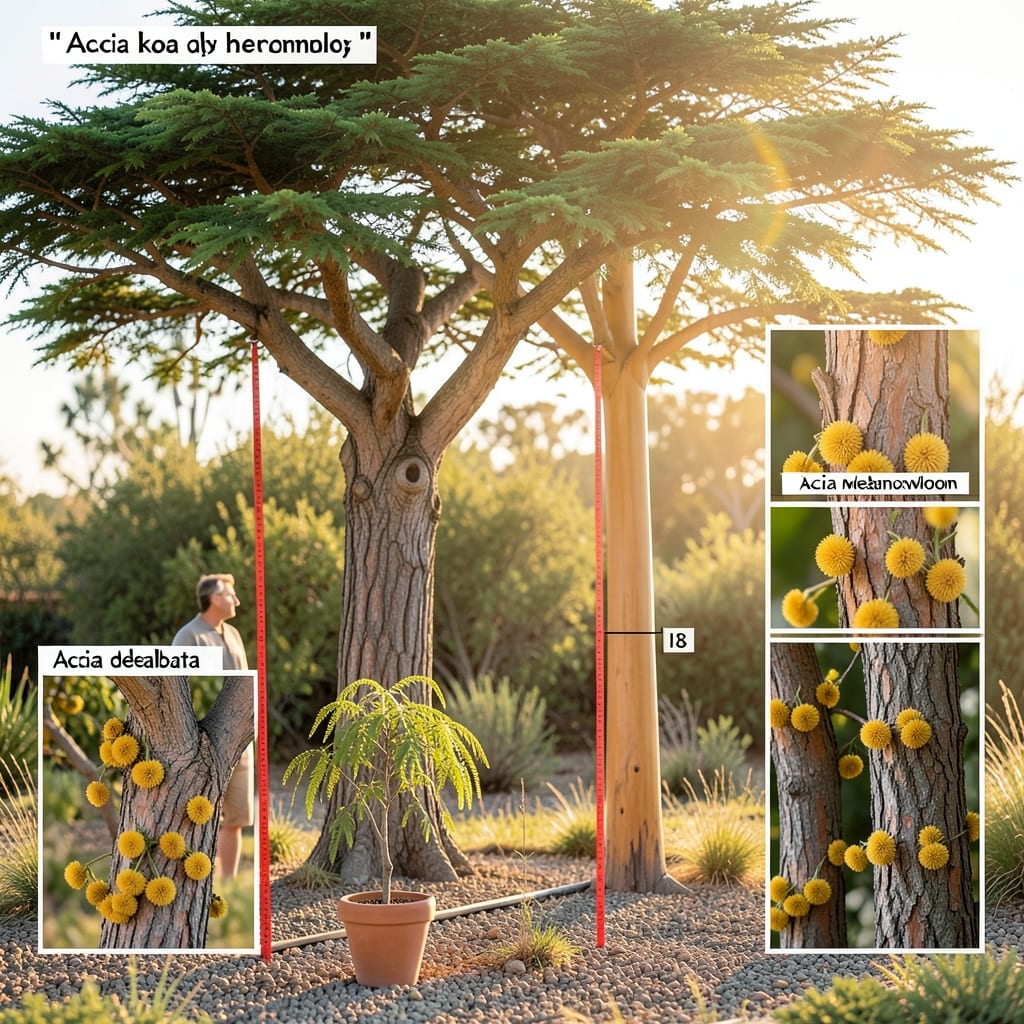
Wondering how tall your Acacia Tree 🌳 could grow—and whether it’ll dwarf your backyard or fit snugly in a corner? The answer depends on the species, because these trees range from compact shrubs under 10 feet to towering giants that stretch over 60 feet into the sky.
If you’re planning your garden layout, knowing these height variations is the key to making the right choice. Some acacias grow at a glacial pace, while others shoot up like weeds—giving you shade in just a few years. Let’s break down the species, growth habits, and what you can do to steer your tree’s height in the right direction.
Whether you’re dreaming of a privacy screen or a statement centerpiece, understanding these differences will help you pick the perfect acacia for your space. Ready to discover which varieties will thrive in your climate and how to keep them in check?
From fast growers that can reach 30 feet in a decade to dwarf types that stay under 15 feet, we’ll cover everything you need to know—so you can plant with confidence and enjoy your Acacia Tree for years to come.


Acacia tree height ranges by species: from dwarf varieties to towering giants
Acacias are one of the most diverse tree genera on the planet, with height variations that can change your garden’s entire look. Some species stay small enough for container gardening, while others reach heights that rival urban skylines. The key to choosing the right acacia lies in understanding these species-specific differences—whether you need a privacy screen or a compact accent plant.
Let’s explore the height spectrum of acacias, from the tiniest shrubs to the tallest giants, so you can pick the perfect fit for your space. Some varieties grow just 10 feet tall, while others can stretch over 60 feet—and everything in between. Knowing these ranges will help you avoid overcrowding or underutilizing your garden.
Here’s a quick look at some of the most popular acacia species and their mature height expectations. Whether you’re planning a backyard oasis or a small urban patio, these details will guide your decision.
| Species | Mature Height | Growth Rate | Best For |
|---|---|---|---|
| Acacia baileyana | 10–15 ft | Slow to moderate | Small gardens, containers |
| Acacia dealbata | 20–30 ft | Moderate | Privacy screens, urban landscapes |
| Acacia farnesiana | 15–20 ft | Fast | Quick shade, small yards |
| Acacia koa | 60+ ft | Slow | Large estates, tropical gardens |
| Acacia melanoxylon | 40–60 ft | Moderate | Wood production, large landscapes |
| Acacia retinoides | 15–25 ft | Slow | Drought-prone areas, hedges |
| Acacia crassicarpa | 30–50 ft | Fast | Fast shade, coastal areas |
The Acacia koa, native to Hawaii, is one of the tallest acacias, often reaching 60+ feet in ideal conditions. If you’re working with limited space, opt for Acacia baileyana or Acacia farnesiana, which stay under 20 feet. These dwarf varieties are perfect for small patios or container gardening.
For quick shade solutions, Acacia crassicarpa is a standout, growing up to 30 feet in just 10 years. This makes it ideal for urban landscapes where you need height fast. Meanwhile, Acacia melanoxylon offers a balance, reaching 40–60 feet but with a moderate growth rate, making it great for larger properties.
If you’re unsure which acacia will thrive in your climate zone, consider USDA zones 7–11 as the sweet spot for most species. Some, like Acacia retinoides, are drought-tolerant and perfect for arid regions, while others, like Acacia dealbata, prefer cooler coastal climates. Always check your local microclimate before planting.
Once you’ve picked your species, remember that pruning and so
Acacia tree height ranges by species: from dwarf varieties to towering giants
Acacia trees are famous for their dramatic height variations—some stay small enough for containers, while others become backyard giants. The Acacia koa, for example, can soar to 60+ feet, while the Acacia baileyana remains a dainty 10–15 feet shrub. Choosing the right species depends on your space and vision, whether you want a privacy screen or a compact accent plant.
Here’s the breakdown: fast-growing acacias like Acacia melanoxylon (blackwood) can reach 50 feet in 20 years, while slower growers like Acacia dealbata (silver wattle) hit 30–40 feet over the same time. Dwarf varieties like Acacia retinodes stay under 12 feet, making them perfect for urban gardens or patio plantings.
| Species | Mature Height | Growth Rate | Best For |
|---|---|---|---|
| Acacia koa | 60–80 ft | 2–3 ft/year | Large gardens, shade |
| Acacia melanoxylon | 50–70 ft | 1.5–2.5 ft/year | Privacy screens |
| Acacia dealbata | 30–40 ft | 1–2 ft/year | Medium yards |
| Acacia baileyana | 10–15 ft | 6–12 in/year | Containers, patios |
| Acacia retinodes | 8–12 ft | 4–8 in/year | Dwarf gardens |
If you’re torn between species, consider your climate zone and soil type. For instance, Acacia koa thrives in USDA zones 9–11 with rich, well-draining soil, while Acacia dealbata adapts to zones 7–10 and tolerates poorer soils. Always check your local growing conditions before planting to ensure your chosen acacia reaches its full potential height.
For urban gardens with limited space, dwarf varieties like Acacia baileyana or Acacia retinodes are ideal—they offer the beauty of acacias without the space commitment. Meanwhile, taller species like Acacia melanoxylon are perfect for rural properties where height isn’t a concern. Pruning can also shape growth, but we’ll dive deeper into that in the next section.
Remember, even the fastest-growing acacias take years to reach maturity. Patience pays off—your 10-foot sapling today could be a 60-foot giant in two decades. Start small, plan ahead, and let your acacia grow into the centerpiece of your outdoor space.
Need help deciding? Ask yourself: Do you want quick shade, a compact focal point, or a wildlife-friendly giant? Your answer will guide your choice! 🌳