
Trees
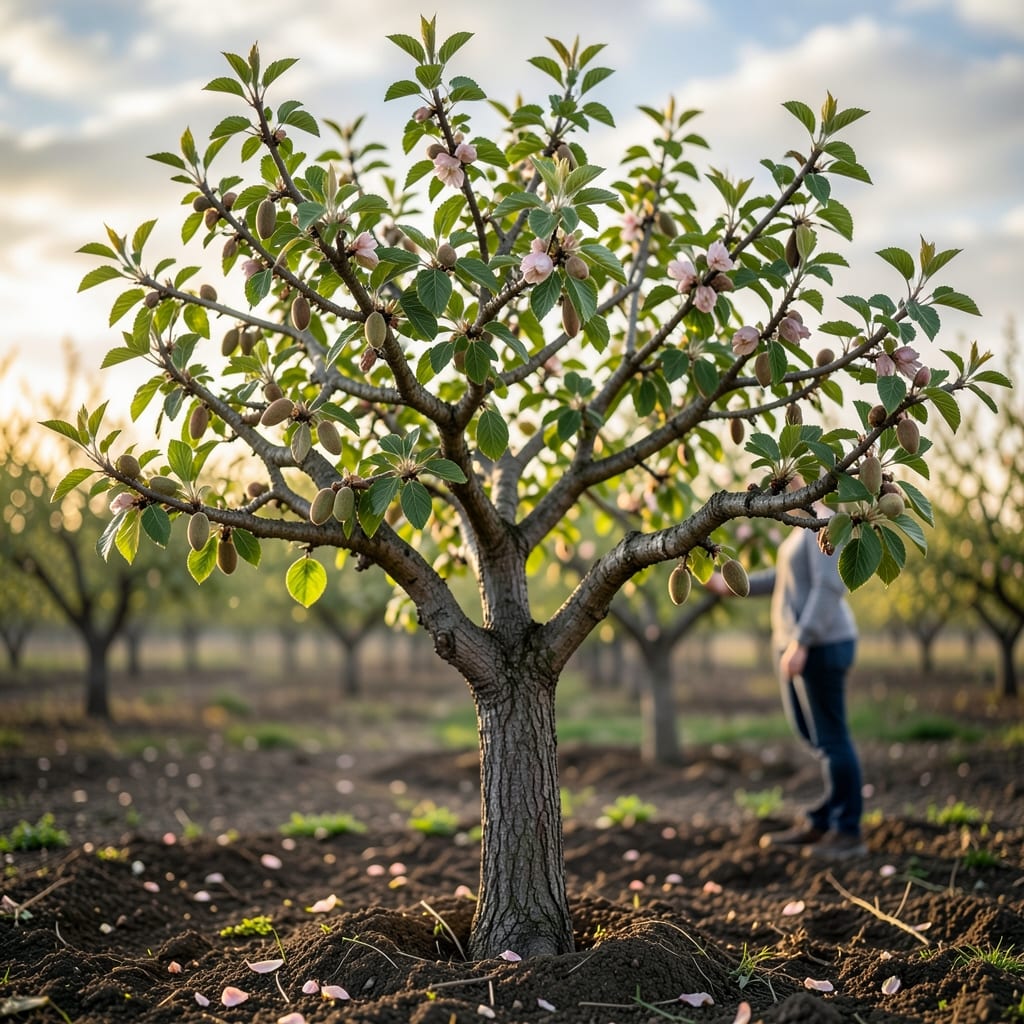
If you're dreaming of harvesting your own 🌰 almond trees but wondering how tall almond trees grow, the answer might surprise you. Standard varieties can reach an impressive 25-40 feet at maturity, while dwarf varieties stay more manageable at 10-15 feet—making them perfect for smaller yards.
Understanding these height differences is key to planning your garden layout. Whether you're in USDA Zone 6a or another suitable climate, choosing the right variety ensures your tree thrives without overwhelming your space. Let’s break down what you need to know to pick the perfect almond tree for your backyard.
From root spread to sunlight needs, every detail matters when it comes to planting. A standard almond tree’s wide canopy means you’ll need plenty of room—often 2-3 times its height in space. Dwarf varieties, however, offer a compact solution without sacrificing the joy of homegrown nuts.
Ready to transform your garden? Discover how to select the ideal almond tree size, calculate spacing, and create a thriving orchard—no matter how big or small your yard is. Let’s get started!


Almond tree height by variety: from dwarf to standard sizes explained
Almond trees come in three main size categories: dwarf, semi-dwarf, and standard, each with distinct mature heights. Standard varieties like Nonpareil and Carmel can tower up to 40 feet, while dwarf varieties like Peerless stay under 15 feet. The height you choose depends entirely on your space and goals.
Most commercial almond trees are grafted onto rootstock that influences their final size. For example, a Nonpareil tree grafted onto Nemaguard rootstock will grow much larger than one grafted onto Giant rootstock. Understanding these differences helps you avoid planting a tree that will outgrow your yard.
Dwarf varieties are ideal for small gardens or containers, while standard trees need ample space. Semi-dwarf trees offer a middle ground, reaching 15-20 feet at maturity. Let’s explore the most popular varieties and their mature heights to help you make the best choice for your landscape.
Here’s a quick reference for the most common almond tree varieties and their mature heights:
| Variety | Type | Mature Height (ft) | Notes |
|---|---|---|---|
| Nonpareil | Standard | 25-40 | Most popular commercial variety; needs full sun and well-draining soil. |
| Carmel | Standard | 30-40 | Large, productive tree; requires cross-pollination. |
| Price | Standard | 30-35 | Early blooming; great for cooler climates. |
| Peerless | Dwarf | 10-15 | Compact size; perfect for small yards or containers. |
| Butte | Semi-Dwarf | 15-20 | Self-pollinating; great for home orchards. |
| Fritz | Dwarf | 12-15 | Cold-hardy; ideal for USDA Zone 6a. |
When selecting an almond tree, consider not just its height but also its spread and rootstock. For instance, a Nonpareil tree can spread up to 20 feet wide, while a dwarf variety like Peerless stays under 10 feet. Always check the rootstock details, as it significantly impacts growth.
If you’re planting multiple trees, ensure they’re spaced correctly to prevent overcrowding. Standard trees need at least 25 feet between them, while dwarf varieties can be planted 10-15 feet apart. Proper spacing ensures good airflow and reduces disease risk.
For home gardeners in USDA Zone 6a, dwarf varieties like Fritz or Peerless are excellent choices. They thrive in smaller spaces while still producing a bountiful harvest. Just remember: even dwarf trees need full sun and well-draining soil to reach their full potential.
Ready to plant? Measure your space and choose a variety that fits your yard’s dimensions. With the right selection, you’ll enjoy homegrown almonds for years to come—without the headache of an overgrown tree.
Root spread and spacing requirements to prevent overcrowding
Almond trees aren’t just tall—they spread wide, often creating a canopy that’s 2-3 times their height. This means a 25-foot-tall tree could require 50-75 feet of space in all directions, including root spread. Proper spacing prevents competition for nutrients and sunlight, which can stunt growth or even kill your tree.
Understanding root spread patterns is just as critical as height. Most varieties develop roots that extend 12-18 inches deep but spread 15-25 feet wide at maturity. Sandy soils encourage faster root expansion, while clay soils may restrict spread but require deeper planting to avoid waterlogging.
Here’s where many gardeners go wrong: they focus only on trunk height and forget the horizontal growth. A 15-foot dwarf almond tree might still need 20 feet of spacing to avoid overcrowding nearby plants or structures. Always check the variety’s mature spread specifications before planting.
| Variety | Mature Height | Mature Spread | Recommended Spacing |
|---|---|---|---|
| Nonpareil (Standard) | 25-40 ft | 25-35 ft | 40-50 ft apart |
| Carmel (Dwarf) | 10-15 ft | 12-15 ft | 15-20 ft apart |
| Price (Semi-Dwarf) | 15-20 ft | 15-20 ft | 20-25 ft apart |
| Peerless (Standard) | 30-40 ft | 30-40 ft | 50-60 ft apart |
Soil type dramatically impacts how much space your almond tree will need. In sandy or loamy soils, roots spread more aggressively, while clay soils may limit lateral growth but require deeper planting to prevent root suffocation. Always amend heavy soils with compost or sand to improve drainage and encourage healthier root development.
When planting multiple almond trees, consider cross-pollination needs. Most varieties require a second tree within 100 feet for proper fruit set. If space is limited, opt for self-pollinating dwarf varieties like ‘Carmel’ or ‘Texas,’ which produce nuts with minimal spacing requirements.
Proper spacing isn’t just about avoiding overcrowding—it’s about creating an optimal growing environment. With the right layout, your almond trees will thrive, yield abundant nuts, and become the centerpiece of your garden for decades to come. 🌳