
Size
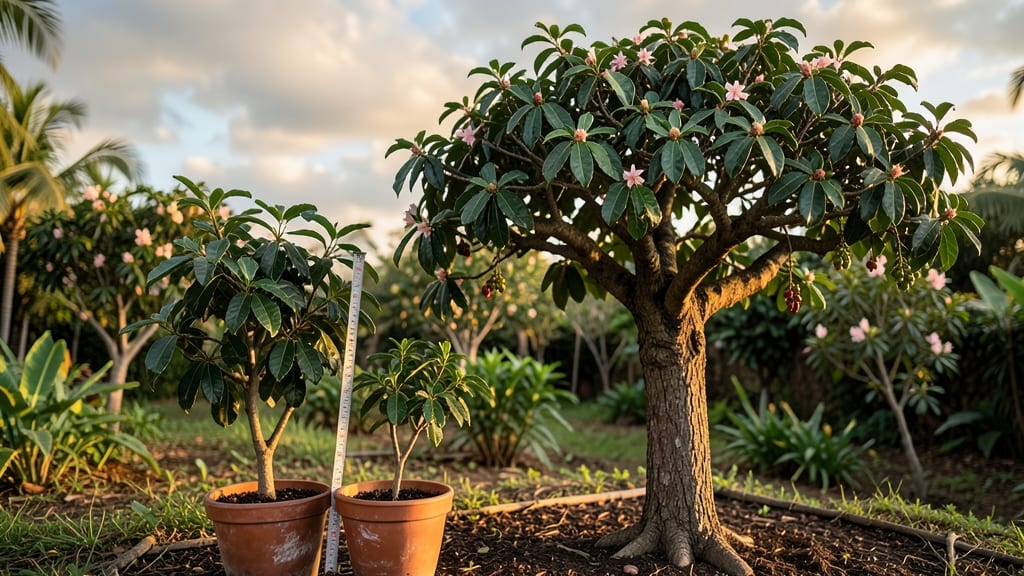
If you're dreaming of growing your own ☕ coffee tree but wondering how tall coffee trees grow, here’s the real deal: coffee trees can reach anywhere from 6 feet to a towering 40 feet, depending on the variety and growing conditions.
Most backyard growers work with dwarf or semi-dwarf varieties of Coffea arabica or Coffea canephora (Robusta), which typically stay between 10 and 15 feet tall—perfect for containers or small gardens.
But in tropical climates without pruning, these trees can easily surpass 20 feet, making them more suited for larger properties.
The key to managing their height lies in climate, pruning, and even soil quality. In USDA Zones 10-12, where coffee trees thrive year-round, proper care can keep them at a more manageable size, while neglect or ideal growing conditions can lead to rapid vertical growth.
Let’s break down how to control their height naturally and which varieties stay the shortest.
Whether you’re planning a cozy backyard ☕ grove or a sprawling farm, understanding these growth patterns will help you choose the right variety and care routine. Ready to find out how to keep your coffee tree at your desired height?


Coffee tree height by variety: dwarf to giant species compared
Coffee trees are stunning tropical plants, but their height can vary dramatically depending on the variety and growing conditions. If you're planning a backyard coffee garden, you might be surprised to learn that some varieties stay compact while others grow taller than a two-story house!
Let’s break down the height ranges you can expect from the most popular coffee species and their dwarf or semi-dwarf cousins.
The two most common coffee species—Coffea arabica (Arabica) and Coffea canephora (Robusta)—have distinct growth habits. Arabica tends to be more refined and slightly shorter, while Robusta often grows taller and bushier.
But within each species, there are dwarf and semi-dwarf varieties that can fit neatly into smaller spaces, making them perfect for containers or urban gardens.
Here’s a quick comparison to help you visualize the differences:
| Variety | Species | Mature Height | Growth Rate | Best For |
|---|---|---|---|---|
| Dwarf Arabica | Coffea arabica | 6–10 ft | Slow to moderate | Containers, patios, small gardens |
| Semi-Dwarf Arabica | Coffea arabica | 12–18 ft | Moderate | Backyard gardens, small farms |
| Standard Arabica | Coffea arabica | 20–30 ft | Moderate to fast | Large gardens, plantations |
| Dwarf Robusta | Coffea canephora | 8–12 ft | Fast | Urban gardens, containers |
| Standard Robusta | Coffea canephora | 30–40 ft | Fast | Large estates, commercial farms |
If you're growing coffee in containers or small spaces, dwarf varieties like Coffea arabica 'Nana' are ideal—they rarely exceed 8 feet and thrive in 15-gallon pots. These compact trees produce delicate, flavorful beans while keeping your garden tidy.
For larger backyards, semi-dwarf varieties like 'Geisha' or 'Bourbon' strike a balance, reaching 12–18 feet with proper care.
Standard varieties, on the other hand, are the giants of the coffee world. A mature Robusta tree can tower over 40 feet, while Arabica trees typically reach 20–30 feet. These are the trees you’ll find in large plantations, where their height allows for mechanical harvesting and easier maintenance.
However, their size means they’re not suitable for most home gardens unless you have plenty of space and a long-term plan.
One thing to note: pruning plays a huge role in managing height. Even standard varieties can be kept smaller with regular pruning, while dwarf varieties may grow slightly taller if left unchecked.
We’ll dive deeper into pruning techniques in the next section, but for now, remember that height isn’t set in stone—it’s all about how you care for your tree.
Choosing the right variety isn’t just about height—it’s also about flavor, yield, and climate suitability. For example, Arabica beans are prized for their complex, sweet flavors, while Robusta offers a stronger, bolder taste and higher caffeine content.
If you’re growing coffee for personal use, consider your space constraints and climate zone before selecting a variety.
For those in cooler climates (USDA Zones 10–12), dwarf varieties are your best bet—they handle slight temperature drops better than their taller counterparts. Meanwhile, in tropical lowlands, even dwarf trees may grow taller due to ideal conditions.
Always check the specific variety’s care requirements to ensure it thrives in your growing zone.
Ready to pick your perfect coffee tree? Whether you’re dreaming of a backyard coffee grove or just a single potted plant, knowing the
Climate zones that affect coffee tree growth height
Your coffee tree’s final height isn’t just about genetics—it’s heavily influenced by where you grow it. In tropical lowland climates like those in Brazil or Vietnam, Arabica coffee trees can soar to 30–40 feet with ideal warmth and humidity.
Meanwhile, in cooler high-altitude regions (like Colombia’s Andes), the same variety might stay shorter—around 10–20 feet—due to slower growth rates. Understanding these climate patterns helps you set realistic expectations for your backyard or farm.
Altitude plays a surprising role too. At elevations above 3,000 feet, coffee trees grow more slowly but produce higher-quality beans. This is why many specialty coffees come from mountainous regions. In contrast, lowland areas see faster growth but may require more aggressive pruning to control height.
If you’re in USDA Zones 10–12, you’ll likely see taller trees unless you intervene with pruning.
Sunlight exposure also shapes height. Coffee trees thrive in partial shade (4–6 hours of direct sun daily), which keeps them compact. Full sun can lead to rapid, unchecked growth—up to 20 feet in just 5 years—while too much shade stunts them.
Balancing light is key, especially in hot climates where afternoon shade is a must to prevent stress.
| Climate Zone | Altitude | Avg. Height (Arabica) | Growth Rate |
|---|---|---|---|
| Tropical Lowland | 0–2,000 ft | 30–40 ft | Fast (2–3 ft/year) |
| Subtropical Mid-Altitude | 2,000–4,000 ft | 15–25 ft | Moderate (1–2 ft/year) |
| High-Altitude | 4,000–6,000 ft | 10–15 ft | Slow (<1 ft/year) |
| Container (Backyard) | N/A | 6–12 ft (pruned) | Controlled (pruning-dependent) |
Temperature extremes can drastically alter growth. Coffee trees struggle below 60°F and thrive between 65–75°F. In cooler microclimates (like parts of Hawaii or California), expect slower growth unless you use greenhouse protection or dwarf varieties.
Even a few degrees difference can mean the difference between a 10-foot tree and one that reaches 25 feet.
If you’re growing coffee in containers—say, on a patio in Zone 11—your tree’s height will naturally stay shorter due to root restriction. However, without pruning, it can still hit 12 feet in 5 years.
The key is to prune aggressively in early spring to redirect energy into bushier, fruit-bearing branches rather than vertical growth.
For backyard growers, the best way to manage height is to mimic high-altitude conditions: provide partial shade, keep soil slightly acidic (pH 6.0–6.5), and prune annually. This way, you’ll enjoy homegrown coffee without a 40-foot monster taking over your yard! ☕🌿