
How To
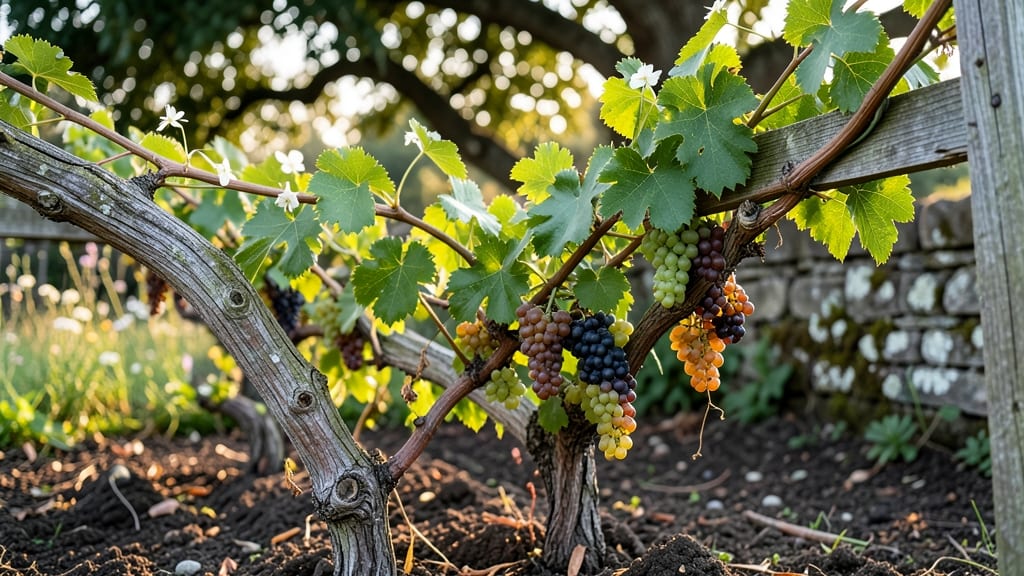
If you’re dreaming of growing your own grapes but wondering how tall do grapes grow, you’re not alone—this is the first question every home gardener asks.
The answer isn’t one-size-fits-all because grapevines can stretch from compact 6-foot bushes to towering 30-foot trellis climbers, depending on the variety and how you train them.
Picture this: a delicate 🍇 muscadine vine sprawling across a backyard fence or a sturdy wine grape like Cabernet Sauvignon reaching for the sky on a trellis. The key to managing their height lies in understanding their growth habits and choosing the right training method for your space.
Whether you have a small balcony or a sprawling backyard, there’s a grapevine that fits.
In this guide, I’ll break down the height ranges of popular grape varieties, share pruning tricks to control their size, and reveal space-saving techniques that work even in tight urban gardens.
By the end, you’ll know exactly how much room to allocate—and how to keep your vines thriving without sacrificing your yard.
Ready to turn your grape-growing goals into reality? Let’s dive into the details so you can plan your vineyard with confidence, no matter how much (or little) space you have.


Grapevine height by variety: compact vs. towering growth habits
When planning your grapevine garden, the first question is almost always: how tall do grapes grow? The answer depends entirely on the variety and training method. Some vines stay compact at 6-10 feet, while others can stretch 20-30 feet when trained on trellises.
Understanding these differences helps you choose the right variety for your space and trellis setup.
Most grapevines are perennial woody vines that grow vigorously once established. Their height potential varies widely—from bush-trained varieties that stay low to sprawling types that need vertical support. Even within the same species, growth habits can differ dramatically based on cultivation practices like pruning and trellising.
Here’s how different grapevine types compare in terms of mature height and growth habits:
| Variety Type | Mature Height | Growth Habit | Best For |
|---|---|---|---|
| Table Grapes (e.g., Thompson Seedless, Red Globe) | 15–25 ft | Sprawling, needs trellis | Large gardens, commercial orchards |
| Wine Grapes (e.g., Cabernet Sauvignon, Chardonnay) | 12–20 ft | Moderate, trellis-trained | Home vineyards, small farms |
| Muscadines (e.g., Scuppernong, Cowart) | 10–18 ft | Bushy, sprawling | Southern climates, trellis or arbor |
| Dwarf Varieties (e.g., 'Black Monukka', 'Concord') | 6–10 ft | Compact, bush-trained | Small yards, containers, patios |
| Espalier Trained (e.g., 'Flame Seedless', 'Niagara') | 8–12 ft (flat against wall) | Flat, horizontal growth | Urban gardens, vertical spaces |
Dwarf varieties are ideal for small spaces, while standard types need more room to sprawl. For example, 'Thompson Seedless' can reach 25 feet if left unpruned, but with proper training, it can be kept under 12 feet. Always check the mature height of the variety you choose to avoid overcrowding.
Another key factor is the training method. Vines trained on arbors or pergolas grow taller but produce more fruit, while bush-trained vines stay shorter but may yield less.
If you’re limited on space, consider espalier training, which keeps vines flat against a wall or fence at a manageable 6–10 feet.
Climate also plays a role. In warmer climates, grapevines grow faster and taller, while in cooler regions, growth may be slower but more controlled.
For instance, muscadine grapes thrive in the South and can reach 18 feet, whereas Concord grapes in the North might max out at 12 feet without aggressive pruning.
If you’re growing grapes in containers, even standard varieties can be kept under 10 feet with regular pruning. Just ensure the container is at least 15–20 gallons and has drainage holes to prevent root rot. Smaller containers will stunt growth but may also limit fruit production.
For first-year growth, expect vines to reach 3–5 feet. By year two, they’ll typically double in height, and by year three, they’ll approach their mature height. Proper winter pruning is essential to control height and encourage fruit production in the following season.
Now that you know how tall grapes grow, the next step is learning how to manage their height through pruning and training. This ensures your vines stay healthy, productive, and within your desired space—whether that’s a sprawling trellis or a compact patio vine.
Grapevine height by variety: compact vs. towering growth habits
Grapes aren’t one-size-fits-all when it comes to height—some varieties stay neatly contained while others reach for the sky. The mature height of a grapevine depends on its type, training method, and even your pruning habits.
For example, table grapes like Thompson Seedless often max out at 12-18 feet when trained on a trellis, while wine grapes such as Cabernet Sauvignon can soar to 20-30 feet if left unchecked.
Even within the same category, dwarf varieties can stay as short as 6 feet, making them perfect for small spaces.
Understanding these differences helps you choose the right variety for your space. If you’re working with limited room, bush-trained vines or espaliered grapes are ideal—they rarely exceed 8 feet in height.
On the other hand, if you have a large backyard or fence, sprawling varieties like Concord or Niagara can spread horizontally while still climbing vertically, creating a stunning living trellis that adds beauty and productivity to your landscape.
Here’s the key takeaway: height isn’t set in stone. With proper training and pruning, even a 30-foot vine can be kept at a manageable 6-foot height if that’s what your space requires.
The variety you choose is just the starting point—your training method and maintenance habits will determine the final outcome.
| Variety | Type | Mature Height (ft) | Best For |
|---|---|---|---|
| Thompson Seedless | Table Grape | 12-18 ft | Trellises, large gardens |
| Cabernet Sauvignon | Wine Grape | 20-30 ft | Large backyards, professional vineyards |
| Concord | Juice/Wine Grape | 15-25 ft | Sprawling fences, arbors |
| Muscadine | Native Grape | 10-20 ft | Humid climates, bush training |
| Flame Seedless | Table Grape (Dwarf) | 6-10 ft | Containers, small spaces |
If you’re growing muscadines, expect a more compact growth habit, especially in humid climates where they thrive. These native grapes often stay between 10-20 feet tall, making them a great choice for gardeners in the Southeast who want a low-maintenance, disease-resistant option.
Meanwhile, wine grapes like Merlot or Pinot Noir can vary widely—some stay under 15 feet with proper pruning, while others will climb higher if given the chance.
For small-space gardeners, look for dwarf varieties like Flame Seedless or Red Globe. These stay under 10 feet and can even thrive in large containers, making them perfect for patios or balconies.
The trade-off? They may produce slightly smaller yields, but the convenience of managing a 6-foot vine instead of a 20-foot monster is worth it for many urban growers.
No matter which variety you choose, remember that training methods play a huge role in height control. A vine trained as a bush will stay shorter than one grown on a trellis, and espaliered grapes can be kept to just a few feet if you’re creative with their structure.
The possibilities are endless—so pick your favorite and get ready to shape your vineyard!