
Trees
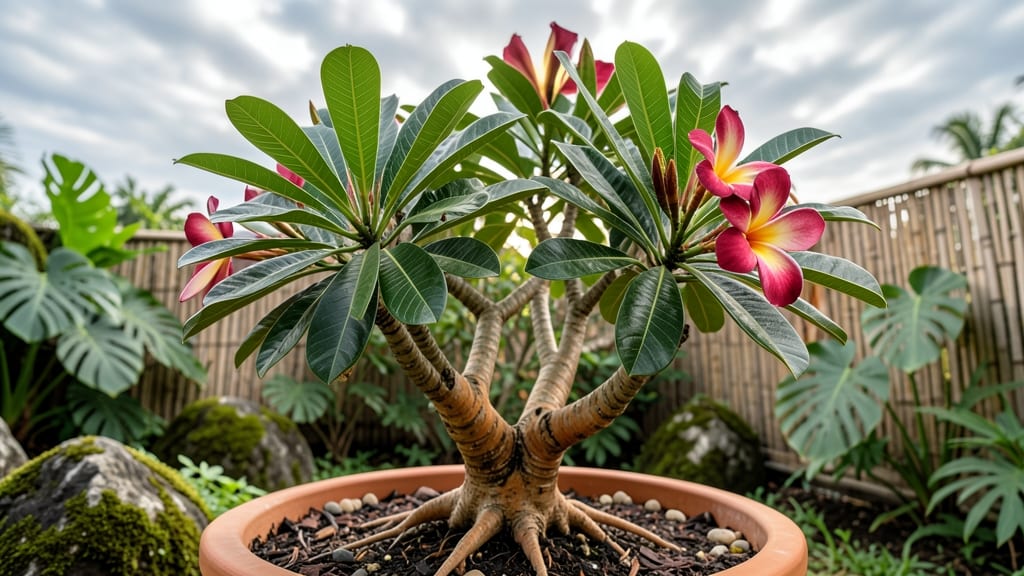
Wondering how tall do plumeria trees grow before you commit to planting one? These fragrant tropical trees can range from compact shrubs to towering giants, depending on the variety and care you provide.
The 🌺 plumeria you choose makes all the difference—some stay under 6 feet, perfect for containers, while others can reach 20 feet or more in ideal conditions.
Whether you're dreaming of a small patio centerpiece or a shade-providing giant, understanding their growth habits is key to getting the right size for your space.
In this guide, I’ll break down the height variations by popular plumeria types, share expert pruning tips to control their size, and reveal the secrets to keeping them thriving in your climate. Ready to find the perfect plumeria for your garden?
From sun-loving tropical zones (USDA 10-12) to container gardening hacks, you’ll learn everything you need to know to grow a plumeria that fits your vision—whether that’s a 3-foot dwarf or a 15-foot statement tree.


Plumeria tree height by variety: dwarf to giant sizes explained
Plumeria trees are famous for their fragrant blooms, but their height can surprise even seasoned gardeners. On average, plumeria trees grow between 3 feet and 20 feet tall, depending on the variety and growing conditions.
Some compact types stay small enough for containers, while others become towering tropical giants. Let’s break down the most common varieties and their mature sizes to help you choose the perfect plumeria for your space.
If you’re growing plumeria in containers, dwarf varieties like 'Mini Snow' or 'Dwarf Plumeria' are ideal, typically reaching 3 to 6 feet. These are perfect for patios, balconies, or even as indoor plants near sunny windows.
For larger yards, standard varieties like 'Plumeria rubra' can soar to 15 to 20 feet, creating a stunning tropical focal point. Always check the variety’s tags for exact expectations, as some hybrids exceed typical ranges.
| Variety | Mature Height | Growth Rate | Best For |
|---|---|---|---|
| Dwarf Plumeria (e.g., 'Mini Snow') | 3–6 ft | Slow to moderate | Containers, patios, small yards |
| Plumeria rubra (Standard) | 10–20 ft | Moderate to fast | Large yards, tropical landscapes |
| Plumeria obtusa (Acuminata) | 15–25 ft | Fast | Large estates, privacy screens |
| Plumeria pudica (Hybrid) | 6–12 ft | Moderate | Medium-sized yards, borders |
| Plumeria alba (White) | 8–15 ft | Moderate | Formal gardens, hedges |
One of the biggest factors influencing plumeria height is growing conditions. Trees planted in well-draining soil with full sun exposure (6+ hours daily) tend to grow taller and fuller.
In contrast, plumeria grown in containers or partial shade may stay shorter but could also become leggy if not pruned regularly. For example, a 'Plumeria rubra' in a large pot might only reach 8 feet if root-bound, while the same variety in the ground could hit 15 feet.
Pruning plays a crucial role in controlling height. If you want a compact plumeria, prune back one-third of the new growth in early spring to encourage bushier, slower vertical growth. For larger varieties, structural pruning in late winter helps maintain shape and prevents weak branches.
Always use sterilized pruners to avoid disease, and seal larger cuts with pruning sealant to prevent sap loss.
Climate also affects height—plumeria trees in USDA zones 10-12 thrive year-round and can grow aggressively, while those in cooler microclimates (like zone 9) may grow more slowly. In colder areas, bring container-grown plumeria indoors during winter to protect it from frost, which can stunt growth or kill the plant entirely.
Even a single night below 32°F can damage leaves and slow height progression.
If you’re planning to plant multiple plumeria trees, consider their mature sizes when spacing them out. Dwarf varieties need 3 to 5 feet of space, while standard and giant types require 10 to 15 feet between plants.
Proper spacing ensures airflow, reducing the risk of fungal diseases like powdery mildew, which can weaken growth and affect height. Always mulch around the base to retain moisture and regulate soil temperature, which supports steady growth.
For container gardeners, choose pots that are at least 12 inches wide for dwarf varieties and 18+ inches for larger types. Larger pots allow roots to spread, which can actually slow vertical growth while encouraging a fuller shape.
If you notice roots circling the pot, it’s time to repot into a larger container or transplant outdoors to give the tree room to grow upward naturally.
Some gardeners worry that plumeria trees will outgrow their space quickly, but with the right variety and care, you can enjoy their beauty without sacrificing your yard’s layout. For instance, 'Plumeria pudica' hybrids often stay between 6 and 12 feet, making them ideal for medium-sized gardens.
Pair it with a trellis or let it grow naturally—either way, its fragrant blooms will reward your patience.
Remember, plumeria trees are not
Plumeria tree height by variety: dwarf to giant sizes explained
If you're wondering how tall do plumeria trees grow, the answer depends entirely on the variety you choose. Plumerias come in a stunning range of sizes, from compact dwarf varieties that fit perfectly in containers to towering giants that can dominate a tropical landscape.
Knowing these differences upfront helps you pick the perfect plumeria for your space and vision.
The smallest plumeria varieties like 'Dwarf Plumeria' or 'Plumeria obtusa' typically stay between 3 to 5 feet tall, making them ideal for patios, balconies, or even as bonsai-style specimens. These are perfect if you're working with limited space or want to grow plumeria in containers.
On the other end of the spectrum, varieties like Plumeria rubra or Plumeria pudica can reach 20 feet or more when given ideal growing conditions.
| Variety | Mature Height | Growth Rate | Best For |
|---|---|---|---|
| Plumeria obtusa (Dwarf Plumeria) | 3–5 ft | Slow to moderate | Containers, patios, bonsai |
| Plumeria acutifolia (Semi-Dwarf) | 6–10 ft | Moderate | Small yards, hedges |
| Plumeria rubra (Standard) | 10–20 ft | Fast | Large gardens, shade trees |
| Plumeria pudica (Giant) | 15–25 ft | Very fast | Tropical landscapes, street trees |
For example, if you're growing plumeria in USDA zones 10-12 and want a low-maintenance patio plant, 'Plumeria obtusa' is an excellent choice. Its slow growth rate means you won’t need to prune it often, and it thrives in 5-gallon containers or larger.
Meanwhile, if you're looking to create a privacy screen or shade tree, varieties like 'Plumeria pudica' will grow quickly and provide that tropical canopy you're after.
One key factor that influences height is pruning frequency. Even fast-growing varieties can be kept smaller with regular pruning, while dwarf varieties may naturally stay compact with minimal intervention.
Always consider your local climate and sunlight exposure—plumerias in full sun tend to grow taller and bushier than those in partial shade.
If you're unsure which variety to choose, start with a semi-dwarf plumeria like 'Plumeria acutifolia'. It strikes a balance between manageable size and impressive height, typically reaching 6 to 10 feet at maturity. This gives you room to experiment with pruning techniques while still enjoying a substantial tree.
Remember, the soil quality and drainage also play a role in how tall your plumeria grows. Well-draining, slightly acidic soil (pH 6.0–7.5) encourages healthier root development, which in turn supports stronger, taller growth.
Always plant in a location with 6+ hours of direct sunlight to ensure your plumeria reaches its full potential height.