
Trees
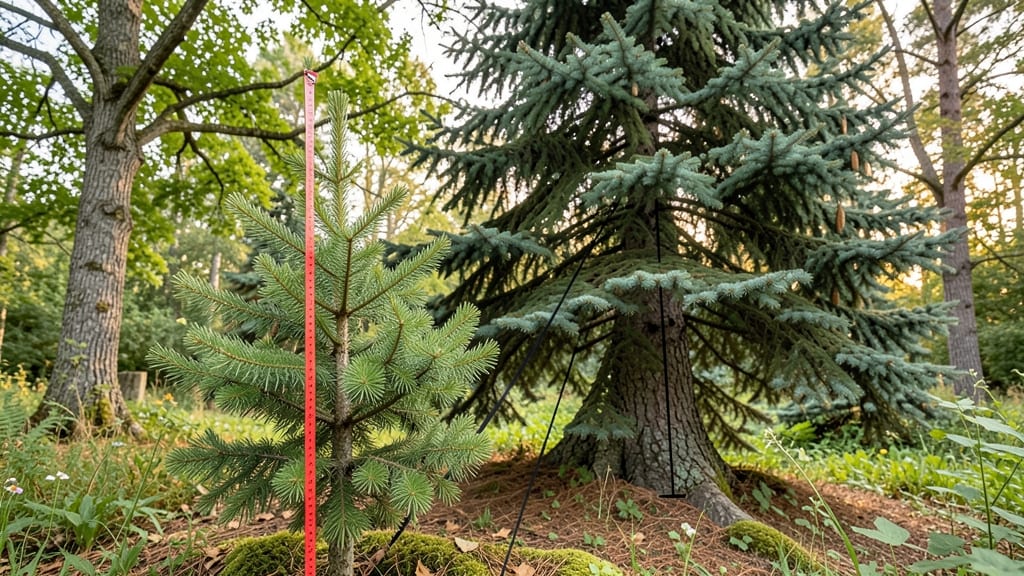
If you're wondering "how tall do spruce trees grow", the answer might surprise you—these evergreen giants can stretch from tiny 10-foot dwarfs to towering 150-foot skyscrapers in your backyard. 🌲 Whether you're planning a cozy garden or a grand landscape, choosing the right variety makes all the difference.
Not all spruce trees are created equal. Some, like the Colorado Blue Spruce, grow 60-100 feet tall, while others, such as the Black Hills Spruce, stay more manageable at 30-40 feet. The key? Understanding your space and growth goals before planting.
Fast-growing varieties can add 3-5 feet per year, making them ideal for privacy screens or quick shade. But if you're working with limited space, dwarf spruces (under 10 feet) offer stunning color without the commitment.
Ready to transform your yard? I’ll break down the best spruce trees for your needs—whether you want a fast privacy shield or a low-maintenance accent tree. Let’s get started.


Mature height ranges of spruce trees by species: fastest-growing varieties explained
When planning your landscape, understanding spruce tree heights is crucial—these evergreens can range from dwarf varieties under 10 feet to giant species towering over 100 feet. The fastest-growing spruces often reach their mature height within 20-30 years, making them ideal for quick privacy screens or dramatic focal points.
For example, the Colorado Blue Spruce can grow 3-5 feet per year under optimal conditions, while slower-growing varieties like the Black Hills Spruce take decades to reach their full potential.
Your yard's size and layout will determine which spruce species suits you best. Small urban lots benefit from dwarf or semi-dwarf varieties, while large rural properties can accommodate towering giants.
Even within a single species, height variations exist—Norway Spruce can range from 40-60 feet, while its 'Pendula' cultivar stays under 30 feet. This diversity means you're not limited to just one option when selecting spruces for your landscape.
Growth rates also depend on soil quality, sunlight exposure, and water availability. Spruces planted in well-draining, slightly acidic soil with full sun exposure grow fastest. In contrast, those in shady or waterlogged conditions may grow 20-30% slower.
For instance, a Colorado Blue Spruce in ideal conditions might reach 60 feet in 20 years, while the same tree in poor soil could take 30+ years to reach half that height.
Here’s how the most popular spruce species compare in terms of mature height and growth rate:
The Colorado Blue Spruce stands out as one of the fastest-growing spruces, often doubling in height within 10 years when planted in well-draining, nutrient-rich soil. Its striking silver-blue needles make it a favorite for landscape accents and windbreaks.
Meanwhile, the Norway Spruce, with its pendulous branches, grows more slowly but offers excellent winter hardiness, making it perfect for northern climates.
If you're working with limited space, dwarf varieties like 'Conica' or 'Globe' Spruce stay under 10 feet and grow just a few inches per year. These are ideal for container gardening, rock gardens, or foundation plantings.
However, even dwarf spruces need proper spacing—plant them 3-5 feet apart to allow airflow and prevent disease. For larger properties, the White Spruce offers a balanced growth rate and tolerates urban pollution, making it great for suburban landscapes.
One common mistake is underestimating how wide spruce trees grow. While height gets most of the attention, spruces also develop wide canopies—some species spread 15-25 feet wider than their height.
For example, a 60-foot Colorado Blue Spruce might have a 30-foot spread, so plan accordingly. Always check the mature spread when selecting a variety to avoid overcrowding in your yard.
For the fastest height gain, prioritize young trees over older nursery stock. A 3-5 foot sapling will grow 2-3 times faster than a 10-foot tree of the same species. Pair this with regular deep watering and a balanced fertilizer in early spring to maximize vertical growth.
Just remember: patience is key—even the fastest spruces take 10-20 years to reach their full height potential.
🌲
How to choose spruce trees based on height needs: space planning for small vs large yards
Selecting the right spruce tree for your yard starts with understanding height limitations. A 10-foot dwarf spruce won’t compete with a 100-foot Colorado Blue Spruce—so your yard size dictates your options.
For tight spaces, miniature varieties like 'Conica' (5-10 ft) thrive in containers or small gardens, while standard spruces need room to stretch their branches.
Before planting, measure your space vertically and horizontally. A 30-foot spruce planted too close to a house risks overpowering your home’s architecture.
Use these spacing guidelines as a rule of thumb: dwarf spruces (under 10 ft) need 3-5 feet of clearance, while tall varieties (50+ ft) require 20+ feet of space to avoid crowding nearby plants or structures.
🌲
📏 Spruce Tree Spacing Guide
- Dwarf Spruces (5-10 ft): Plant 3-5 ft from structures or other plants.
- Medium Spruces (15-30 ft): Allow 10-15 ft of clearance.
- Large Spruces (40-60 ft): Space 20-30 ft from buildings or fences.
- Giant Spruces (70-150 ft): Require 30-50 ft of open space.
💡 Pro Tip: Always check the mature height of your chosen variety—nursery tags often list this!
If you’re working with a small yard, consider columnar spruces like 'Fastigiata' Norway Spruce, which grows 40-60 feet tall but only 10-15 feet wide. This narrow profile makes it ideal for tight spaces or urban gardens.
For large properties, a Colorado Blue Spruce can create a stunning focal point, but plan for its 100-foot height and wide canopy.
Don’t forget to check local regulations before planting tall spruces. Some neighborhoods have height restrictions for trees near power lines or roads. A quick call to your municipal arborist can save you from costly pruning or removal later.
For example, a 60-foot spruce near power lines may require regular trimming to maintain safety standards.
For privacy screens, opt for fast-growing varieties like 'Glauca Globosa' (Blue Dwarf Spruce), which reaches 10 feet in 10 years. Plant them in a double row with 5-foot spacing between trees for a dense, evergreen barrier.
In contrast, a single Norway Spruce (40-60 ft) can serve as a solitary statement piece in a spacious backyard.
Finally, soil and sunlight affect height potential. Spruces planted in poor soil or shade may grow 20-30% slower than their full-sun counterparts. Amend your soil with compost and ensure 6+ hours of sunlight daily to maximize growth.
With the right variety and care, your spruce will reach its genetic height potential—just give it the space it deserves!