
How To
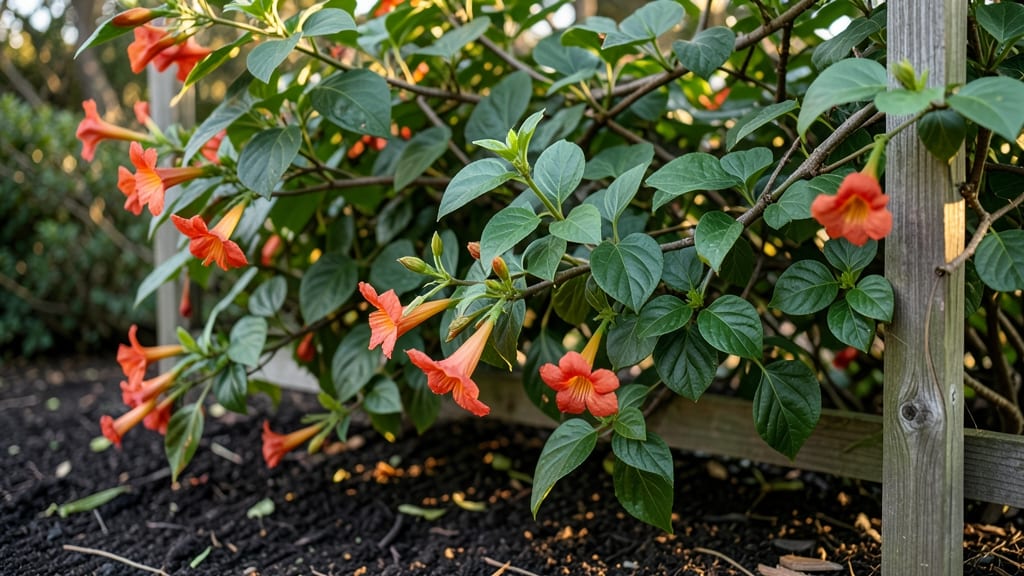
If you’ve ever wondered how tall do trumpet vines grow, you’re not alone—these eye-catching climbers can shoot up faster than you might expect, turning even the smallest garden into a vertical jungle of 🌸 trumpet-shaped blooms.
Native to zones like 6a, trumpet vines (Campsis radicans and Campsis grandiflora) are perennial powerhouses, capable of reaching heights between 30 to 40 feet in ideal conditions. That’s taller than most two-story homes! But don’t worry—you don’t need a skyscraper to enjoy their dramatic beauty.
Whether you’re planning a trellis, pergola, or fence, understanding their growth habits is key. These vines thrive in full sun and can climb almost anything—fences, arbors, or even tree trunks—if given the right support.
The good news? With smart pruning and training, you can keep them in check while still enjoying their stunning spring blooms.
Ready to transform your space? I’ll break down everything you need to know—from variety-specific heights to the best ways to manage their rapid growth—so you can grow a showstopping vine without losing control. Let’s dive in!


Trumpet vine growth heights by variety: from compact to towering climbers
Trumpet vines (Campsis radicans and Campsis grandiflora) are among the most dramatic climbers in any garden, capable of transforming bare walls or trellises into lush, flowering vertical gardens. But their growth heights vary dramatically depending on the variety, growing conditions, and support structure.
Some varieties stay manageable at 10-15 feet, while others can soar to 40 feet or more—taller than a two-story house! Understanding these differences is key to planning your garden layout and choosing the right support.
If you're working with limited space, dwarf varieties like 'Flava' or 'Tecumseh' can be a game-changer, offering vibrant blooms without the overwhelming height. Meanwhile, standard varieties like 'Praecox' or 'Grandiflora' will demand more room and sturdy supports.
Let’s break down the height ranges by variety so you can pick the perfect trumpet vine for your space and vision.
🌿 Key Takeaway: Trumpet vines grow aggressively—some varieties can add 10 feet in a single season if given ideal conditions. Without proper pruning or support, they’ll quickly dominate your garden, potentially smothering nearby plants or damaging structures.
For gardeners in USDA Zones 6-9, trumpet vines thrive in full sun and well-draining soil, which directly impacts their growth rate.
In warmer climates (Zones 8-9), vines may grow 20-30% faster due to longer growing seasons, while cooler zones (Zone 6) might see slightly slower but still impressive growth. If you’re in a container, expect heights to be 20-30% shorter unless you provide a tall trellis or cage.
One of my favorite tricks for controlling height is using vertical supports like obelisks or A-frame trellises. These structures guide the vine’s growth upward while keeping it contained.
For example, a 10-foot obelisk can train a 'Flava' variety to stay compact, while a 20-foot pergola will encourage a standard trumpet vine to reach its full potential. Just be sure to secure the vine with soft ties to avoid damaging the stems as they grow.
🌸 Pro Tip: If you’re planting near a fence or wall, leave at least 3 feet of clearance between the vine and any structures. This prevents smothering and allows for better airflow, reducing the risk of fungal diseases like powdery mildew.
Trumpet vines are deciduous perennials, meaning they die back in winter but regrow from the roots each spring. This means their height is cumulative—each year, they’ll add another 5-15 feet depending on the variety and care.
For instance, a 'Praecox' vine planted in spring might reach 10 feet by its first summer and 20 feet by its second year
How to control trumpet vine height: pruning, trellis tips, and support structures
Trumpet vines (Campsis radicans and Campsis grandiflora) grow aggressively, but with the right support structures and pruning techniques, you can guide their height and shape. The key is balancing their natural fast growth with structured vertical training to prevent them from becoming unruly.
Start by installing a sturdy trellis, arbor, or pergola within the first growing season to give vines a framework to climb.
For young trumpet vines, focus on directional pruning—gently tie new shoots to the trellis as they emerge. This encourages upward growth instead of sprawling. Avoid heavy pruning in the first year, as it can stress the plant and reduce flowering.
Instead, let the vine establish itself while guiding its path with soft ties or clips.
Once established, trumpet vines can climb 30–40 feet tall, but pruning in late winter or early spring keeps them manageable. Cut back one-third of the previous year’s growth to promote bushier, more controlled growth.
This also prevents overcrowding and improves air circulation, reducing the risk of fungal diseases like powdery mildew.