
How To
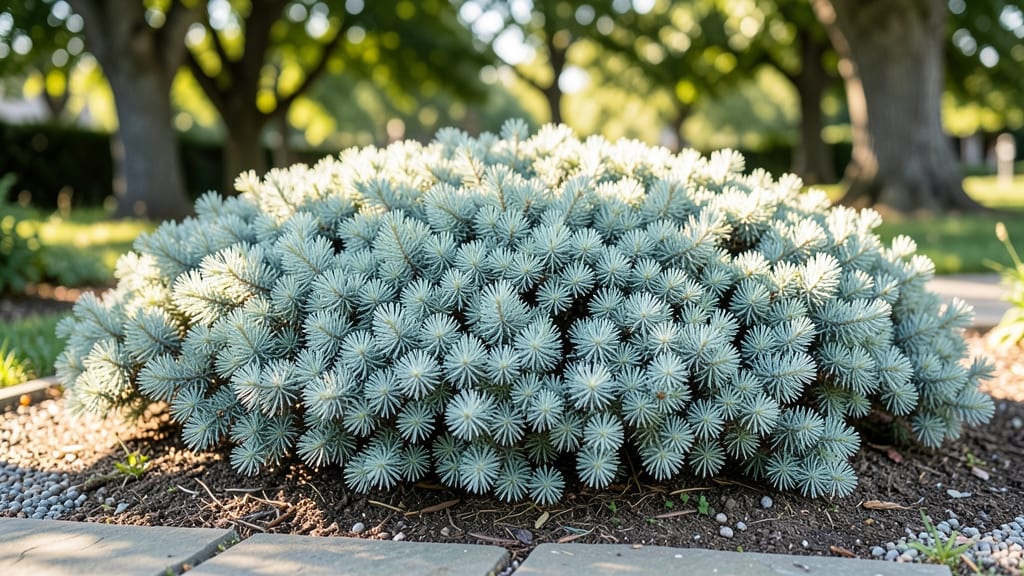
If you're wondering how tall do Wichita Blue junipers grow, you might be surprised to learn they stay far more compact than their wild cousins—typically reaching 10 to 15 feet at maturity.
This makes them a perfect fit for medium-sized yards or even large containers, offering year-round greenery without overwhelming your space.
The 🌲 Wichita Blue Juniper is a low-maintenance shrub that thrives in USDA Zone 6a and beyond, growing at a steady pace of about 12 to 24 inches per year.
Whether you're planting in early spring or fall, their manageable size means you can enjoy their striking blue-green foliage without constant pruning—though a little shaping can keep them even more tidy.
What sets this juniper apart is its adaptability. It handles full sun beautifully and requires minimal water once established, making it ideal for busy gardeners. Plus, its natural shape means you can use it as a standalone specimen or pair it with other shrubs for a layered look.
Ready to add one to your landscape? I’ll show you how to plant and prune it for the perfect height—no guesswork required. Let’s get started!


Natural height range of Wichita Blue Junipers: what to expect
The Wichita Blue Juniper (Juniperus × pfitzeriana 'Wichita Blue') typically reaches a mature height of 10 to 15 feet under ideal conditions, but many gardeners find it stays closer to 8 to 12 feet with proper care.
This compact size makes it perfect for hedges, privacy screens, or as a standalone focal point in smaller landscapes. Unlike its taller cousins, this variety grows in a spreading, rounded shape, which helps control its vertical expansion naturally.
In the first year, your Wichita Blue Juniper will grow just 1 to 2 feet, giving you time to adjust its placement before it matures.
By year three, it reaches 5 to 7 feet, so spacing is critical—plant at least 6 to 8 feet apart for shrub borders or 10 feet apart if you want to maintain individual specimens. Proper spacing prevents overcrowding, which can stunt growth or encourage taller, leggier stems.
Growth rate varies by USDA hardiness zones. In zones 5-7, where winters are colder, growth slows to 12 inches per year, while in warmer zones 8-10, it can reach 24 inches annually.
For example, in Zone 7, a Wichita Blue might hit 10 feet in 5 years, while in Zone 9, it could surpass 12 feet in the same timeframe.
🌱 Wichita Blue Juniper Growth Summary
| Stage | Height Range | Growth Rate | Best For |
|---|---|---|---|
| Year 1 | 1–2 ft | 6–12 in | Container or small gardens |
| Year 3 | 5–7 ft | 12–24 in/year | Hedges or borders |
| Mature (5–7 yrs) | 10–15 ft | Slowing growth | Privacy screens or focal points |
Soil type plays a surprising role in height control. Well-draining, slightly alkaline soil (pH 6.0–8.0) encourages denser, bushier growth, while clay-heavy or waterlogged soil can stress the plant, leading to taller, sparser stems.
Amend heavy soil with compost or sand to improve drainage—this simple step can reduce height by 20–30% over time.
Sunlight exposure also affects height. In full sun (6+ hours daily), Wichita Blue Junipers grow 20–30% taller than those in partial shade (3–5 hours).
For example, a plant in Zone 8 with full sun might hit 14 feet, while the same variety in partial shade could max out at 11 feet. If you’re in a shady yard, prioritize eastern or southern exposure to keep growth in check.
Climate matters too. In arid regions like the Southwest, Wichita Blue Junipers often stay shorter and denser due to natural water stress, while in humid climates (e.g., Southeast), they may grow taller but require better air circulation to prevent fungal issues.
Always match your watering schedule to your local climate—deep, infrequent watering (every 10–14 days) promotes deeper root systems, which naturally limits height.
For container growth, expect 30–50% smaller heights due to root restriction. A Wichita Blue Juniper in a 15-gallon pot will typically reach 6 to 8 feet at maturity, making it ideal for patios or balconies.
Use fast-draining potting mix with perlite or pumice to prevent root rot, which can stunt growth and encourage taller, weaker stems.
If you’re planning a hedge or windbreak, space plants 4 to 6 feet apart to allow airflow and sunlight penetration. This spacing ensures uniform height and prevents the center plants from growing taller than the edges, a common issue with dense plantings.
For a privacy screen, aim for 8 to 10 feet apart to create a natural, layered look without overcrowding.
Remember, pruning isn’t just for height control—it’s for health. Regular pruning (every 1–2 years) removes dead or crossing branches, which encourages bushier, more compact growth.
Even without pruning, most Wichita Blue Junipers stay under 12 feet, but proactive care keeps them lush and manageable for decades.
Natural height range of Wichita Blue Junipers: what to expect
The Wichita Blue Juniper (Juniperus × pfitzeriana 'Wichita Blue') typically reaches a mature height of 10–15 feet with a spread of 6–12 feet, making it a versatile choice for both shrub borders and small trees.
Unlike its taller cousins, this variety stays compact yet substantial, perfect for hedges or focal points in your landscape design. Its growth rate averages 12–24 inches per year, so you won’t see dramatic changes overnight—but patience pays off with its striking blue-green foliage.
In USDA Zones 3–9, this juniper thrives in full sun and well-draining soil, where it naturally grows taller. However, in cooler climates (Zone 3–5), growth slows slightly, often maxing out around 10–12 feet.
Conversely, in warmer zones (Zone 6–9), expect the upper range of 14–15 feet if left unpruned. Your local climate plays a bigger role than you might think!
| Factor | Height Impact | Notes |
|---|---|---|
| Climate Zone | 10–12 ft (Zones 3–5) | Cooler temps slow growth |
| Sunlight | 14–15 ft (Zones 6–9) | Full sun fuels faster growth |
| Soil Drainage | 8–10 ft (Poor drainage) | Waterlogged soil stunts growth |
| Pruning | 5–8 ft (Regular pruning) | Structural cuts keep height in check |
For container gardening, expect a slightly smaller stature—around 6–8 feet—since root restriction naturally limits growth. However, if you’re planting in the ground, give it space! A 10-foot diameter planting area ensures it won’t feel cramped, especially if you plan to prune it into a tree-like shape.
Pro tip: If you want a hedge effect, space plants 3–4 feet apart for a dense, uniform look.
One common misconception is that Wichita Blue Junipers grow into towering trees. In reality, their natural form leans more shrub-like unless you train them upward. I’ve seen them used as privacy screens in suburban yards, where their height is ideal for blocking noise without overwhelming smaller properties.
Their drought tolerance also means they won’t outgrow their welcome in water-restricted areas.
To maximize their potential, plant them in well-draining, slightly acidic soil (pH 6.0–7.5). Amend heavy clay with compost or sand to prevent root rot, which can slow growth. Avoid over-fertilizing—this juniper prefers lean soil and thrives with minimal intervention.
With the right conditions, you’ll love how its blue-gray needles stand out against evergreen neighbors like arborvitae or boxwood.
If you’re still unsure about its size, consider a test planting in a less visible spot for a year. This gives you a real-world gauge of how it’ll perform in your specific microclimate.
Most gardeners are pleasantly surprised by how well it fits into their landscape plans without requiring constant pruning.