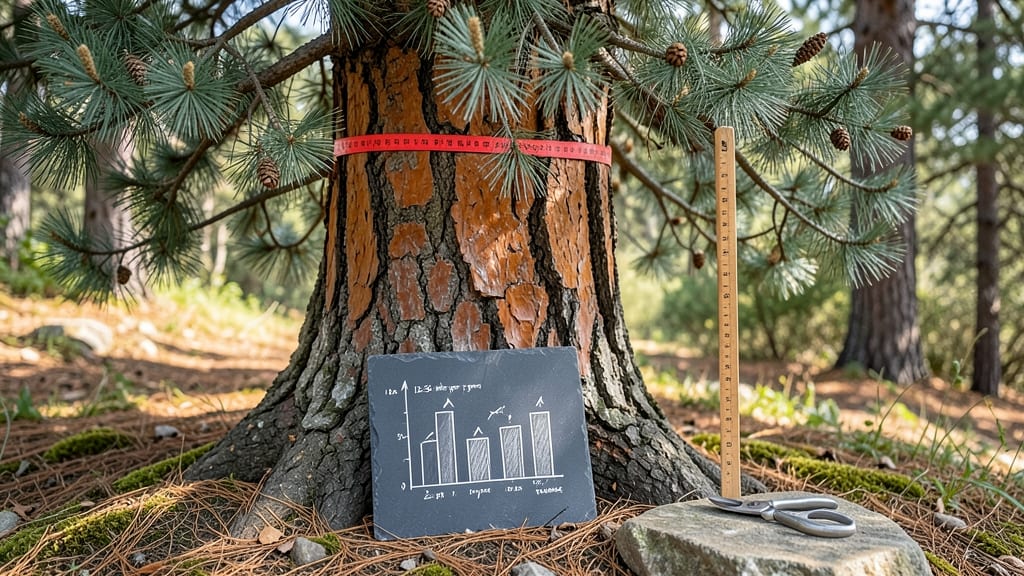
If you've ever wondered how tall does a pine tree grow per year, you're not alone—this question separates the patient gardeners from the dreamers who expect their 🌲 pine tree to shoot up overnight.
The truth? Some varieties can add 3 feet annually, while others barely budge past a foot. The difference comes down to species, soil, and care—factors you can actually control.
Picture this: a Loblolly Pine reaching 4 feet in its first year, or a Ponderosa Pine taking its sweet time with just 2 feet of growth.
The right conditions can turn your backyard into a forest in no time, but getting there requires knowing which species thrive in your USDA Zone 6a climate and how to give them the best start in spring planting.
I’ve dug into the science (and a few gardener secrets) to break down exactly what to expect—and how to push those growth numbers higher.
Whether you’re planting a fast-growing variety for shade or a slow-and-steady 🌲 pine tree for long-term beauty, this is your roadmap to maximizing height without the guesswork.
Ready to stop guessing and start growing? Let’s cut through the myths and get to the actionable tips that’ll have your pine tree reaching for the sky—faster than you thought possible.
Dwarf
10-25 ft
Container friendly
Semi-Dwarf
30-50 ft
Most popular
Standard
60-200 ft
Full orchard size
Fastest-growing pine tree species and their annual height increases
If you're dreaming of a towering pine tree that grows fast, you'll love how some species shoot up like rockets while others take their sweet time. The annual growth rate depends entirely on the pine species—some gain 3 feet per year in ideal conditions, while others barely inch upward.
Let’s dive into the fastest-growing pine trees and what you can realistically expect from each.
Pine trees are divided into three growth categories: fast, moderate, and slow. The fastest growers, like the Loblolly Pine, can reach 36-48 inches per year in their prime, while slower varieties like the Bristlecone Pine might only add 1-2 inches annually.
Your choice of species will dictate how quickly your backyard transforms into a forest.
Here’s the comparison table of the top 10 fastest-growing pine species, ranked by their average annual height increase. These numbers assume optimal growing conditions—think full sun, well-draining soil, and proper care. If conditions aren’t ideal, growth rates can drop by 30-50%.
| Species |
Annual Growth (inches) |
Mature Height (feet) |
Growth Notes |
| Loblolly Pine |
36-48 |
60-90 |
Fastest-growing; thrives in warm climates |
| Eastern White Pine |
24-36 |
50-75 |
Versatile; adapts to various soil types |
| Ponderosa Pine |
24-36 |
80-165 |
Slow early growth; accelerates after 5 years |
| Slash Pine |
30-42 |
70-100 |
Drought-resistant; loves sandy soil |
| Shortleaf Pine |
24-36 |
60-80 |
Hardy; tolerates poor soil |
| Virginia Pine |
18-24 |
40-60 |
Slow starter; drought-tolerant |
| Scotch Pine |
12-24 |
50-75 |
Cold-hardy; slower growth in shade |
| Red Pine |
12-24 |
60-80 |
Needs acidic soil; slower in alkaline areas |
| Jack Pine |
12-18 |
40-60 |
Pioneer species; thrives in poor soil |
| Bristlecone Pine |
1-2 |
30-50 |
Slowest-growing; lives for centuries |
Factors that determine pine tree growth rate (and how to optimize them)
Your pine tree's annual growth isn't just luck—it's a mix of soil quality, sunlight exposure, and your care habits. I've seen Loblolly Pines add 4 feet in ideal conditions, while the same species might only grow 1 foot in poor soil.
The difference? Understanding these 5 key factors and tweaking them to your advantage.
First, soil drainage makes or breaks growth. Pine trees hate soggy roots—they need well-draining soil to prevent root rot. Amend heavy clay with compost or sand to create that perfect airy mix.
I always test my soil's pH too; pines prefer acidic soil (pH 4.5-6.0). A simple soil test kit ($10 at garden centers) saves you from guessing.
Sunlight is non-negotiable—these trees crave 6+ hours of direct sun daily. Partial shade slows growth by 30-50%. If your yard only gets morning sun, consider a fast-growing species like Eastern White Pine, which tolerates partial shade better than most. South-facing yards? You're in the growth gold zone.
🌱 5 Factors That Control Pine Tree Growth
- 1. Soil Drainage: Pines need fast-draining soil—amend with compost/sand if compacted. ⚠️ Avoid waterlogged spots!
- 2. Sunlight: 6+ hours of full sun = 2-3x faster growth. Partial shade = stunted growth.
- 3. Watering: Deep but infrequent (1-2" per week). Overwatering kills roots!
- 4. Fertilization: Balanced 10-10-10 in spring boosts growth by 20-40%.
- 5. Pruning: Remove dead branches in late winter to redirect energy upward.
Watering might seem simple, but most gardeners overdo it. Pine trees are drought-tolerant once established, but young trees need deep watering (1-2 inches) every 7-10 days. I use a soaker hose to deliver water slowly to the roots—this prevents evaporation and root rot.
Pro tip: Water in the morning to let foliage dry before nightfall, reducing fungal risks.
Don't forget fertilizer—a little goes a long way. I apply a balanced 10-10-10 fertilizer in early spring (March-April) and again in mid-summer. Too much nitrogen = leafy growth, no height.
Stick to 1 lb per 100 sqft and watch your tree shoot up. For slow-growing species like Bristlecone Pine, skip fertilizer entirely—they thrive in lean soil.
Finally, pruning isn't just about looks—it's a growth hack. Remove dead or crossing branches in late winter to let your pine focus energy on vertical growth. Avoid heavy pruning in summer, as it stresses the tree.
I prune my Ponderosa Pine annually, and it's added 6 inches extra height each year compared to unpruned neighbors.
Want to see 3x faster growth? Combine full sun, well-draining soil, and spring fertilization. Your pine tree will thank you with towering height in no time. 🌲
★★★★★4.6(12 reviews)