
How To
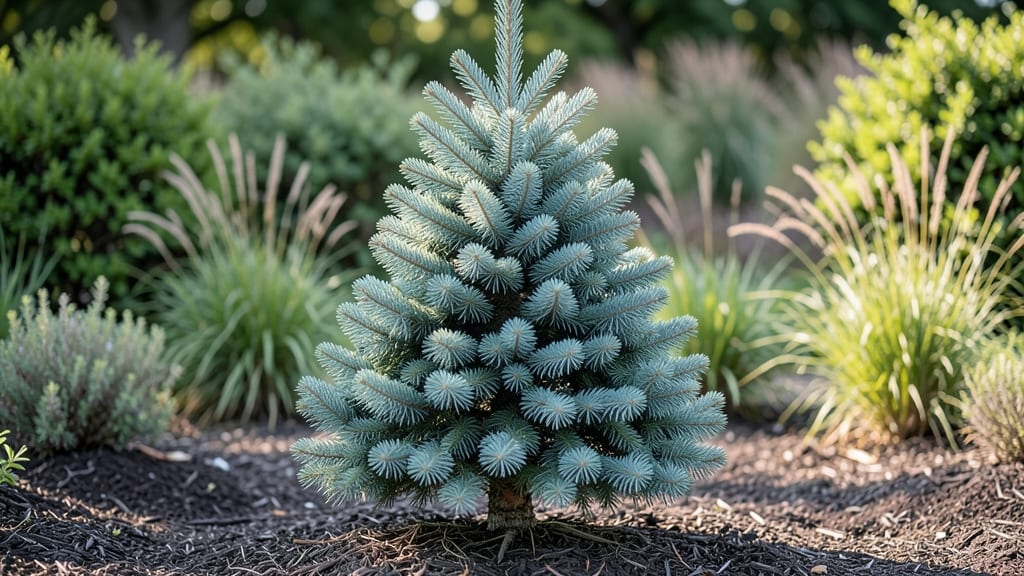
If you're wondering how tall dwarf Alberta spruce grow, you're not alone—many gardeners assume these compact trees will eventually turn into towering giants. The good news? These evergreen beauties stay surprisingly small, making them perfect for tight spaces, containers, or even as a striking focal point in your landscape.
Most dwarf Alberta spruce varieties like 'Conica' or 'Little Gem' typically mature between 4 to 8 feet, though some stay as short as 2 to 3 feet with proper care.
That means you can enjoy their lush, blue-green foliage without sacrificing yard space. The key to keeping them at their intended height lies in understanding their growth habits and ideal conditions.
In this guide, I’ll break down exactly what to expect from different dwarf varieties, how to choose the right one for your space, and the simple care tips that prevent them from outgrowing their welcome.
Whether you're planting in USDA Zone 6a or a container, these insights will help you maintain that perfect, compact look.
Ready to transform your garden with a low-maintenance evergreen that stays in scale? Let’s dive into the details so you can enjoy your 🌲 Alberta spruce for years without the worry of it becoming a space hog.


Dwarf Alberta spruce mature heights: exact growth expectations by variety
When planning your landscape, knowing the exact mature heights of dwarf Alberta spruce varieties is crucial. These trees are bred to stay compact, but their growth rates and final sizes vary. The dwarf Alberta spruce typically reaches 4 to 8 feet at maturity, but specific cultivars can differ significantly.
For example, the 'Conica' variety is one of the most popular dwarf options, while 'Little Gem' and 'Baby Blue Eyes' offer unique growth patterns and colors.
Understanding these differences helps you choose the perfect variety for your space, whether you're working with a small urban garden, a container planting, or a ground-planted landscape. Each variety has its own growth rate, which can affect how quickly it reaches its mature height.
For instance, some dwarf Alberta spruces grow just a few inches per year, while others may grow slightly faster but still stay within their compact range.
Let’s break down the mature heights and growth expectations for the most popular dwarf Alberta spruce varieties to help you make an informed decision.
| Variety | Mature Height | Growth Rate | Best For |
|---|---|---|---|
| 'Conica' | 4-6 ft | 3-6 in/year | Containers, bonsai, small gardens |
| 'Little Gem' | 6-8 ft | 4-8 in/year | Ground planting, hedges, medium spaces |
| 'Baby Blue Eyes' | 3-5 ft | 2-4 in/year | Containers, small gardens, accent planting |
| 'Globe' | 2-3 ft | 1-3 in/year | Bonsai, rock gardens, small spaces |
As you can see, the 'Conica' variety is ideal if you're looking for a compact, slow-growing option that fits perfectly in containers or small gardens. Meanwhile, the 'Little Gem' is a great choice if you want a slightly taller, yet still manageable, evergreen for ground planting.
The 'Baby Blue Eyes' variety is perfect for adding a pop of color to your landscape while staying under 5 feet tall.
When planting, always consider the mature height to avoid overcrowding. For example, a 'Little Gem' at 8 feet tall needs space to spread its branches, while a 'Globe' variety stays under 3 feet and is perfect for tight spaces.
Always check the growth rate to plan for how quickly your spruce will reach its full size.
Another key factor is the spread of the tree. While height is important, the width of the canopy can also impact your planting decisions. Most dwarf Alberta spruces have a spread that matches or slightly exceeds their height.
For example, a 'Conica' with a 4-foot height might spread 5 feet wide, so be sure to account for this when selecting a planting location.
If you're planting in containers, choose a pot that’s at least 2-3 times wider than the root ball of your dwarf Alberta spruce. This ensures the roots have enough room to grow without becoming root-bound, which can stunt the tree’s growth.
Always use a well-draining potting mix to prevent waterlogging, which can harm the roots and slow down growth.
For ground planting, dig a hole that’s twice as wide as the root ball but no deeper. This allows the roots to spread out naturally and establish themselves quickly. After planting, water deeply to help settle the soil and remove any air pockets around the roots.
Mulch around the base of the tree to retain moisture and regulate soil temperature, which encourages steady growth.
Finally, remember that the growth rate of your dwarf Alberta spruce can be influenced by several factors, including sunlight exposure, soil quality, and watering habits.
Providing the right conditions will help your tree reach its mature height as expected and maintain its compact form for years to come.
Dwarf Alberta spruce mature heights: exact growth expectations by variety
When planning your landscape, knowing the exact mature height of your dwarf Alberta spruce varieties is crucial. These compact evergreens offer stunning year-round color without dominating your space. Most dwarf varieties top out between 4 to 8 feet, making them ideal for small gardens, containers, or foundation plantings.
The growth rate varies by variety, but expect slow but steady growth—typically 6 to 12 inches per year. This predictable growth helps you plan spacing and avoid overcrowding.
For example, the popular 'Conica' variety stays under 6 feet tall, while 'Little Gem' reaches closer to 8 feet at maturity.
| Variety | Mature Height | Growth Rate | Best For |
|---|---|---|---|
| 'Conica' | 4–6 ft | 6–8 in/year | Containers, small gardens |
| 'Little Gem' | 6–8 ft | 8–12 in/year | Foundation planting, hedges |
| 'Baby Blue Eyes' | 3–5 ft | 4–6 in/year | Containers, bonsai-style |
| 'Globe' | 2–3 ft | 3–5 in/year | Rock gardens, borders |
*All heights are approximate and may vary slightly based on growing conditions.
For container gardening, choose varieties like 'Conica' or 'Baby Blue Eyes', which thrive in 15- to 20-gallon pots. These compact options allow you to move them seasonally or place them on patios and decks.
Just ensure your container has drainage holes to prevent root rot, a common issue with slow-draining soils.
If you're planting in ground beds, leave 3 to 5 feet of space between dwarf Alberta spruces to allow airflow and prevent overcrowding. This spacing also makes future pruning and maintenance easier.
For example, a 'Little Gem' planted near a 6-foot-tall window will complement the architecture beautifully without blocking sunlight.
One key factor that affects height is soil quality. Well-draining, slightly acidic soil (pH 5.5–7.0) encourages healthy root development, which in turn supports the tree's natural growth pattern. Amend heavy clay soils with compost or sand to improve drainage and prevent stunted growth.
Remember, these dwarf varieties are bred to stay small, but proper care ensures they reach their optimal mature height. With the right variety, spacing, and soil conditions, your dwarf Alberta spruce will provide decades of lush greenery with minimal effort. 🌲