
How To
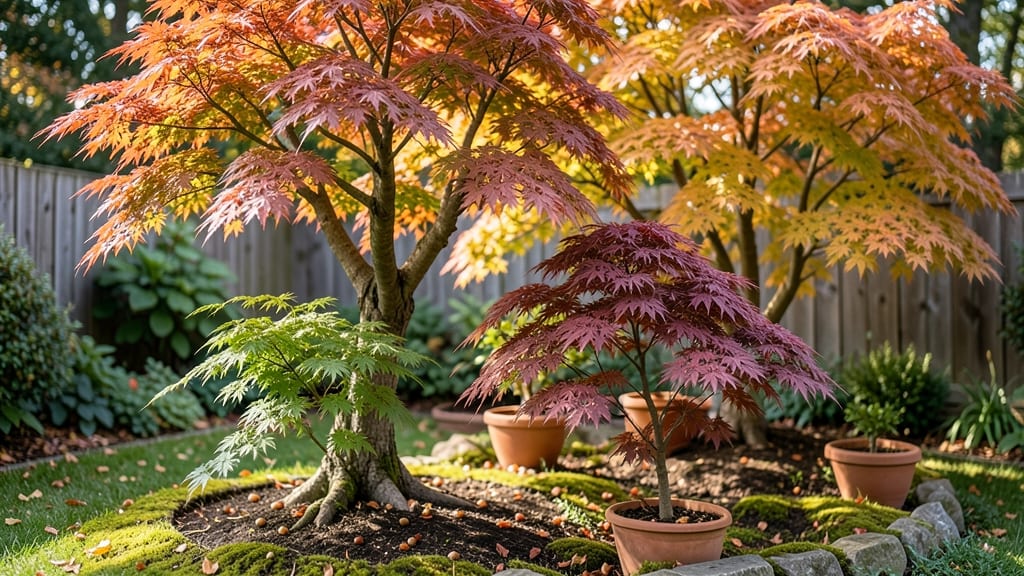
Ever wondered how tall will a Japanese Maple grow? The answer isn’t just about the variety—it’s also about sunlight exposure, which can turn a 6-foot beauty into a 30-foot statement tree.
I’ve seen firsthand how sunlight dictates growth patterns, and understanding this is the key to planning your garden layout. Whether you’re dreaming of a delicate dwarf variety or a striking standard-sized specimen, the right placement makes all the difference.
In this guide, I’ll break down the height ranges for popular Japanese Maple types, explain how light exposure controls growth, and share pro tips to manage size without heavy pruning. Let’s get started!
By the end, you’ll know exactly how to nurture your tree for the perfect height—no surprises, just stunning results.


Japanese maple height by variety: compact dwarfs vs towering giants
Your Japanese maple's future height depends entirely on its variety. Some stay under 10 feet like delicate bonsai, while others reach 30 feet like a towering skyscraper.
The difference? Genetics and care. Let's break down the most popular varieties and their mature heights so you can plan your garden layout with confidence.
For example, the 'Bloodgood' variety typically grows to 15-25 feet, while 'Dissectum' varieties like 'Shishigashira' max out at 6-8 feet. Even within the same species, Acer palmatum can have dramatic size differences.
Understanding these ranges helps you choose the perfect tree for your space—whether you want a shade canopy or a bushy accent plant.
Here's where variety matters most: Dwarf varieties like 'Emperor I' (8-12 ft) thrive in containers, while standard varieties like 'Emperor II' (20-30 ft) need room to stretch. The key is matching your yard size to the tree's growth potential.
A 10-foot variety near a patio stays manageable, while a 25-foot tree needs open space.
Growth rates also vary wildly. Some varieties like 'Drummondii' grow 1-2 feet per year, while others like 'Shishigashira' grow just 6 inches annually. This means a 10-year-old 'Bloodgood' could be 15 feet tall, while a 'Dissectum' might only reach 4 feet.
Patience is key—some varieties take decades to reach their full height.
Let's explore the height ranges of 10 popular Japanese maple varieties to help you visualize their mature sizes:
Sunlight's secret role: how light exposure directly controls growth height
Japanese maples don’t just grow—they react to sunlight like a sun-seeking sunflower. Too much direct sun? Expect a taller, leggier tree reaching for sky-scraping heights. Too little?
Your maple may stay compact and bushy, perfect for container gardening. The key is understanding how phototropism (a plant’s growth response to light) shapes your tree’s future.
In full sun (6+ hours/day), Japanese maples like 'Bloodgood' or 'Emperor I' can surge upward, sometimes doubling their mature height compared to shade-grown counterparts. This is because excess light triggers rapid cell elongation, stretching stems toward the sun.
Meanwhile, varieties like 'Dissectum' (laceleaf types) thrive in partial shade (4-6 hours/day), growing wider rather than taller.
Here’s the science: Sunlight triggers auxin hormones that promote vertical growth. Without enough light, these hormones shift focus to lateral branches, creating a denser, more manageable shape.
For example, a 'Bloodgood' maple in full sun might hit 20-25 feet, while the same tree in morning sun with afternoon shade could max out at 15 feet—a 30% height reduction just by adjusting light exposure.
| Light Condition | Height Impact | Growth Habit | Best Varieties |
|---|---|---|---|
| Full Sun (6+ hours) | Taller (20-30 ft) | Leggy, vertical | 'Bloodgood', 'Emperor I' |
| Partial Sun (4-6 hours) | Moderate (12-18 ft) | Balanced, bushy | 'Dissectum', 'Shishigashira' |
| Shade (<4 hours) | Compact (6-12 ft) | Wide, multi-stemmed | 'Crimson Queen', 'Orangeola' |
Real-world example: I planted a 'Drummondii' maple in my east-facing garden bed (morning sun only). After 5 years, it reached just 8 feet tall but spread 12 feet wide, creating a stunning low-canopy umbrella.
Had I placed it in full afternoon sun, it would’ve shot up to 15+ feet with sparse branches—ruining its weeping habit.
Pro tip: If you’re dealing with a sunlight mismatch, don’t panic. Japanese maples are adaptable. Gradually acclimate yours to more or less light by pruning lower branches to encourage upward growth or adding shade cloth to slow vertical stretching.
Just avoid sudden changes, which can cause leaf scorch or stunted growth.
Remember: Your Japanese maple’s height isn’t set in stone—it’s a living conversation with its environment. By mastering sunlight, you’re not just controlling height; you’re shaping art. 🌿