
How To
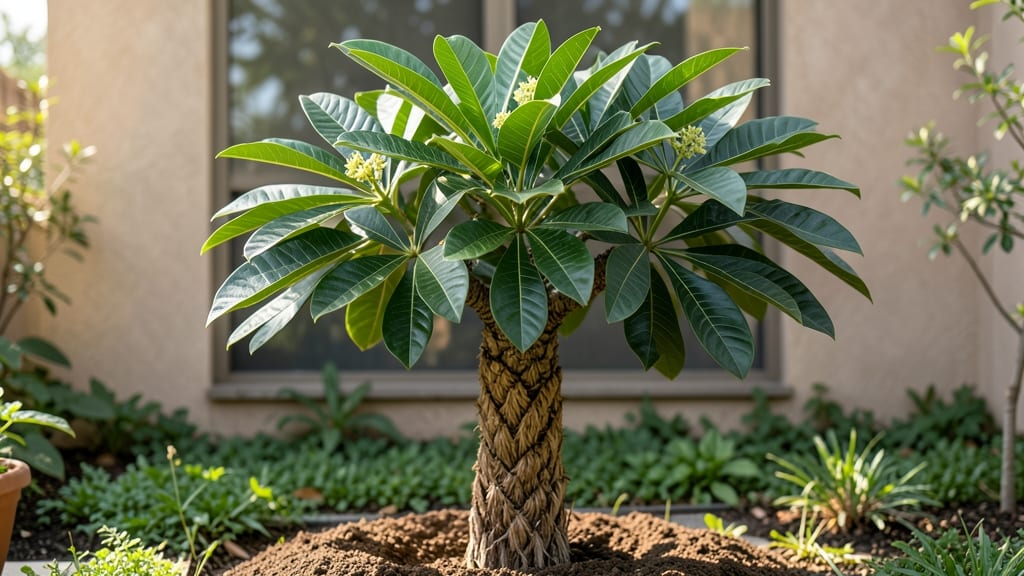
Money tree height guide: how tall they grow indoors (with growth charts)
Your money tree (Pachira aquatica) can become a stunning indoor centerpiece—but its height depends entirely on your care routine. Without intervention, these tropical beauties can grow 6 to 10 feet tall indoors, often outpacing even the tallest ceilings.
The key to managing its size lies in understanding its natural growth patterns and how indoor conditions like light exposure and pruning frequency influence its vertical expansion.
Most money trees start small, reaching just 1-2 feet in their first year. By year two, they’ll shoot up to 3-4 feet, and without pruning, they can double that height by year three.
The good news? With strategic care, you can keep your money tree at a compact 3-5 feet—perfect for living rooms or offices—while still enjoying its lush, braided trunk and vibrant foliage.
Here’s the critical factor: indoor growth rates are typically 12-24 inches per year, but this can accelerate to 36 inches or more if your plant gets too much light or isn’t pruned regularly.
The secret to controlling height isn’t stunting growth—it’s guiding it. Let’s break down the height expectations and how to shape your money tree’s future.
| Stage | Height Range | Timeframe | Care Tip |
|---|---|---|---|
| Seedling | 0-6 inches | 0-6 months | Use small pot, high humidity |
| Year 1 | 1-2 feet | 12 months | Prune lightly to encourage bushiness |
| Year 2 | 3-4 feet | 24 months | Repot if root-bound, prune to control height |
| Year 3+ (Unpruned) | 6-10 feet | 36+ months | Regular pruning essential for height control |
| Year 3+ (Pruned) | 3-5 feet | 36+ months | Trim top growth annually, rotate pot |
The summary table above shows how your money tree’s height progresses without intervention—and how pruning transforms its trajectory. Notice how the unpruned tree can reach 10 feet by year three, while a pruned specimen stays a manageable 3-5 feet. The difference? Consistent pruning and pot rotation to encourage even growth.
Light plays a surprising role in height control. Money trees grown in bright indirect light (like an east or west-facing window) grow 20-30% taller than those in lower light. That’s because they stretch toward light sources—a phenomenon called etiolation.
If your money tree is leaning or growing leggy, it’s likely light-starved. Move it closer to a window or supplement with a grow light to keep it compact.
Pot size matters too. Money trees in too-small containers grow taller because their roots compete for space, forcing the plant upward. Always choose a pot that’s 2-3 inches wider than the root ball, and repot every 2-3 years to prevent root-bound stress.
A well-draining soil mix with perlite or orchid bark also helps maintain healthy, controlled growth.
One common mistake that accelerates height growth is over-fertilizing. While money trees love nutrients, too much fertilizer—especially high-nitrogen blends—can cause rapid but weak growth.
Stick to a balanced 10-10-10 fertilizer applied every 4-6 weeks during spring and summer. Reduce feeding in fall and winter to slow vertical growth naturally.
For a braided money tree, height control becomes even more critical. The braiding process itself doesn’t limit growth, but the tight wrapping can stress the plant if it’s too tall.
Aim to keep braided varieties under 5 feet by pruning the top growth regularly. This ensures the braids stay secure and the plant remains stable.
If you’re wondering how to measure your money tree’s growth, use a simple trick: Mark the stem height on a nearby wall with removable tape every 3 months.
This visual tracking helps you adjust care—like pruning or light exposure—before the plant becomes unmanageable. Most gardeners find their money trees grow 1-2 feet per year with minimal intervention.
Remember, the goal isn’t to stunt your money tree—it’s to guide its growth so it thrives in your space. With the right balance of light, pruning, and pot size, you can enjoy a lush, healthy money tree that stays at your
Money tree vs. money tree varieties: which stays shortest indoors?
Not all money trees grow to the same height—some varieties stay compact while others reach towering heights. If you’re working with limited ceiling space, choosing the right cultivar can make all the difference.
The standard Pachira aquatica can grow 6-10 feet tall indoors, but dwarf varieties and hybrids like ‘Money Tree’ (Pachira aquatica ‘Rafael’) often max out at 3-5 feet with proper care.
For the shortest options, look for ‘Dwarf Money Tree’ hybrids or Pachira glabra, which naturally stay under 5 feet when pruned regularly. Even within the same species, light exposure and pruning habits can shrink or stretch growth by up to 3 feet over a year.
| Variety | Mature Height (Indoors) | Growth Rate | Best For |
|---|---|---|---|
| Standard Pachira aquatica | 6–10 ft | Fast (1–2 ft/year) | Large spaces, statement plants |
| ‘Money Tree’ (P. aquatica ‘Rafael’) | 3–5 ft | Moderate (1 ft/year) | Small apartments, offices |
| Pachira glabra | 4–6 ft | Slow (6–12 in/year) | Low-maintenance growers |
| Dwarf hybrids (e.g., ‘Bonsai Money Tree’) | 2–4 ft | Slow (4–8 in/year) | Tables, shelves, bonsai styles |
If you’re buying a money tree, ask the nursery for ‘dwarf’ or ‘miniature’ labels—these are often grafted or bred to stay small. Even standard varieties can be kept under 5 feet with regular pruning every 6–8 weeks and root-bound conditions (which slow vertical growth).
For the absolute shortest results, pair a dwarf variety with low-light conditions (which reduces growth by 20–30%) and smaller pots. Just avoid overcrowding—roots need room to breathe, or your plant may become stressed.
Pro tip: If your money tree starts leaning, it’s a sign it needs more bright indirect light to grow upright. A south-facing window with sheer curtains is ideal for balancing height and stability.
Whether you choose a 6-foot giant or a 3-foot tabletop treasure, the key is matching the variety to your space—and pruning before it outgrows your ceiling! 🌿