
Flowers
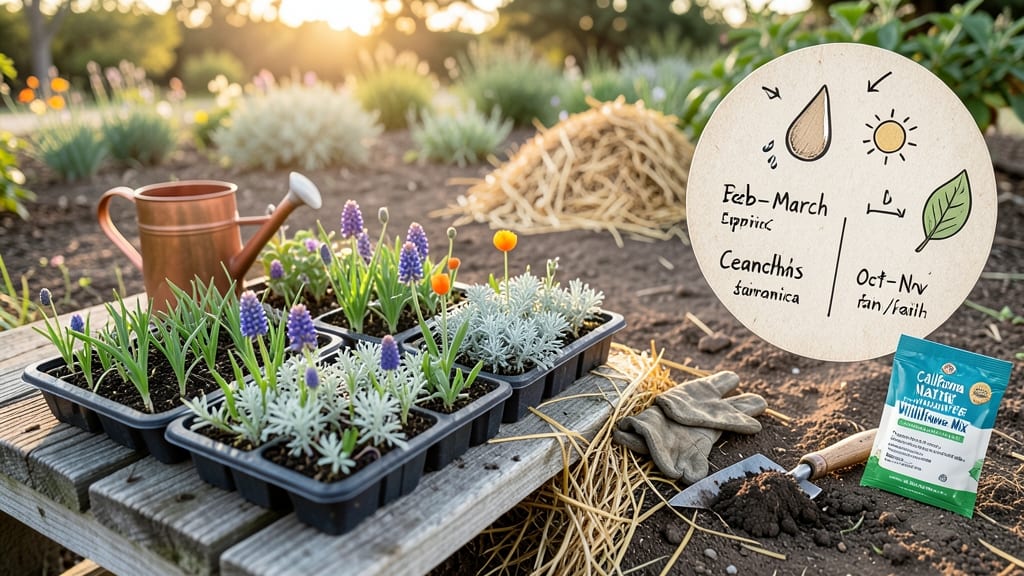
If you’ve ever planted flowers in California only to watch them struggle through the heat or fade too soon, you’re not alone. The perfect planting time for vibrant blooms depends entirely on where you live—whether you’re battling coastal fog, desert sun, or valley heat.
With USDA zones ranging from 7b to 10a and microclimates that feel like entirely different states, timing is everything. Skip the guesswork and learn exactly when to plant for year-round color, from frost-free coastal gardens to sunbaked desert landscapes.
I’ll break down the ideal months for annuals, perennials, and drought-resistant varieties so your garden thrives—no matter if you’re in Zone 9b’s desert or Zone 10a’s coastal breeze. Let’s get those 🌸 blooming on schedule!
Whether you’re a first-time gardener or a seasoned pro, these region-specific tips will help you avoid common mistakes and keep your flowers flourishing all year. Ready to transform your outdoor space?
California flower planting calendar by USDA Zone (coastal vs. desert vs. valley)
California’s USDA zones 7b through 10a create wildly different planting windows—coastal areas like San Francisco (Zone 10) can plant year-round, while inland valleys like Sacramento (Zone 9b) must time sowing carefully to avoid summer heat stress.
Even desert regions like Palm Springs (Zone 10b) have distinct deadlines for winter vs. fall bloomers.
Most annual flowers thrive when sown 6-8 weeks before last frost (or year-round in frost-free zones), while perennials often need early spring or fall planting to establish roots before summer dormancy.
Bulbs like tulips (Zone 7b+) should go in fall, but drought-tolerant natives like California poppies can self-seed anytime.
Here’s your zone-by-zone breakdown for optimal planting months, with adjustments for heat-sensitive vs. drought-resistant varieties:
Notice how Zone 10a/b (coastal) allows year-round planting, but Zone 9b (inland valleys) must avoid summer heat for tender annuals. Desert zones (11) focus on fall/winter to escape summer’s 110°F+ temps. Pro tip: Use shade cloth in Zone 9b+ to protect seedlings during June–August.
For bulbs like tulips and daffodils, plant in fall (Oct–Dec) in Zone 7b+, but skip them in Zone 10a/b—they’ll rot in winter wetness. Instead, opt for spring-blooming bulbs like wild hyacinth or blue dicks, which thrive in cooler coastal winters.
Ever wonder why your zinnias bolt in July? That’s because they’re heat-sensitive and need spring/fall planting in Zone 9b+. Swap them for sunflowers
Best flowers to plant now by California region (fastest blooms & low-maintenance picks)
California’s microclimates mean your planting timeline should match your region—whether you’re in coastal fog, valley heat, or desert sun. For instant color, focus on fast-blooming annuals like marigolds and zinnias, which thrive in Zone 9b-10a.
These varieties handle heat stress and drought better than delicate imports.
In coastal areas (e.g., San Francisco), snapdragons and pansies love the mild winters and can be planted year-round. Meanwhile, desert regions (like Palm Springs) favor bougainvillea and lantana, which bloom even in 110°F+ temps. Let’s break down the best picks for each zone.
- Snapdragons: Plant now for spring blooms; tolerates coastal winds.
- Pansies: Year-round color; heat-tolerant varieties like ‘Matrix’ series.
- Sweet Peas: Fall planting for winter-spring fragrance; needs trellis support.
- Bougainvillea: Plant in spring; thrives in full sun and drought.
- Lantana: Heat-loving annual; deadhead for non-stop blooms.
- Desert Marigold: Native perennial; drought-resistant and pollinator-friendly.
- Zinnias: Fast blooms in 6-8 weeks; cut flowers for arrangements.
- Marigolds: Pest-repellent; plant in summer for fall color.
- Sunflowers: Tall varieties like ‘Moulin Rouge’ for summer height.
- Lupines: Native perennial; plant in early spring before heat sets in.
- Columbines: Shade-tolerant; blooms spring-fall.
- Astilbe: Feathery plumes for partial shade gardens.
For low-maintenance gardens, prioritize drought-tolerant natives like California poppies or yarrow. These perennials return yearly with minimal water once established. If you’re succession planting for continuous blooms, stagger marigolds every 2 weeks—they’ll fill gaps as older flowers fade.
Pro tip: Test soil moisture before watering—California’s clay soils retain water longer than sandy desert mixes. Mulch with wood chips to lock in moisture and suppress weeds, saving you hours of labor each month. Even heat-sensitive flowers like petunias can thrive with afternoon shade in Zone 10a.
Don’t overlook bulbs! Tulips and daffodils planted in fall (October-November) will surprise you with spring blooms, even in cooler microclimates. For instant gratification, pre-planted pots of geraniums or impatiens let you skip the waiting—just pop them into the ground and water deeply.