
Size
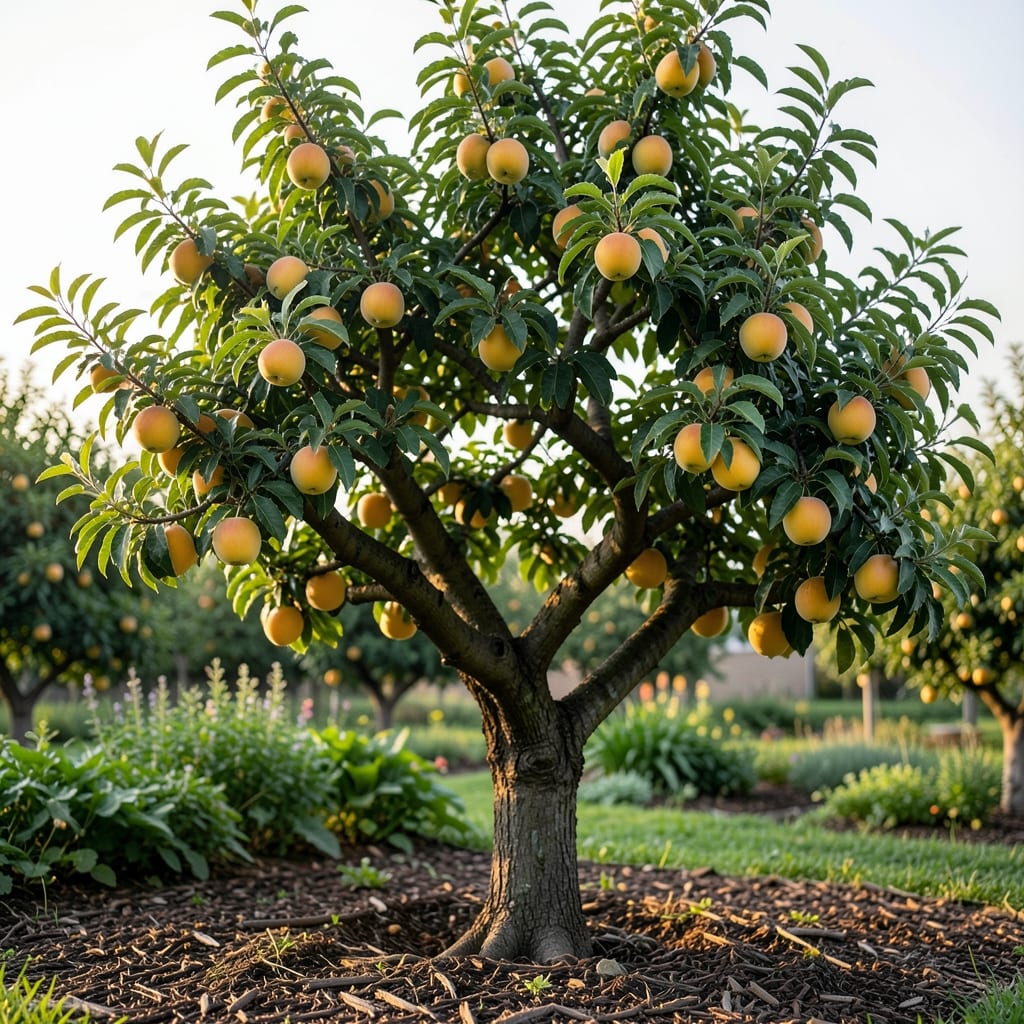
Wondering how tall can a peach tree grow before it outgrows your backyard? The answer depends on whether you plant a dwarf variety or let a standard tree reach its natural height—some varieties can tower over 25 feet!
If space is tight, you’ll love knowing that dwarf peach trees stay between 8-12 feet, while semi-dwarf options grow to 12-18 feet. But even full-size trees can be managed with the right pruning techniques, so you don’t have to sacrifice fruit for space.
In this guide, I’ll break down the height ranges for popular varieties and share pro tips for keeping your 🍑 peach tree at your ideal height—whether you’re in USDA Zone 6a or beyond.
Ready to grow peaches without the space worries? Let’s dive into the varieties, pruning secrets, and everything else you need to know to keep your tree happy and manageable.

Peach tree height by variety: dwarf to standard tree size guide
If you're planning to grow a peach tree but lack space, choosing the right variety is your first step. Peach trees come in three main height categories: dwarf, semi-dwarf, and standard. Each grows at a different rate and reaches a distinct mature height, making them ideal for different garden layouts. For example, a dwarf peach tree like 'Bonanza' stays under 12 feet, while a standard variety like 'Elberta' can tower over 25 feet.
The height of your peach tree isn't just about the variety—it's also influenced by growing conditions, pruning habits, and even soil quality. In optimal conditions, a standard peach tree can grow 3-4 feet per year in its early years, while dwarf varieties grow more slowly, gaining only 1-2 feet annually. Understanding these growth rates helps you plan for long-term space needs and harvest accessibility.
For home gardeners with limited space, dwarf peach trees are the best choice. They mature quickly, produce fruit in 2-3 years, and fit perfectly in small yards or even large containers. Semi-dwarf varieties strike a balance, offering manageable heights while still yielding abundant fruit. Meanwhile, standard trees require ample yard space and regular pruning to prevent them from becoming unmanageable giants.
Here’s how different peach tree varieties compare in height and growth expectations:
When selecting a peach tree, consider not just its mature height but also its spread. Some varieties, like 'Bonanza', have a rounded canopy that spreads nearly as wide as it grows tall, while others, like 'Redhaven', develop a more upright shape. This spread affects how close you can plant trees to each other and whether they’ll fit comfortably in your garden layout.
For example, a standard peach tree like 'Elberta' needs at least 20 feet of space in all directions to avoid overcrowding. In contrast, a dwarf variety like 'Sanguinole' can thrive in a 5-foot diameter container or a small corner of your yard. Always check the specific variety’s spacing requirements to ensure healthy growth and easy harvesting.
Another critical factor is the rootstock used to grow the tree. Dwarf varieties are often grafted onto dwarfing rootstock, such as 'Lovell' or 'Halford', which naturally restricts the tree’s height and spread. Semi-dwarf and standard trees may use semi-vigorous or seedling rootstock, allowing for taller growth. If you’re unsure about the rootstock, ask your nursery for details—they can provide insights into how the tree will perform in your space.
Even with the right variety, pruning plays a massive role in controlling height. Regular pruning can reduce a standard tree’s height by 30-50% over time, making it more manageable. Techniques like central leader pruning or open-center training can further shape the tree to fit your space. We’ll dive deeper into these methods in the next section, but for now, remember: prune young to establish the desired shape early.
If you're growing peaches in a container, choose a dwarf variety and ensure the pot is at least 18 inches deep with drainage holes. Containers limit root growth, which naturally restricts the tree’s height and spread. Just be prepared to repot every 2-3 years as the tree grows, using a pot that’s 6-12 inches larger in diameter each time.
Finally, don’t forget that so
How to prune peach trees for height control: step-by-step techniques for small spaces
Pruning is the secret weapon for controlling your peach tree’s height—especially if you’re working with a standard variety that could otherwise reach 25+ feet. The key is timing, technique, and consistency. When done correctly, pruning can reduce a tree’s height by 30-50% while improving air circulation and fruit production. Start pruning in late winter or early spring, just before new growth begins, to avoid encouraging disease or pest infestations.
For dwarf varieties, minimal pruning is usually needed—just remove dead or crossing branches to maintain shape. But for semi-dwarf or standard trees, you’ll want to employ structured pruning methods like central leader training or open-center (vase) shaping. Central leader keeps the tree upright with a single main trunk, while open-center encourages a wider, bushier shape that’s easier to harvest from. Both methods require regular maintenance to keep the tree at your desired height.
Here’s a step-by-step guide to pruning your peach tree for height control, tailored for small spaces:
- 1 Assess the tree’s structure: Start by identifying the central leader (main trunk) and any suckers or water sprouts (vigorous shoots growing from the base or trunk). These compete for nutrients and should be pruned first.
- 2 Remove dead or diseased branches: Use sterilized pruning shears to cut these back to healthy wood. This prevents the spread of disease and improves airflow.
- 3 Thin out crowded branches: Focus on removing branches that cross or rub against each other. Aim to leave 6-8 main scaffold branches spaced evenly around the trunk.
- 4 Prune to control height: For central leader training, cut back the leader to your desired height (e.g., 10-12 feet for a semi-dwarf). For open-center shaping, prune the leader shorter and encourage lateral branches to fill out the canopy.
- 5 Shape for accessibility: Prune lower branches to create a clear trunk of at least 3-4 feet. This makes harvesting easier and reduces the risk of branches breaking under fruit weight.
- 6 Clean up and seal cuts: Remove all pruned branches from the area and apply pruning sealant to larger cuts (over 1/2 inch thick) to prevent disease.
Tools are essential for effective pruning. Use sharp bypass pruners for small branches, loppers for thicker stems, and a pruning saw for larger limbs. Always sterilize your tools with rubbing alcohol between cuts to avoid spreading pathogens. For container-grown peach trees, prune more aggressively to keep the tree compact—aim for a height that fits your pot’s dimensions.
Seasonal pruning is crucial. Conduct a light pruning in late summer to remove any suckers or excessive growth that may have sprouted during the season. Avoid heavy pruning in fall or winter, as this can stimulate new growth that won’t harden off before cold weather. Instead, focus on corrective pruning in late winter to shape the tree for the upcoming growing season.
If your peach tree is already too tall, don’t panic—you can still manage it. Start by reducing the height incrementally, cutting back no more than 25% of the tree’s height in a single session. This prevents shock and allows the tree to recover. Over time, you’ll see a noticeable reduction in height while maintaining a healthy, productive tree. With patience and consistent pruning, even a 20-foot standard peach tree can be shaped into a manageable 10-foot beauty.
Remember, the goal is to balance height and fruit production. A well-pruned peach tree not only fits your space but also yields larger, higher-quality fruit with better air circulation and sunlight exposure. Happy pruning—and enjoy those homegrown peaches! 🍑