
How To
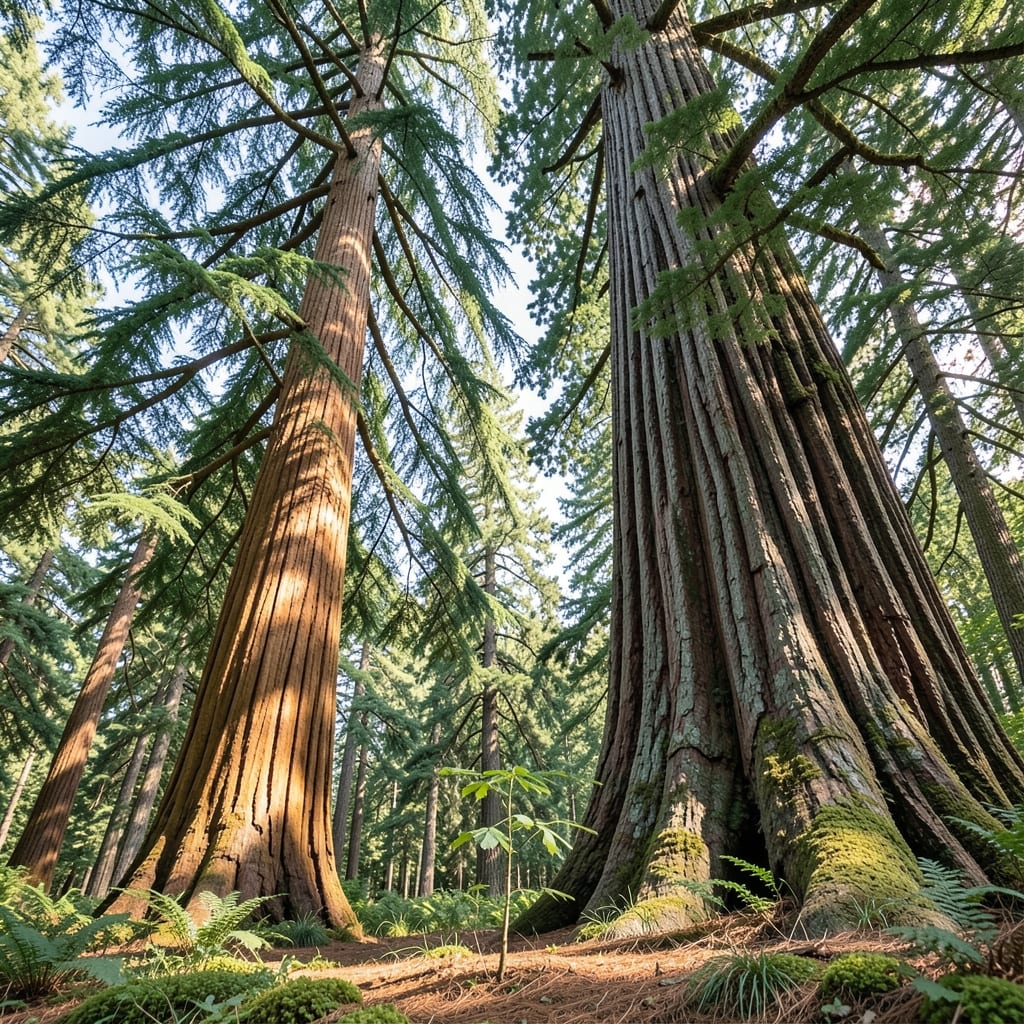
The record-breaking height of sequoias: how tall can they really grow?
When you think of the tallest trees on Earth, coast redwoods and giant sequoias immediately come to mind. But just how tall can these giants grow? The answer might surprise you—some sequoias reach heights that defy imagination, stretching toward the sky like natural skyscrapers. The tallest known specimen, Hyperion, stands at a staggering 380 feet, making it the tallest tree on the planet.
To put that into perspective, Hyperion’s height is equivalent to a 30-story building. Even the General Sherman tree, the largest by volume, towers over 275 feet. These trees don’t just grow tall—they grow massive, with trunks wide enough for entire families to gather inside. Their ability to reach such heights is a testament to their biological resilience and adaptability.
But how do they achieve this? The secret lies in their genetic makeup, root systems, and environmental conditions. Unlike many trees, sequoias have evolved to thrive in cool, foggy climates and nutrient-rich soils, which provide the perfect conditions for their vertical expansion. Their roots spread wide and deep, anchoring them while absorbing water and nutrients efficiently.
Here’s a quick look at the height potential of the two main sequoia species:
The coast redwood holds the record for height, thanks to its ability to thrive in foggy coastal climates. These trees can grow 3-5 feet per year in ideal conditions, with their height fueled by constant moisture from coastal fog. In contrast, giant sequoias grow more slowly but develop thicker trunks, making them the largest trees by volume.
One of the most fascinating aspects of sequoias is their growth rate. Young sequoias grow rapidly, adding several feet per year during their first few decades. However, as they mature, their growth slows dramatically. A 100-year-old sequoia might only add 1-2 feet per year, while ancient giants grow at a glacial pace of less than a foot per decade. This slow-and-steady approach allows them to reach their record-breaking heights over centuries.
The biological mechanisms behind their height are equally impressive. Sequoias have highly efficient water transport systems, allowing them to move water from their roots to their crowns without succumbing to cavitation (a process where air bubbles block water flow). Their thick bark also protects them from fires, pests, and harsh weather, giving them a competitive edge in their native habitats.
But what about the limits of their growth? While sequoias can theoretically grow taller, their height is constrained by environmental factors like water availability, nutrient supply, and climate conditions. For example, a sequoia growing in a dry inland region will never reach the same height as one thriving in a foggy coastal forest. Even with perfect conditions, their growth is a slow, lifelong process that spans centuries.
If you’ve ever dreamed of growing your own sequoia, remember that these trees require patience, space, and ideal growing conditions. While you might not see a 380-foot giant in your backyard, even a small sequoia can become a stunning focal point in your landscape with the right care. Their majesty lies not just in their height but in their longevity and resilience, making them a true wonder of the natural world.
Next, we’ll explore the key factors that influence how tall a sequoia can grow, from genetics to environmental conditions, so you can better understand what it takes to nurture these ancient giants.
Key factors that influence sequoia tree height: from genetics to environment
When it comes to sequoia tree height, genetics and environment work together like a perfectly tuned orchestra. The two main species—coast redwoods and giant sequoias—have different genetic blueprints for growth, but both need ideal conditions to reach their full potential. For example, coast redwoods can stretch toward the sky with fewer constraints, while giant sequoias prioritize width over height, though they still become massive.
One of the biggest factors is soil quality. Sequoias thrive in deep, nutrient-rich soils with excellent drainage. In the wild, they grow in well-drained, loamy soils that retain moisture without becoming waterlogged. Poor soil can stunt growth, leaving a tree struggling to reach its genetic height potential. For instance, a giant sequoia planted in rocky soil might only grow to half its expected height.
Elevation also plays a critical role. Giant sequoias, native to the Sierra Nevada mountains, grow best between 5,000 and 7,000 feet in elevation. At higher altitudes, cooler temperatures slow growth, while lower elevations can lead to heat stress and reduced height. Meanwhile, coast redwoods prefer lower elevations near the coast, where fog and mild temperatures create perfect growing conditions.
Climate is another game-changer. Sequoias need consistent moisture, especially during their early years. The coastal fog that blankets redwood forests provides natural irrigation, allowing them to grow taller. In contrast, giant sequoias rely on seasonal rainfall and snowmelt in the Sierra Nevada. Droughts can severely limit their height, as seen in some stunted sequoias in drier regions.
Even microclimates within their native ranges can influence height. For example, sequoias growing on north-facing slopes often outperform those on south-facing slopes due to cooler temperatures and less direct sunlight. This is why Hyperion, the world’s tallest tree, thrives in a sheltered grove where moisture and temperature are just right.
Finally, competition for resources shapes a sequoia’s height. In dense forests, trees grow taller to reach sunlight, a phenomenon called self-thinning. However, in open spaces, they may grow wider instead. This is why isolated sequoias often develop broader canopies rather than extreme heights.
Understanding these factors helps explain why some sequoias reach 380 feet while others barely surpass 100 feet. The right combination of genetics, soil, climate, and space is what turns a seedling into a sky-piercing giant.
| Factor | Impact on Height | Example |
|---|---|---|
| Genetics | Determines max potential height | Coast redwoods: 380 ft | Giant sequoias: 250 ft |
| Soil Quality | Poor drainage stunts growth | Rocky soil = 50% height reduction |
| Elevation | Optimal range: 5,000–7,000 ft | Sierra Nevada: ideal for giant sequoias |
| Climate | Drought slows growth | Coastal fog = faster height gain |
| Competition | Less competition = wider growth | Isolated trees = broader canopies |
If you’re dreaming of growing a towering sequoia, focus on replicating these ideal conditions as closely as possible. While you might not reach 380 feet in your backyard, creating the right environment can still yield a stunning, centuries-old giant. Just remember—patience is key, as these trees take decades to show their true potential.