
How To
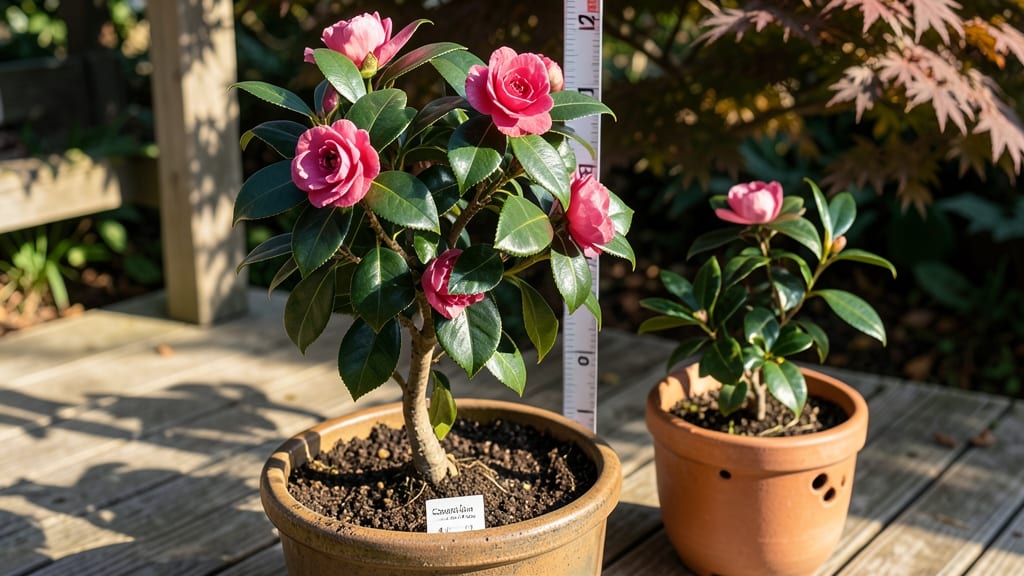
If you’ve ever wondered how tall do camellias grow in pots, you’ll be relieved to know their height is far more manageable than you might think.
While mature camellias can reach 6 to 10 feet in the ground, container-grown varieties stay compact—often 3 to 5 feet—with the right care.
The key to controlling their size lies in choosing the right variety and pot. Dwarf types like ‘Donation’ or ‘Spring’s Promise’ rarely exceed 4 feet, making them perfect for balconies or small patios.
Even standard varieties can be pruned to stay within your space limits, so long as you give them proper drainage and occasional trimming.
But here’s what most gardeners overlook: root-bound conditions can stunt growth, while larger pots encourage taller plants. I’ll show you how to pick the ideal container size, prune for height control, and spot the best low-growing varieties for your setup—so you can enjoy those stunning blooms without sacrificing space.
Whether you’re working with a 12-inch pot or a 18-inch planter, this guide will help you keep your camellias thriving—and at the perfect height for your space. Let’s get started!


Average height of camellias in pots: variety-specific growth expectations
Camellias in pots can range dramatically in height depending on the variety and your pruning habits. While some standard varieties reach 8–10 feet in the ground, container-grown camellias often stay 30–50% shorter due to root restrictions. The key is choosing dwarf or semi-dwarf cultivars bred for compact growth.
For example, Camellia sasanqua varieties like ‘Yuletide’ typically max out at 5–6 feet in pots, while Camellia japonica types such as ‘Desire’ can grow 6–8 feet tall if unpruned. Even these heights can be managed with regular pruning and proper container size.
Here’s how root-bound conditions affect growth: when roots circle the pot, they compete for nutrients, stunting height. A 12–18 inch pot is ideal for dwarf varieties, while larger containers (20+ inches) can accommodate semi-dwarfs. Always use pots with drainage holes to prevent root rot.
Pruning isn’t just for height control—it also encourages bushier growth and better blooms. I prune my ‘Donation’ camellia (a dwarf variety) every spring and fall to keep it under 4 feet. Without pruning, even dwarf varieties can grow 20–30% taller.
| Variety | Mature Height in Pots | Pruning Needs | Best Pot Size |
|---|---|---|---|
| Camellia sasanqua ‘Yuletide’ | 5–6 ft | Light pruning | 12–15 inches |
| Camellia japonica ‘Desire’ | 6–8 ft | Moderate pruning | 18–24 inches |
| Camellia ‘Donation’ | 3–4 ft | Minimal pruning | 10–12 inches |
| Camellia ‘Spring’s Promise’ | 4–5 ft | Light pruning | 14–16 inches |
If you’re working with a standard camellia in a pot, expect it to grow 3–5 feet taller than its ground-planted counterpart. For instance, a ‘Nobility’ camellia might reach 10 feet in the ground but only 7–8 feet in a large container.
The trade-off? Potted camellias often bloom more prolifically due to controlled root growth.
Another factor is the growth rate. Dwarf varieties like ‘Donation’ add only 6–12 inches per year, while semi-dwarfs like ‘Spring’s Promise’ grow 12–18 inches annually. Plan accordingly if you’re designing a small-space garden—patience pays off with these slower growers.
For fastest height control, combine pruning with container size. A 10-gallon pot limits roots, slowing vertical growth, while a 20-gallon container allows more expansion. I’ve seen ‘Yuletide’ camellias in 12-inch pots stay under 4 feet with consistent care.
Don’t forget about root pruning—gently teasing out circling roots during repotting can encourage outward growth instead of height spikes. This technique works best in spring or early summer, when the plant is actively growing.
Finally, light exposure plays a subtle role. While camellias thrive in partial shade, too much direct sun can cause leggy growth—long, weak stems that stretch for light. Position your potted camellia where it gets morning sun and afternoon shade to maintain a compact shape.
Average height of camellias in pots: variety-specific growth expectations
Camellias in pots can reach dramatically different heights depending on the variety and care you provide. While standard varieties like Camellia japonica can grow up to 8-10 feet in-ground, potted camellias typically max out at 3-6 feet with proper container gardening.
The key difference lies in root restriction and pruning practices.
Dwarf varieties are specifically bred for containers, staying between 3-5 feet tall. Semi-dwarf types like Camellia sasanqua ‘Yuletide’ reach 4-6 feet but can be pruned to fit tighter spaces. Even standard varieties will stay shorter in pots due to limited root space, though they may grow faster if not pruned.
Pot size plays a crucial role in height control. A 12-inch pot will restrict growth more than an 18-inch container, but too-large pots can lead to overwatering. Always choose a container that's 2-3 inches larger in diameter than the root ball to maintain balance without encouraging excessive growth.
Pruning in late winter or early spring can reduce height by 20-30% annually. For example, if you want a 4-foot camellia from a 6-foot variety, prune back by one-third of the current height each year. This also encourages bushier growth and more abundant blooms.
Light conditions affect height too. Camellias in full sun (6+ hours) may grow 1-2 feet taller than those in partial shade (4-6 hours). If your balcony only gets morning sun, expect slightly slower vertical growth but more vibrant flowers.
Remember, even dwarf varieties need proper drainage and well-aerated soil to reach their potential height. Root-bound plants will grow upward instead of outward, leading to leggy, unstable growth. Repot every 2-3 years to refresh the soil and encourage healthy development.