
Trees
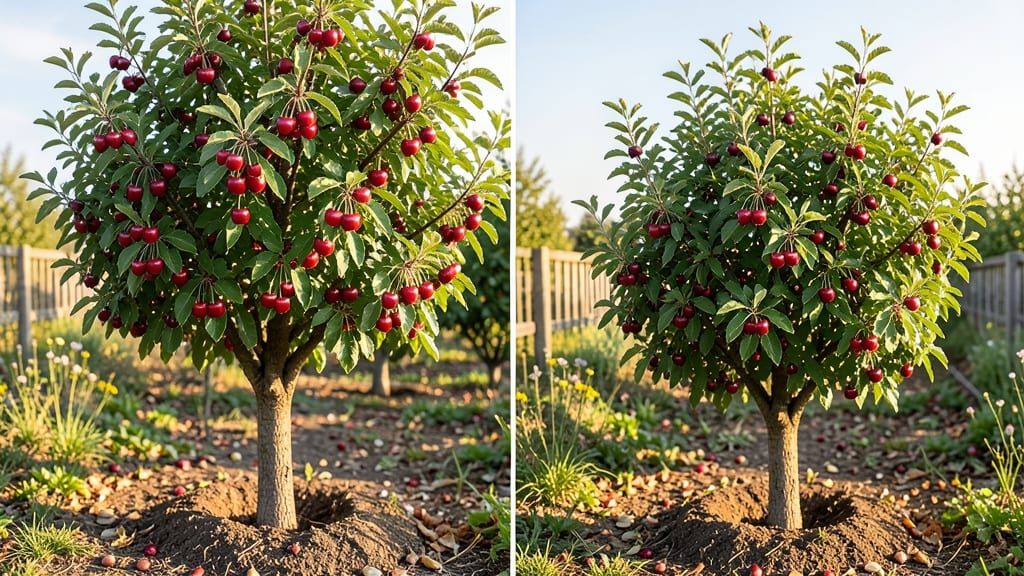
Cherry tree height breakdown: dwarf vs. semi-dwarf vs. standard varieties
When planning your cherry orchard—even a backyard one—understanding the mature height of different cherry tree varieties is critical. Standard varieties can soar to 20–40 feet, while dwarf and semi-dwarf types offer space-saving solutions for smaller gardens.
Let’s break down the key differences so you can choose the perfect fit for your space and goals.
Standard cherry trees, like the classic Bing or Rainier, typically reach heights of 20–40 feet at maturity. These giants require ample space, making them ideal for large orchards or rural properties. However, their towering presence isn’t practical for most home gardens, where space is often limited.
Semi-dwarf varieties strike a balance, growing to 12–18 feet tall. These trees are more manageable for suburban yards and still produce abundant fruit. Popular choices like Montmorency (sour cherries) or Lapins (sweet cherries) fit well in yards with moderate space.
For those with limited space, dwarf cherry trees are the answer. These compact varieties max out at 6–10 feet, making them perfect for containers, small patios, or even urban gardens. Varieties like Stella or Compact Stella deliver sweet cherries without the space requirements of their larger counterparts.
| Variety Type | Mature Height | Best For | Spacing Needs |
|---|---|---|---|
| Standard | 20–40 ft | Large orchards, rural properties | 20–30 ft apart |
| Semi-Dwarf | 12–18 ft | Suburban yards, moderate spaces | 12–15 ft apart |
| Dwarf | 6–10 ft | Containers, small patios, urban gardens | 6–8 ft apart (or in pots) |
Choosing the right variety isn’t just about height—it’s also about fruit type. Sweet cherries, like Stella, are perfect for snacking, while sour cherries, such as Montmorency, are ideal for baking or preserving.
Both types come in dwarf and semi-dwarf forms, so you can enjoy your favorite flavors without sacrificing space.
If you’re growing cherries in containers, dwarf varieties are your best bet. A 5-gallon pot can accommodate a young dwarf cherry tree, though you’ll need to repot it to a 15-gallon container as it matures. Just ensure the container has drainage holes to prevent root rot.
Another factor to consider is growth rate. Dwarf trees grow more slowly than standard varieties, taking 3–5 years to bear fruit compared to 5–7 years for standard trees. However, their compact size makes them easier to manage and harvest.
For urban gardeners or those with limited space, espaliered cherry trees are a creative solution. By training the tree to grow flat against a fence or wall, you can keep it under 6 feet tall while maximizing fruit production in a small footprint.
Regardless of the variety, all cherry trees benefit from well-draining soil and full sun exposure (6–8+ hours daily). Proper care, including regular pruning and consistent watering, will ensure your tree grows to its ideal height while producing a bountiful harvest.
Cherry tree height breakdown: dwarf vs. semi-dwarf vs. standard varieties
Understanding the height differences between cherry tree varieties is key to choosing the right fit for your garden. Standard cherry trees can soar to 20–40 feet, towering over most backyards. But if you’re working with limited space, dwarf and semi-dwarf options offer compact alternatives without sacrificing fruit production.
Let’s break down the height ranges and what they mean for your growing plans.
Dwarf cherry trees typically mature between 6–10 feet, making them ideal for small gardens, patios, or even large containers. Semi-dwarf varieties grow slightly taller, reaching 10–12 feet, while standard trees dominate with their 15–25+ foot height. The choice depends on your space, sunlight access, and long-term maintenance goals.
🌱
| Variety Type | Mature Height | Ideal Spacing | Best For |
|---|---|---|---|
| Dwarf | 6–10 ft | 8–10 ft apart | Containers, small gardens, patios |
| Semi-Dwarf | 10–12 ft | 12–15 ft apart | Medium-sized yards, orchards |
| Standard | 15–25+ ft | 20–30 ft apart | Large properties, rural orchards |
💡 Pro Tip: Dwarf varieties often require pollination partners for fruit set, so plant at least two compatible trees.
Dwarf cherry trees are genetically engineered or grafted to stay small, but their fruit size and yield are nearly identical to larger varieties. Semi-dwarf trees strike a balance, offering more space for root growth while keeping the canopy manageable.
Standard trees, while impressive, require regular pruning to control height and maintain accessibility for harvesting.
If you’re growing cherries in containers, dwarf varieties like 'Stella' or 'Compact Stella' thrive in 20–30 gallon pots with proper drainage. Just ensure they get full sun (6+ hours daily) and deep watering to compensate for root restrictions.
For in-ground planting, prioritize well-draining soil and adequate spacing to prevent overcrowding.
🌿
One common misconception is that smaller trees produce fewer cherries. In reality, dwarf varieties often yield just as much fruit per square foot as larger trees, thanks to their concentrated growth.
For example, a 6-foot 'Stella' can produce 20–30 pounds of cherries annually—comparable to a standard tree’s output but in a fraction of the space.
When selecting a cherry tree, consider your climate zone and local pests. Some dwarf varieties, like 'Black Tartarian,' are more cold-hardy (USDA Zones 5–7), while others, like 'Lapins,' thrive in warmer regions (Zones 6–9).
Always check the mature height and spread of the variety to ensure it fits your garden layout.