
How To
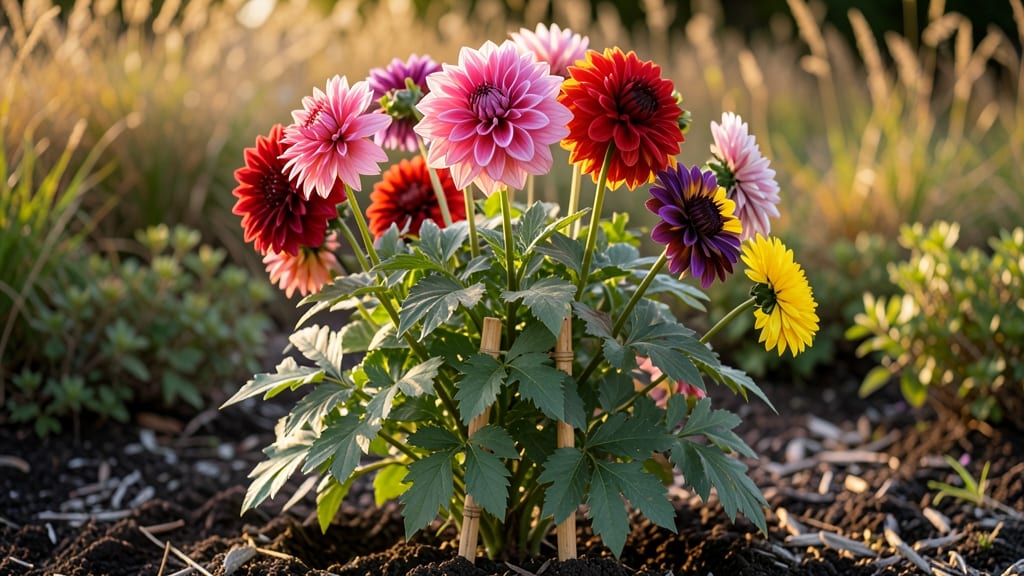
If you've ever wondered how tall dahlias grow, you're not alone—this stunning 🌼 flower can range from tiny tabletop charmers to towering garden giants, depending on the variety.
Some varieties stay compact at just 12 inches, perfect for containers or borders, while others shoot up to an impressive 8 feet, reaching heights that rival a basketball hoop.
The secret to controlling their size lies in understanding the variety you're growing and a few simple pruning techniques.
Whether you're working with USDA Zone 6a conditions or planning your spring planting window in April or May, knowing how to manage their growth will help you create the perfect display without sacrificing space.
In this guide, I'll break down the height ranges of popular dahlia varieties, from dwarf options to giant cultivars, and share expert tips on pruning to keep them at your desired height.
You'll also discover how sunlight, soil quality, and even your watering habits can influence how tall your dahlias grow.
Ready to transform your garden into a vertical masterpiece? Let's dive into the world of dahlias and learn how to harness their full potential—without letting them take over your space.


Dahlia height by variety: from dwarf to giant (with exact measurements)
If you’ve ever wondered how tall dahlias grow, the answer depends entirely on the variety you choose. Dahlias range from 12-inch miniatures to 8-foot giants, making them incredibly versatile for gardens of all sizes.
The key to managing their height starts with selecting the right type—whether you want a low-maintenance border plant or a dramatic focal point for your backyard. Let’s break down the height ranges by category, so you can pick the perfect dahlia for your space.
First, it’s important to note that dahlia height is determined by their genetic classification, not just their growing conditions. While factors like sunlight and soil can influence growth, the variety’s inherent size is the biggest predictor.
For example, a ‘Café au Lait’ dahlia will reliably stay under 2 feet, while a ‘Black Narcissus’ can soar to 7 feet. Knowing these categories helps you plan your garden layout and avoid surprises.
Here’s how dahlia varieties stack up by height, from the smallest to the tallest, with real-world examples to help you visualize their mature sizes:
| Variety Type | Height Range | Popular Examples | Best For |
|---|---|---|---|
| Miniature | 12–18 inches | ‘Tom Thumb’, ‘Mignon’ | Containers, rock gardens |
| Dwarf | 18–24 inches | ‘Café au Lait’, ‘Little Chief’ | Borders, front of beds |
| Semi-Dwarf | 24–36 inches | ‘Bishop’, ‘Karma Choc’ | Mixed borders, cut flowers |
| Standard | 36–48 inches | ‘Arabian Night’, ‘Galaxy’ | Back of beds, focal points |
| Tall | 48–60 inches | ‘Thomas Edison’, ‘Happy Single’ | Cutting gardens, tall arrangements |
| Giant | 60–96 inches | ‘Black Narcissus’, ‘Mignonette’ | Stunning backdrops, dramatic displays |
When selecting dahlias, always check the plant tag or seed packet for height estimates, as even within categories, there can be slight variations. For instance, the ‘Tom Thumb’ series might top out at 16 inches, while ‘Little Chief’ can reach 22 inches.
If you’re growing dahlias in containers, opt for dwarf or semi-dwarf varieties—their roots won’t outgrow the pot, and you’ll avoid the need for staking.
One common mistake gardeners make is assuming all dahlias need the same amount of space. A 6-foot ‘Thomas Edison’ planted too close to a fence will quickly become a tangled mess, while a 1-foot ‘Tom Thumb’ in a 5-gallon pot will thrive.
Always follow spacing guidelines: 12–18 inches apart for dwarf varieties and 24–36 inches for giants. This ensures airflow, reduces disease risk, and prevents competition for nutrients.
For those with limited space, miniature and dwarf dahlias are game-changers. They’re perfect for balcony gardens, window boxes, or small urban plots where vertical space is limited. Plus, their compact size means less pruning and staking—just plant, water, and enjoy the blooms!
If you’re dreaming of a dramatic, old-fashioned garden, giant dahlias will steal the show, but they’ll need sturdy stakes or cages to support their weight.
Pro tip: If you love the look of tall dahlias but lack the space, consider training them as climbers. Use a trellis or tall obelisk to
How to prune dahlias for height control (step-by-step guide by growth stage)
If your dahlias are reaching for the sky like unruly teenagers, don’t panic—pruning is your secret weapon. The right cuts at the right time can reduce a 6-foot giant to a manageable 3 feet or encourage a dwarf variety to reach its full potential.
I’ve pruned dahlias for years, and I’ll show you exactly when, where, and how to trim for perfect height control without sacrificing blooms.
Timing is everything. Prune too early, and you stunt growth; wait too long, and you lose control. The key is to prune in stages, starting when your dahlia has 4-6 leaves and continuing through the season.
Think of it like training a vine—gentle guidance yields the best results. Let’s break it down by growth stage so you can prune like a pro.
🌱 Visual Cue: Look for healthy leaves with visible veins—this means your dahlia is ready for its first pruning. Avoid cutting into woody stems; focus on green, flexible growth only. A sharp pair of bypass pruners is your best tool for clean cuts that heal faster.
🌿 Step-by-Step Pruning Guide
- 🌱 Early Season (4-6 leaves): Pinch off the top set of leaves just above a pair of healthy leaves. This encourages bushier growth and prevents legginess. Aim to keep the plant 12-18 inches tall if you want a dwarf look.
- 🌿 Mid-Season (6-8 weeks after planting): Cut back one-third of the plant’s height just above a leaf node with 2-3 leaves. This is where new branches will sprout, creating a fuller, more compact shape. For tall varieties, leave 3-4 feet of stem to maintain structure.
- 🌳 Late Season (after first bloom): Trim spent blooms and weak stems to redirect energy to new growth. For height control, cut back side shoots that exceed your target height, focusing on the top third of the plant to maintain balance.
- ✂️ Post-Bloom (fall prep): Once frost threatens, cut back the entire plant to 6 inches tall. This makes it easier to dig up and store tubers over winter and ensures a cleaner start next spring.
Pro Tip: Always prune in the morning when stems are stiff with water. This reduces stress on the plant and speeds up healing.
Pruning isn’t just about height—it’s also about airflow and bloom quality. When you remove crowded stems, you reduce fungal risks like powdery mildew and encourage larger, showier flowers. I once had a 6-foot ‘Karma Choc’ dahlia that produced football-sized blooms after I pruned it back in mid-season.
The secret? Less is more—focus on shape and structure, not aggressive cutting.
Mistakes happen, especially to beginners. One common error is pruning too late in the season, which can delay blooming or leave plants vulnerable to frost. Another is cutting into old wood—always prune above a leaf node where new growth can emerge.
If you accidentally over-prune, don’t worry! Dahlias are resilient. Just water deeply and fertilize lightly to encourage recovery.
For potted dahlias, height control is even more critical. Since containers limit root space, pruning helps prevent top-heavy plants from tipping over. I recommend staking or using tomato cages for varieties over 3 feet tall.
And remember: dwarf varieties like ‘Mignon’ or ‘Tom Thumb’ need minimal pruning—just a light pinch to encourage branching.
Now that you’ve mastered the basics, experiment with your dahlias! Try escalating pruning (cutting back harder each time) for bushier, shorter plants, or minimal pruning to let them reach their full height. The key is to observe and adjust. Your garden—and your dahlias—will thank you for it. 🌼