
Trees
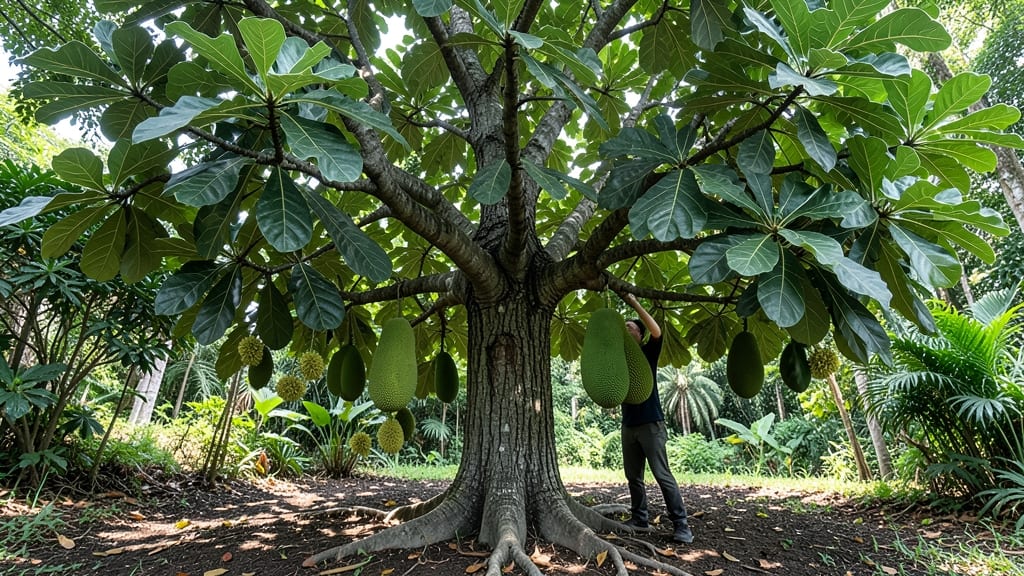
If you're wondering how tall do jackfruit trees grow, get ready for a tropical giant that could turn your backyard into a jungle!
This fast-growing tree 🥴 can reach heights of 60 to 100 feet—taller than a three-story building—once fully mature, making it one of the most impressive fruit trees around.
But don’t let the size scare you off—understanding the growth patterns is the key to planning your space wisely.
Whether you're in USDA Zone 6a or a warmer climate, knowing how tall your jackfruit tree will grow helps you decide if it’s the right fit for your garden or if you’ll need to consider dwarf alternatives (which, spoiler, don’t exist for this tropical beauty).
The good news? With the right care—like plenty of sunlight, well-draining soil, and strategic pruning—you can manage its growth and still enjoy its lush foliage and massive fruit. Let’s break down what you need to know to keep your jackfruit tree thriving without it taking over your entire yard.
From variety-specific heights to practical tips for controlling its size, you’ll learn how to make this tropical giant work for you—no matter how limited your space might be. Ready to dive in?


Mature heights of jackfruit trees by variety: from small to towering giants
Jackfruit trees (Artocarpus heterophyllus) are among the tallest fruit-bearing trees you can grow in your garden, with mature heights that can reach 60 to 100 feet under ideal conditions. Some exceptional specimens even surpass 120 feet, making them true giants of the tropical landscape.
Their rapid growth—gaining 3 to 6 feet per year in optimal climates—means they can quickly outpace even the most ambitious garden plans.
While most jackfruit trees are towering, their height isn’t fixed—it varies dramatically by variety, genetics, and growing conditions. Some tropical nurseries offer "dwarf" or semi-dwarf selections, though these are often mislabeled or require aggressive pruning to stay manageable.
Understanding these differences helps you choose the right variety for your space, whether you have acres or just a suburban yard.
Here’s a breakdown of what to expect from different jackfruit varieties, including their mature heights and growth habits:
| Variety | Mature Height | Growth Rate | Notes |
|---|---|---|---|
| Standard (e.g., 'Golden Jackfruit') | 60–100 ft | 3–6 ft/year | Most common; needs space |
| 'J33' (Semi-Dwarf) | 30–50 ft | 2–4 ft/year | Grafted rootstock; slower growth |
| 'Kulu' (Indian Variety) | 40–70 ft | 2–5 ft/year | Smaller fruit but compact canopy |
| 'J20' (Dwarf Claimed) | 20–30 ft (with pruning) | 1–3 ft/year | Requires heavy pruning; not true dwarf |
| Wild/Uncultivated | 80–120+ ft | 4–8 ft/year | Fastest growers; invasive potential |
The 'Golden Jackfruit' is the most widely grown variety in tropical regions, often reaching 80–100 feet with a spread of 40–60 feet. Its massive size is matched by its productivity—each tree can yield 50–200 pounds of fruit per year once mature.
However, this comes at a cost: a single tree can easily overwhelm a backyard, requiring at least 1,200 square feet of space to thrive without crowding other plants.
For gardeners with limited space, the 'J33' variety is often marketed as a "semi-dwarf," but even this can reach 30–50 feet if left unpruned. The key to keeping it smaller lies in grafting onto dwarfing rootstock and implementing regular structural pruning.
Without these interventions, expect it to grow just as tall as standard varieties over time. True dwarf jackfruit trees do not exist in commercial cultivation, so any claims of "dwarf" varieties should be met with skepticism.
In tropical climates like Hawaii, Florida, or Southeast Asia, jackfruit trees grow the fastest and tallest due to year-round warmth, high humidity, and rich volcanic soil.
In contrast, even in USDA Zone 10 or 11, where jackfruit trees are hardy, their growth slows slightly in cooler months, capping mature heights at 50–70 feet unless given ideal conditions.
If you’re in a subtropical zone (e.g., Southern California or Arizona), expect slower growth and potentially shorter mature heights unless you provide supplemental heat and protection from frost.
One surprising fact about jackfruit trees is how their canopy width often exceeds their height. A 60-foot-tall jackfruit tree might have a 70-foot-wide spread, creating a dense, umbrella-like shade. This makes them excellent for shade trees in tropical homesteads but challenging for urban gardens.
Always measure your space horizontally and vertically before planting, and leave extra room for the tree’s eventual spread.
If you’re considering growing jackfruit for its fruit rather than its shade, prioritize varieties with compact growth habits and focus on pruning techniques to encourage fruit production near the lower branches.
With the right approach, you can enjoy harvests within 5–7 years even in a smaller yard—though you’ll still need to manage its height aggressively.
Mature heights of jackfruit trees by variety: from small to towering giants
Jackfruit trees are nature's skyscrapers, with mature heights that can reach 60 to 100 feet—and sometimes even taller in ideal tropical conditions. The Artocarpus heterophyllus variety, the most common type, grows into a majestic, broad-canopied tree that can dominate your landscape.
But not all jackfruit trees are created equal—some varieties stay more manageable, while others grow with reckless abandon.
If you're considering planting one, understanding these height variations will help you plan your garden space wisely. Whether you're dreaming of a backyard tropical oasis or need a more compact option, knowing the potential size of your jackfruit tree is essential before digging that first hole.
| Variety | Mature Height | Growth Rate | Notes |
|---|---|---|---|
| Standard Jackfruit (Artocarpus heterophyllus) | 60–100 ft | Fast (3–5 ft/year) | Most common; needs space |
| Dwarf Varieties (Rare) | 15–25 ft | Moderate (1–2 ft/year) | Grafted rootstock; limited availability |
| Semi-Dwarf (Grafted) | 30–40 ft | Fast (2–4 ft/year) | More manageable; still large |
| Wild/Uncultivated | Up to 120 ft | Very Fast | Untamed growth; minimal care |
Standard jackfruit trees, like the Jumbo or Golden varieties, can grow to 60–100 feet in tropical climates like Hawaii or Florida. These giants require ample space, making them better suited for large properties or rural settings.
Their rapid growth—often 3–5 feet per year—means they’ll quickly outgrow even the most generous backyard.
For those with limited space, dwarf varieties are the holy grail of jackfruit cultivation. While true dwarf jackfruit trees are rare, some growers use grafting techniques to keep trees under 25 feet. These smaller trees still produce fruit but require careful pruning and maintenance to stay compact.
If you’re lucky enough to find a grafted dwarf variety, it could be the perfect solution for urban gardeners.
Even with dwarf varieties, remember that jackfruit trees are not shrubs. Even the smallest mature specimens will need at least 15 feet of clearance for their canopy. If you’re planting near structures, power lines, or other trees, plan accordingly to avoid future headaches—and potential hazards.
Before planting, check local regulations, as some areas restrict tree heights due to power line clearance. A 60-foot tree can easily interfere with overhead wires, leading to costly trimming or removal. Always measure your space and consider future growth when choosing a jackfruit variety.