
How To
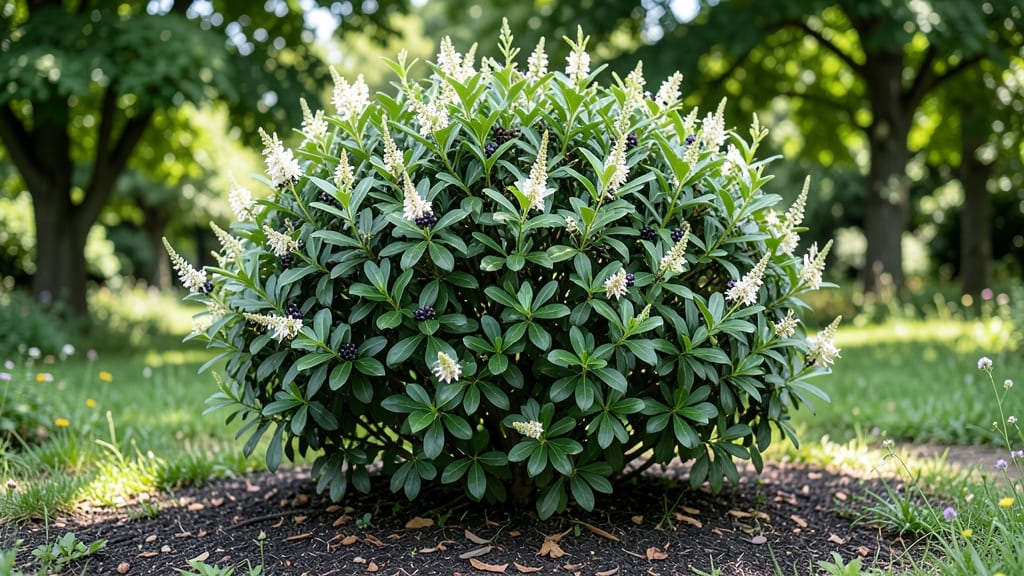
If you're wondering how tall do ligustrum grow, the answer might surprise you—this versatile shrub can range from a modest 6-foot hedge to a towering 40-foot tree, depending on the variety and care you provide.
Whether you're dreaming of a lush privacy screen or a compact accent plant, understanding ligustrum's growth potential is the first step to creating your ideal outdoor space.
Ligustrum, often called privet, thrives in USDA Zone 6a and beyond, making it a popular choice for spring planting. But here's the catch: some varieties grow aggressively, while others stay neatly contained.
The key to controlling its height lies in choosing the right type and mastering pruning techniques that keep it at your desired size.
From the dwarf varieties perfect for small gardens to the standard types that can reach tree-like proportions, ligustrum offers options for every space. Let’s break down the exact heights you can expect from different ligustrum species and how to manage their growth for a polished, professional look.
Ready to transform your yard? Discover the secrets to keeping your ligustrum at the perfect height—whether you want a neat hedge or a statement-making shrub. We’ll cover everything from planting tips to pruning schedules so you can enjoy a beautiful, well-managed landscape all season long.


Ligustrum height by species: exact growth expectations
Ligustrum plants are famous for their adaptability, but their mature height varies dramatically depending on the variety. Some stay compact enough for small gardens, while others grow into towering trees. Knowing these differences helps you choose the perfect ligustrum for your space and design goals.
From the Chinese privet (Ligustrum sinense) to the Amur privet (Ligustrum amurense), each type has distinct growth habits. Dwarf varieties like 'Little Miss Sunshine' max out at 6-8 feet, while standard types like 'Regent' can reach 20-30 feet or more without pruning.
Your ligustrum’s height also depends on growing conditions. Full sun and rich soil can accelerate growth by 30-50% compared to shaded or nutrient-poor sites. Even within the same variety, a ligustrum in USDA Zone 8 may grow 2-3 feet taller than one in Zone 6.
📊 Here’s a quick height comparison to help you visualize:
If you’re planting ligustrum for a hedge, choose dwarf or semi-dwarf varieties spaced 3-4 feet apart to fill gaps quickly. For a privacy screen, taller types like Chinese privet or Amur privet will block views in 3-5 years with minimal pruning.
One common misconception is that all ligustrum grow into trees. In reality, most varieties are shrubs that can be pruned to stay compact. Even the tallest types, like Regent, can be kept as multi-stemmed shrubs at 8-12 feet with regular maintenance.
For container gardening, select dwarf varieties like 'Golden Sunshine' or 'Loddon Pink'. These thrive in 15-gallon pots and can be kept under 6 feet tall with annual pruning. Just ensure the container has drainage holes to prevent root rot.
Your ligustrum’s height also depends on whether you prune it for height control or bushiness. Pruning in late winter or early spring encourages vertical growth, while summer pruning promotes a fuller shape. Always use sterilized shears to avoid spreading disease.
🌿 Pro Tip: If you’re unsure about a variety’s growth, check the tag at the nursery. Many reputable growers list mature heights, which can save you from overcrowding issues later.
How to control ligustrum height: pruning techniques for different goals
Pruning is the secret weapon for keeping your ligustrum at your desired height—whether you want a compact hedge or a taller privacy screen. The key is timing and technique.
Late winter or early spring (just before new growth starts) is ideal for structural pruning, while summer pruning encourages bushier growth. Always use clean, sharp pruners to avoid damaging branches.
For height control, never cut more than one-third of the plant’s height in a single season. This prevents stress and ensures your ligustrum stays healthy while shrinking.
If you’re dealing with an overgrown specimen, gradual reduction over 2-3 years works best. Start by trimming the topmost branches first to maintain a natural shape.
Here’s how to prune for different goals—whether you want to keep it short, encourage bushiness, or shape it into a tree:
🌿 Step-by-Step Pruning Guide
- For a compact hedge (6-12 ft): Prune twice yearly—once in late winter to shape and again in summer to encourage dense foliage. Cut just above a leaf node to promote new growth.
- For a taller screen (12-20 ft): Focus on removing lower branches to create a clean trunk. Prune in late winter to avoid blocking sunlight for lower branches.
- To maintain a tree form: Remove suckers at the base and thin out interior branches to improve airflow. Prune after flowering to avoid cutting off next year’s blooms.
- For bushier growth: Trim back the tips of branches in summer to stimulate side shoots. Avoid heavy pruning in fall, as it can reduce winter hardiness.
If your ligustrum is too leggy, it’s likely not getting enough sunlight. Move it to a sunnier spot and prune back the longest branches to encourage a fuller shape.
Avoid pruning in fall, as new growth won’t have time to harden off before winter. Always sterilize your tools between cuts to prevent disease spread.
For dwarf varieties, pruning is minimal—just a light trim after flowering to keep them tidy. Over-pruning can stunt growth or leave them vulnerable to pests. If you’re unsure, prune conservatively and observe how the plant responds before making drastic cuts.
Pro tip: Mark your pruning spots with a string or garden twine to ensure even cuts. This is especially helpful for formal hedges where uniformity is key. With the right approach, you can shape your ligustrum to fit your space perfectly—without sacrificing its health or beauty. 🪴