
Trees
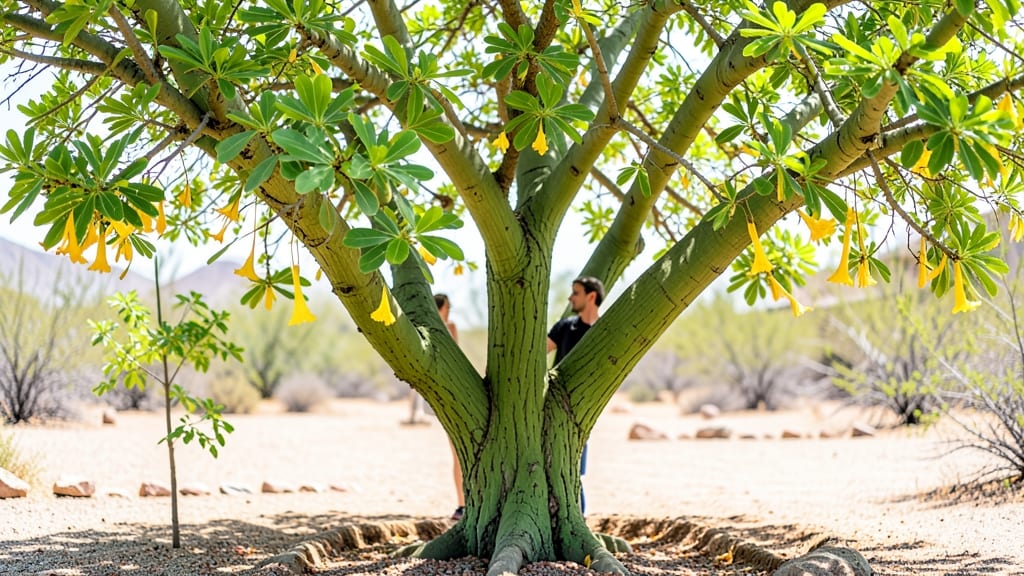
If you're wondering how tall do Palo Verde trees grow, you’re about to discover why this stunning 🌳 tree is a top choice for desert landscapes—but its mature height might surprise you.
Native to arid regions like Phoenix (Zone 9b), Palo Verde trees can reach anywhere from 15 to 40 feet, depending on the species and growing conditions.
While Parkinsonia microphylla stays on the smaller side (15–25 ft), its cousin Parkinsonia florida can tower over 30 feet, making it a statement piece in any yard.
What sets this tree apart isn’t just its height but its fast growth rate. In ideal conditions, it can add 3–5 feet per year, turning a sapling into a shade provider in just a few seasons. The key? Full sun, well-draining soil, and minimal fuss—perfect for low-maintenance gardeners.
Ready to learn how to encourage (or control) its growth? I’ll break down the factors that influence its height, from soil type to pruning tips, so you can get the perfect-sized tree for your space.


Palo Verde tree height by mature age: what to expect in different climates
When planting a Palo Verde tree, one of your first questions is likely, "how tall do Palo Verde trees grow?" The answer varies dramatically based on age, species, and climate—but here’s what you can expect.
These trees are native to arid regions and thrive in USDA Zones 8a-11, where they can reach their full potential height.
In their native Sonoran Desert habitat, Palo Verde trees grow faster and taller than in cooler climates.
For example, in Phoenix, Arizona, a mature Parkinsonia florida can easily top 30 feet, while in Mediterranean climates like Southern California, growth may be slightly slower, reaching 25-30 feet over 20-30 years.
Understanding their growth stages helps you plan for long-term landscaping. A young Palo Verde sapling grows 3-5 feet in its first year, then 8-12 feet by year two. By year five, expect 12-20 feet of height, with full maturity typically reached between 15-40 years depending on the species.
| Age | Height Range (ft) | Climate Impact | Growth Rate |
|---|---|---|---|
| Year 1 | 3–5 ft | Faster in desert climates | Rapid early growth |
| Year 5 | 12–20 ft | Slower in coastal areas | Moderate growth |
| Year 10 | 20–30 ft | Peak growth in Zone 10+ | Slower as mature |
| Mature (20+ yrs) | 15–40 ft | Taller in deserts, shorter in cooler zones | Minimal vertical growth |
Sunlight exposure plays a crucial role in determining how tall your Palo Verde will grow. In full sun conditions (6+ hours daily), these trees grow 20-30% taller than in partial shade.
For example, a Parkinsonia microphylla in Tucson, Arizona may reach 25 feet in full sun but only 18 feet in a shaded urban yard.
Urban landscapes often limit vertical growth due to root restrictions and limited sunlight. If planting near buildings or sidewalks, expect 10-20% reduced height compared to open desert conditions. Always leave 15-20 feet of clearance above power lines and structures to avoid future pruning headaches.
Another key factor is soil type. Sandy soils, common in desert regions, allow roots to spread quickly, supporting faster vertical growth. In contrast, clay-heavy soils can restrict root expansion, potentially limiting height to 15-20 feet even in mature trees.
Always amend clay soils with compost or sand to improve drainage and encourage healthier growth.
For those in cooler microclimates (e.g., Zone 8a), growth rates slow significantly. A Palo Verde in Las Vegas might reach 30 feet in 20 years, while one in Santa Barbara, California may only reach 20 feet over the same period.
Always check your local microclimate conditions when estimating mature height.
If you're considering a Palo Verde for a small urban yard, plan for its eventual size. While some varieties like Parkinsonia microphylla stay shorter (15-25 feet), others like Parkinsonia florida can easily exceed 30 feet.
Always choose the right species for your space to avoid future pruning challenges.
Remember, Palo Verde trees are slow to grow in their early years but accelerate rapidly once established. With proper care—including full sun exposure, well-draining soil, and minimal watering—you’ll see impressive height gains within a decade.
For the fastest growth, plant in Zone 10 or higher where these trees thrive.
Fastest-growing Palo Verde varieties: which reach 20+ feet soonest?
If you're eager to see your Palo Verde tree grow tall quickly, the variety you choose makes all the difference. Parkinsonia florida is the speedster of the two main types, shooting up 3–5 feet per year in ideal conditions—double the pace of its smaller cousin, Parkinsonia microphylla.
This means your 30-foot shade tree could be ready in just 6–8 years instead of a decade.
But growth speed isn’t just about genetics—soil type plays a huge role. Sandy desert soil (like in Phoenix) lets roots spread fast, while clay-heavy soil can slow growth by up to 30%.
If your yard has heavy clay, amending with compost or coarse sand can give your tree a growth boost.
Here’s how the two fastest-growing varieties stack up:
| Variety | Mature Height | Annual Growth | Best For |
|---|---|---|---|
| Parkinsonia florida | 25–40 ft | 3–5 ft/year | Large yards, fast shade |
| Parkinsonia microphylla | 15–25 ft | 2–3 ft/year | Small spaces, urban areas |
To maximize height, plant in full sun and water deeply once a week during the first year. Avoid overwatering—root rot can stunt growth permanently. Prune in late winter to remove dead branches and encourage upward energy.
For urban gardeners with limited space, Parkinsonia microphylla is the smarter pick. It stays compact while still offering lush green foliage and bright yellow flowers. Plus, its multi-trunked habit makes it perfect for small yards or as a street tree.
Want to push your tree’s height even faster? Try mulching with gravel to keep roots cool and avoid fertilizing in summer—this tree grows best when it focuses on vertical growth, not leafy sprawl.