
Trees
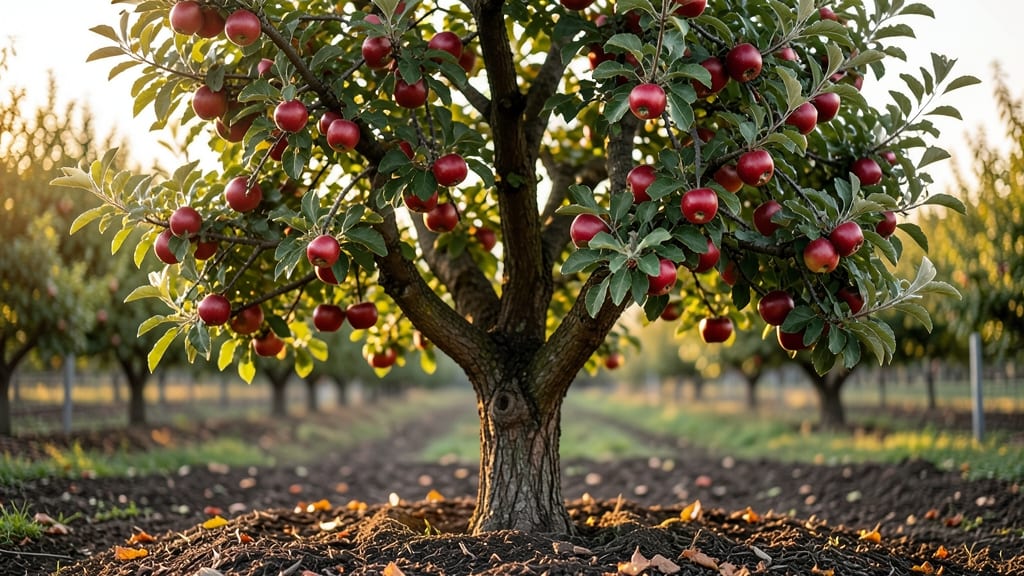
Red Delicious apple tree height: mature size and growth stages explained
When planning your Red Delicious apple tree garden, knowing its mature height helps you choose the right spot and variety. Standard Red Delicious trees typically reach 15–25 feet tall, towering like a small oak over time.
This height makes them perfect for rural properties but challenging for urban backyards. Understanding their growth stages lets you anticipate space needs and plan pruning early.
In their first year, saplings grow just 2–4 feet tall, looking more like a shrub than a tree. By year two, they shoot up to 6–8 feet, and by year three, they hit 10–12 feet.
This rapid growth means young trees can quickly outgrow small spaces if not managed. Regular pruning during these early years is key to controlling their eventual height.
Most Red Delicious trees reach their full height between 5–10 years, depending on rootstock and growing conditions. Without intervention, they’ll dominate your landscape, shading out other plants and making maintenance difficult.
This is why dwarf varieties are so popular—they stay under 8–12 feet, making them ideal for patios or small gardens.
Here’s how their height compares at different stages: Year 1: 2–4 ft (sapling) Year 3: 10–12 ft (young tree) Year 5: 15–20 ft (mature standard) Year 10: 20–25 ft (full-size)
| Growth Stage | Height Range | Timeframe | Key Notes |
|---|---|---|---|
| Sapling | 2–4 ft | Year 1 | Focus on root development |
| Young Tree | 6–12 ft | Years 2–4 | Prune to shape and control growth |
| Mature Standard | 15–25 ft | Years 5–10 | Requires regular pruning and space |
| Dwarf Variety | 6–12 ft | Years 5–8 | Ideal for small gardens |
Pruning plays a huge role in controlling height. If you skip pruning, your Red Delicious tree will grow unchecked, reaching its full potential height of 20–25 feet. But with strategic pruning—especially during the first 3–5 years—you can keep it shorter.
For example, using the open-center pruning method encourages a bushier, more manageable shape while limiting vertical growth.
Another factor influencing height is the rootstock the tree is grafted onto. Standard rootstock (like seedling rootstock) produces tall trees, while dwarfing rootstocks like Malling 9 or B9 keep trees under 12 feet.
Choosing the right rootstock is one of the easiest ways to control height without heavy pruning. For small gardens, dwarf varieties are a game-changer.
If you’re working with a standard Red Delicious tree, plan for at least 20 feet of vertical space and 15–20 feet of ground space around the tree. This ensures branches don’t rub against fences or power lines.
In tight spaces, consider semi-dwarf varieties, which max out at 12–16 feet and still produce abundant fruit. They strike a balance between manageable size and high yields.
For urban gardeners, dwarf Red Delicious trees are the best choice. These compact trees grow just 6–12 feet tall and can even thrive in large containers. They’re perfect for patios, small yards, or even balconies with sufficient sunlight.
Just remember: even dwarf trees need proper pruning to maintain their size and encourage fruit production.
One common mistake is assuming all Red Delicious trees grow the same height. While the standard variety reaches 20–25 feet, some heirloom or older cultivars can grow even taller.
Always check the rootstock and variety before purchasing to avoid surprises. Nurseries often label trees clearly, but it’s worth double-checking if space is limited.
In summary, your Red Delicious apple tree’s height depends on its variety, rootstock, and pruning habits. Standard trees will dominate your space, while dwarf varieties keep things manageable.
Whether you’re planning a large orchard or a small backyard, understanding these growth stages helps you make the best choice for your garden’s layout.
Best small-space Red Delicious varieties that stay compact
If you love the taste of Red Delicious apples but lack yard space, don’t worry—there are compact varieties perfect for small gardens, containers, and even urban balconies. The key lies in choosing dwarf or semi-dwarf rootstocks, which dramatically reduce mature height while maintaining fruit quality.
These varieties typically reach 6–12 feet tall, making them ideal for patios, courtyard gardens, or even large pots.
For example, the 'Red Delicious Dwarf' grafted onto Malling 9 (M.9) rootstock stays under 8 feet tall and produces sweet, familiar apples. Another great option is 'Red Delicious Semi-Dwarf' on Budagovsky 9 (B.9) rootstock, which tops out around 10–12 feet—still manageable for most homeowners.
Both varieties yield plenty of fruit despite their smaller stature.
Here’s how these compact varieties compare to standard Red Delicious trees:
| Variety | Rootstock | Mature Height | Yield Potential | Best For |
|---|---|---|---|---|
| Red Delicious Dwarf | Malling 9 (M.9) | 6–8 ft | Moderate (50–75 lbs/year) | Containers, small yards, balconies |
| Red Delicious Semi-Dwarf | Budagovsky 9 (B.9) | 10–12 ft | High (75–100 lbs/year) | Backyards, larger patios |
| Standard Red Delicious | Seedling or MM.106 | 15–25 ft | Very High (100+ lbs/year) | Large properties, orchards |
When selecting a compact variety, prioritize rootstock compatibility with your climate. For example, Malling 9 (M.9) thrives in cooler regions (USDA Zones 5–7) but may struggle in heat. Meanwhile, Budagovsky 9 (B.9) handles warmer zones (USDA Zones 6–9) better. Always check your local nursery’s recommendations for the best match.
For container growing, choose 5-gallon pots or larger with drainage holes and use a high-quality potting mix. Place your tree in a location with at least 6 hours of sunlight daily and water deeply 2–3 times per week during the growing season.
Compact varieties also benefit from regular pruning to encourage bushier growth and better air circulation.
With the right variety and care, you can enjoy homegrown Red Delicious apples—even in the smallest of spaces! Just remember: smaller trees mean earlier fruiting (often within 2–3 years) compared to standard varieties, which can take 5–7 years to bear fruit. 🌱