
How To
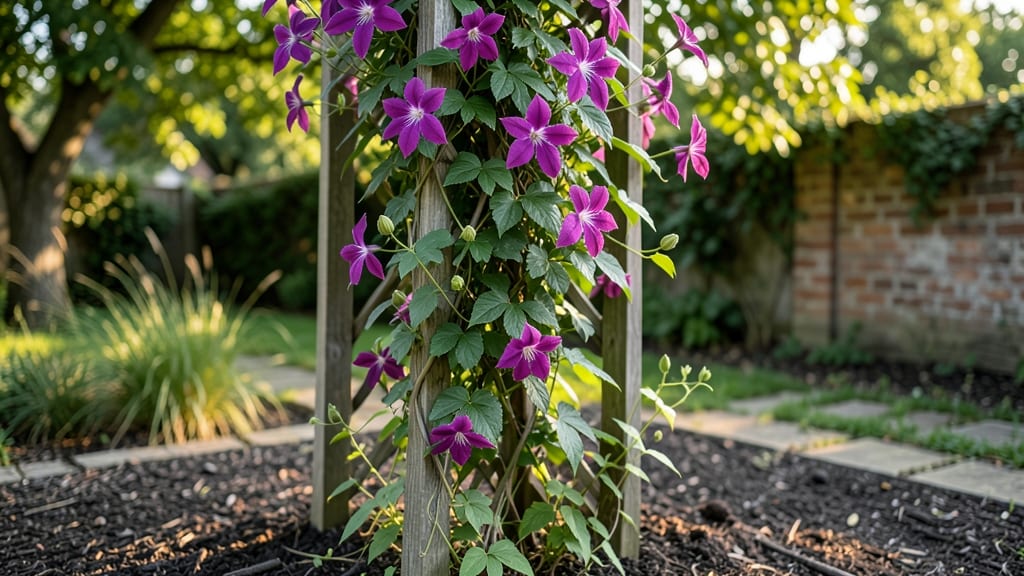
If you’ve ever dreamed of a garden that looks like a fairy-tale trellis but aren’t sure how tall a clematis grows, you’re in the right place.
These stunning vines can stretch from just 3 feet to towering over 20 feet, depending on the variety—meaning your choice could make or break your garden’s vertical vision.
Imagine this: a delicate 🌸 clematis cascading down an arbor, its blooms reaching eye level, or a bold vine climbing a sturdy fence, creating a living privacy screen. The key to getting it right? Knowing which types thrive in your space—and how to train them for maximum impact.
Whether you’re a beginner gardener or a seasoned pro, picking the perfect clematis height isn’t just about aesthetics. It’s about sunlight, support, and even pruning strategies that keep your vines healthy and your garden looking intentional.
Let’s break down the exact heights by variety, so you can choose a clematis that grows just the way you want—without ending up with a tangled mess or a vine that outgrows its welcome.


Clematis vine height by variety: small, Medium, and giant growth ranges
Clematis vines are famous for their dramatic vertical growth, but not all varieties reach the same heights. The mature height of your clematis depends entirely on its type and pruning group. Some stay compact enough for containers, while others need sturdy trellises or walls to support their towering growth.
Let’s break down the height ranges you’ll encounter, from dwarf varieties to giants that can dwarf your entire garden.
First, understand that clematis heights are categorized into three main groups: dwarf (under 3 ft), semi-dwarf (3-10 ft), and standard (10-20+ ft).
The pruning group also plays a role—Group 1 and 2 varieties often grow taller than Group 3, which are typically early bloomers with more controlled growth. For example, the ‘Jackmanii’ clematis (Group 3) can reach 12-15 feet, while the ‘Niobe’ (Group 2) maxes out around 8-10 feet.
| Variety Type | Mature Height | Pruning Group | Ideal Support |
|---|---|---|---|
| Dwarf Varieties | 3–6 ft | Group 1 or 3 | Small trellis or container |
| Semi-Dwarf Varieties | 6–10 ft | Group 2 or 3 | Medium trellis or fence |
| Standard Varieties | 10–20+ ft | Group 1 or 2 | Strong arbor or wall |
| Giant Hybrids | 15–25 ft | Group 1 | Large pergola or tree |
If you’re planting ‘Jackmanii’, one of the most popular varieties, expect it to grow 10–15 feet in just a few years. This Group 3 clematis thrives with minimal pruning and loves climbing trellises or pergolas.
On the other hand, ‘Perle d’Azur’, a stunning blue variety, tops out around 8–10 feet and is perfect for smaller gardens or container growing. For compact options, consider ‘Fascination’ or ‘Hagley Hybrid’, both of which stay under 6 feet and bloom profusely.
One common mistake is assuming all clematis grow to 20 feet. While some varieties like ‘Comtesse de Bouchaud’ can reach that height, most home gardeners work with varieties in the 6–12 foot range.
To manage height, always prune in late winter or early spring, removing dead or weak stems and shaping the vine to encourage balanced growth. For large varieties, consider installing a strong trellis or arbor at planting to avoid damaging the vine later.
For container gardening, choose dwarf varieties like ‘Betty Corning’ or ‘Vyvyan Pennell’, which stay under 5 feet and thrive in 15-gallon pots. These are ideal for patios or balconies where vertical space is limited.
If you’re designing a vertical garden, pair taller clematis with climbing roses or jasmine to create a layered effect. Just ensure the support structure is sturdy and weather-resistant, as heavy vines can snap weaker materials.
Climate also affects height—cooler regions may see slower growth, while warm, sunny climates can accelerate vine expansion. In USDA Zone 6 or higher, most clematis will reach mature height within 3–5 years.
If you’re in a drier climate, expect slightly shorter vines unless you provide consistent moisture. Always mulch around the base to retain soil moisture and protect roots during hot summers.
Pro tip: If you’re unsure about height, start with a semi-dwarf variety like ‘Nelly Moser’ (8–10 ft) or ‘Multiblue’ (6–8 ft). These offer stunning blooms without overwhelming your space.
For advanced gardeners, experiment with rare hybrids like ‘Wyatt’s Wonder’ (12–15 ft), which produces massive, fragrant flowers but requires strong support.
Remember, the first year of growth is the slowest—most clematis start at 3–5 feet and double in height each subsequent year. With the right variety and care, your clematis can become the showstopper of your garden, whether it’s a
Clematis vine height by variety: small, Medium, and giant growth ranges
Clematis vines are famous for their dramatic vertical growth, but not all varieties reach for the sky. Some stay compact enough for containers or small gardens, while others scale walls or fences like a living waterfall.
The mature height of your clematis depends entirely on its variety type, with dwarf types topping out at just 3 feet and giant climbers stretching over 20 feet. Understanding these ranges helps you choose the perfect vine for your space—and avoid pruning disasters!
Most clematis varieties fall into three broad height categories: dwarf (3-6 ft), semi-dwarf (6-10 ft), and standard (10-20+ ft).
The pruning group (1-3) also influences height, with Group 3 vines (like 'Jackmanii') growing aggressively and needing heavy pruning, while Group 1 (early bloomers like 'Early Sensation') stay shorter and bloom on old wood.
Let’s break down the specifics so you can pick a vine that fits your garden’s vertical potential.
| Variety Type | Mature Height | Pruning Group | Ideal Support |
|---|---|---|---|
| Dwarf Varieties | 3–6 ft | 1 or 2 | Small trellis, container, or ground cover |
| 'Freckles' | 3–5 ft | 2 | Patio trellis or hanging basket |
| 'Jackmanii' | 10–20+ ft | 3 | Arbor, fence, or strong wall |
| 'Niobe' | 8–12 ft | 2 | Pergola or tall fence |
| Semi-Dwarf Varieties | 6–10 ft | 1 or 3 | Medium trellis or small arbor |
| 'Perle d’Azur' | 6–8 ft | 1 | Obelisk or small fence |
| Standard Varieties | 10–20+ ft | 2 or 3 | Large arbor, wall, or strong trellis |
| 'Comtesse de Bouchard' | 12–15 ft | 2 | Pergola or tall fence |
If you’re working with limited vertical space, dwarf varieties like 'Freckles' or 'Betty Corning' are ideal—they thrive in containers or small trellises and still produce stunning blooms.
For bold garden statements, 'Jackmanii' or 'Comtesse de Bouchard' will climb walls or arbors, but require heavy-duty support and regular pruning to manage their aggressive growth. Pro tip: Always plant clematis near a support structure from day one—they hate being transplanted once established!
Hybrid varieties can defy expectations, too. For example, 'Multi Blue' is a Group 3 vine that tops out at 10–12 feet but blooms prolifically on new wood, making it a favorite for mid-sized gardens.
Meanwhile, 'The President' (a Group 1 variety) stays under 6 feet but produces large, fragrant flowers perfect for cutting. Always check the pruning group when selecting a variety—it directly impacts both height and bloom time.
For container gardening, choose compact varieties like 'Fascination' (6–8 feet) or 'Hagley Hybrid' (5–7 feet). These thrive in 15-gallon pots with a sturdy vertical trellis and benefit from regular feeding to compensate for their limited root space.
In ground plantings, however, even dwarf varieties can stretch taller if given optimal sunlight and nutrients, so always plan for 1–2 feet extra growth than the listed range.
One common mistake is assuming all clematis need full sun and massive support. Shade-tolerant varieties like 'Niobe' (a Group 2 vine) can handle partial shade and still reach 8–12 feet, making them perfect for woodland gardens or north-facing walls.
Pair shade-loving clematis with hostas or ferns for a lush, layered effect. And remember: Pruning in late winter (for Group 3) or early spring (for Groups