
How To
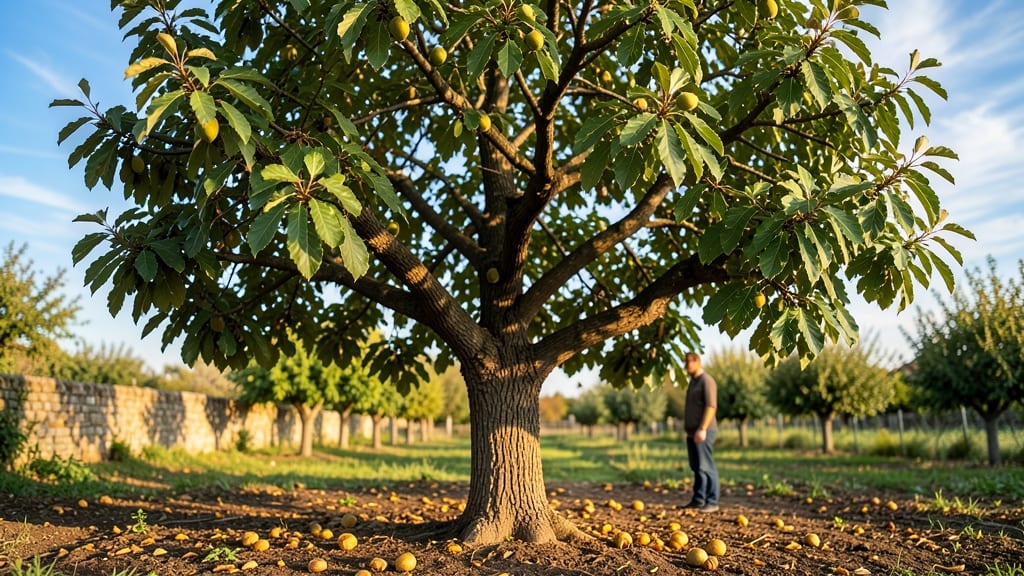
If you're dreaming of growing a walnut tree 🌳 but wondering how tall does a walnut tree grow, the good news is that height varies wildly by variety—and smart planting choices can keep it manageable.
Some types reach towering heights of 100+ feet, while others stay compact enough for small gardens.
English walnuts, for example, typically grow between 50-70 feet, while black walnuts can stretch toward 130 feet if left unchecked. The key to controlling height lies in selecting the right cultivar and understanding how to prune young trees for better shape and size.
Before you plant, consider your space and climate—USDA Zone 6a gardeners will need to account for slower growth in cooler years. With the right approach, you can enjoy walnuts without sacrificing your yard's layout.
I'll break down the tallest and shortest varieties, plus proven pruning tips to keep your walnut tree 🌳 at your desired height. Let’s get started!


Mature heights of popular walnut tree varieties compared
If you're dreaming of planting a walnut tree but worried about it becoming a backyard giant, you're not alone. Walnut trees vary dramatically in height depending on the variety and cultivar.
Some can dwarf skyscrapers, while others stay manageable for smaller spaces. Let's break down the mature heights of the most common types so you can plan accordingly.
English walnut trees (Juglans regia), the most popular choice for home gardens, typically reach 50-70 feet at maturity. These trees are prized for their sweet, edible nuts and adaptable nature, but their height requires careful planning.
Black walnut trees (Juglans nigra), native to North America, can grow even taller, often 70-130 feet, making them better suited for rural properties or large estates.
Now, let's compare the heights of popular walnut varieties in this detailed table to help you visualize their mature sizes and suitability for your space.
| Variety | Mature Height (ft) | Growth Rate (ft/year) | Best For |
|---|---|---|---|
| English Walnut ('Paradox') | 50-70 ft | 1.5-2 ft | Home gardens, orchards |
| Black Walnut ('Thomas') | 70-130 ft | 2-3 ft | Large properties, wood production |
| Heartnut ('Heartnut') | 40-60 ft | 1-1.5 ft | Smaller yards, urban gardens |
| Dwarf English Walnut ('Little King') | 15-25 ft | 0.5-1 ft | Containers, patios, small spaces |
| Butternut ('White Walnut') | 40-60 ft | 1.5-2 ft | Woodworking, medium yards |
For gardeners with limited space, dwarf varieties like 'Little King' are a game-changer. These compact trees reach only 15-25 feet at maturity, making them perfect for containers or small urban yards. Even semi-dwarf varieties like 'Paradox' can be pruned to stay under 30 feet, blending beauty with practicality.
If you're considering a walnut tree for its wood quality or nut production, standard varieties like 'Thomas' black walnut will provide the best yield—but only if you have the space. Their towering height means they're better suited for rural settings where they can spread their roots and branches freely.
When choosing a variety, also consider the spread of the tree, which can be just as important as height. Many walnut trees develop a canopy width of 30-50 feet, so ensure your planting site has enough room to accommodate both the height and the spread of the mature tree.
Pro tip: Always check the USDA hardiness zone for your specific variety, as some walnut trees thrive in zones 5-9, while others may need warmer climates. For example, English walnuts are more cold-hardy than black walnuts, making them a better choice for northern gardens.
Whether you're aiming for a shade tree, a nut-producing powerhouse, or a compact ornamental, understanding the mature height of your chosen walnut variety is the first step to successful planting and long-term enjoyment.
Factors that influence walnut tree height and growth rate
Your walnut tree’s mature height isn’t set in stone—it’s shaped by a mix of natural and environmental factors. The variety you choose plays the biggest role, but soil quality, sunlight exposure, and even climate conditions can push a tree toward its maximum potential or keep it more compact.
For example, a black walnut in ideal conditions might reach 70-130 feet, while the same tree in poor soil could stay under 50 feet. Understanding these variables helps you plan for the right space and care.
One of the most critical factors is soil type and drainage. Walnut trees thrive in well-draining, slightly acidic soil (pH 6.0-7.0). Heavy clay or waterlogged soil stunts root growth, limiting the tree’s ability to reach its full height.
I’ve seen English walnut trees in sandy loam soil grow 30% taller than identical trees planted in compacted clay. Amending your soil with compost or organic matter before planting can make a noticeable difference in early growth rates.
- 🌱 Variety: Dwarf cultivars (15-25 ft) vs. standard types (70-130 ft)
- ☀️ Sunlight: Full sun (6+ hours) maximizes growth; partial shade reduces height by 20-30%
- 💧 Water: Deep watering weekly in dry climates; drought stress slows growth by 40%
- 🌡️ Climate: Warmer zones (USDA 7-9) accelerate growth; colder zones (USDA 5-6) may limit mature height
- ✂️ Pruning: Regular pruning can reduce height by 15-25% if done correctly
- 🌿 Soil: Well-draining soil with pH 6.0-7.0 supports optimal growth; poor soil reduces height by 30%
Don’t overlook the impact of sunlight exposure. Walnut trees are sun-worshippers, needing at least 6-8 hours of direct sunlight daily to reach their full height.
In my garden, a heartnut tree planted in partial shade only grew to 40 feet after 15 years, while an identical tree in full sun hit 60 feet in the same time.
If your yard has limited sun, consider a dwarf variety like ‘Thomas’ English walnut, which tops out at 20-25 feet even with less light.
Your local climate zone also plays a surprising role. Walnut trees grow faster in warmer climates (USDA zones 7-9), where they can push 3-4 feet per year in ideal conditions. In cooler zones (USDA 5-6), growth slows to 1-2 feet per year, often resulting in shorter mature heights.
For example, a black walnut in California might reach 100 feet, while the same tree in Minnesota could max out at 60 feet. Always check your zone before planting to avoid overestimating growth potential.
Finally, pruning habits can intentionally control height. While pruning won’t drastically reduce a tree’s natural height, strategic cuts during the dormant season (late winter) can shape growth patterns. I’ve used selective branch removal to keep a semi-dwarf walnut tree under 30 feet in my suburban yard.
The key is to prune young trees annually to encourage a stronger central leader and limit vertical growth. Avoid heavy pruning once the tree matures, as this can stress the wood and reduce nut production.
By paying attention to these factors, you can steer your walnut tree toward your desired height—whether you want a shade-providing giant or a manageable dwarf for small spaces. Start with the right variety, then fine-tune with soil, sun, and pruning to get the perfect fit for your garden. 🌳