
How To
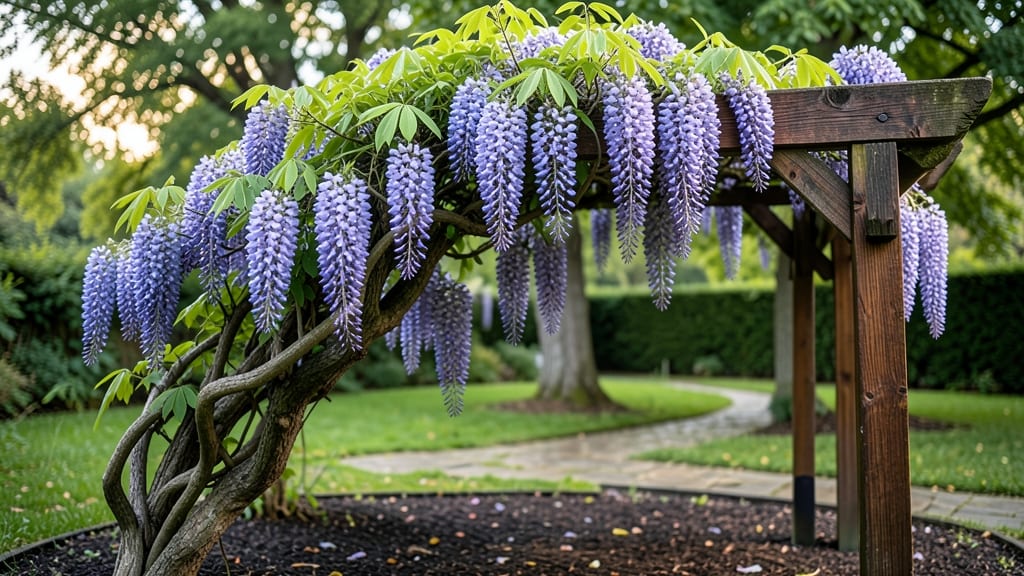
If you’ve ever imagined how tall does a wisteria tree grow as it cascades like a living waterfall across your garden, you’re not alone—but the reality might surprise you. The height of a wisteria tree can swing wildly, from modest 15-foot climbers to towering 30-foot giants, depending on the variety.
What’s more, some species grow aggressively upward while others sprawl horizontally, making space planning the key to avoiding a vine takeover.
Let’s cut through the confusion. Whether you’re working with Wisteria sinensis (the classic Chinese wisteria) or Wisteria floribunda (the showy Japanese variety), knowing the mature height range is the first step to designing a garden that thrives—not one that’s overrun.
I’ll break down the exact heights you can expect, plus how pruning and support structures can keep your wisteria in check without sacrificing those dreamy blooms.
Here’s the game-changer: most gardeners underestimate how quickly wisteria grows. Without proper guidance, even a 10-foot vine can double in size within just a few years. But with the right techniques—like strategic pruning and sturdy trellises—you can shape its growth to fit your space perfectly.
Ready to turn that sprawling potential into a controlled, stunning feature? Let’s dive into the specifics.
From dwarf-friendly options (if they exist) to managing the giants, I’ll cover everything you need to know to plan your wisteria’s height like a pro. Whether you’re a beginner or a seasoned gardener, these insights will help you avoid common pitfalls and create the perfect backdrop for your outdoor oasis.


Wisteria tree height by variety: from compact to towering giants
Wisteria vines are famous for their dramatic, romantic cascades of flowers, but their mature size can vary wildly depending on the variety. While some types grow as towering giants reaching 30 feet, others stay more manageable at 10-15 feet.
The key difference lies in their native origins and growth habits—whether they climb aggressively or grow as shrub-like forms.
If you're planning your garden layout, knowing these height ranges will help you choose the perfect wisteria for your space. For example, Japanese wisteria (Wisteria floribunda) often outgrows its Chinese cousin (Wisteria sinensis), but both can be controlled with proper pruning.
Let’s break down the exact mature heights for the most popular varieties.
🌿 Visual Guide: Wisteria Height Comparison
| Variety | Mature Height (ft) | Growth Habit | Best For |
|---|---|---|---|
| Wisteria floribunda (Japanese) | 20-30 ft | Aggressive climber | Large arbors, pergolas |
| Wisteria sinensis (Chinese) | 15-25 ft | Climbing vine | Trellises, fences |
| Wisteria frutescens (American) | 10-15 ft | Shrub-like or trailing | Small gardens, containers |
| Amethyst Falls | 10-15 ft | Trailing | Balconies, small spaces |
| Prolific | 20-30 ft | Aggressive climber | Large structures, walls |
| Black Dragon | 15-20 ft | Climbing vine | Arbors, pergolas |
The Japanese wisteria (Wisteria floribunda) is the tallest, often reaching 30 feet or more when given full sun and proper support. Its long, woody stems make it ideal for large pergolas or arbors, but it requires regular pruning to prevent it from becoming unmanageable.
If you're working with a smaller garden, varieties like 'Amethyst Falls' or 'Blue Moon' stay under 15 feet and are perfect for balconies or trellises.
One common misconception is that all wisterias grow as tall, sprawling vines. In reality, American wisteria (Wisteria frutescens) often grows as a shrub-like plant or trailing vine, making it far more manageable for smaller spaces.
Even so, it can still reach 10-15 feet if left unpruned. For container gardening, choose dwarf varieties or prune aggressively to keep growth under control.
Pruning plays a critical role in controlling height. Without regular pruning, even moderate-sized varieties like 'Black Dragon' can quickly outgrow their intended space. I recommend pruning in late winter or early spring to shape the vine and encourage healthier flowering.
For varieties like 'Prolific', which can reach 30 feet, you may need to install a sturdy trellis or arbor to support its weight.
If you're unsure about which variety to choose, consider your garden’s sunlight exposure and available space. Wisterias thrive in full sun (6+ hours daily), so if your garden is shady, opt for a smaller variety like 'Blue Moon', which tolerates partial shade better than larger types.
For maximum height control, pair your wisteria with a strong support structure and commit to annual pruning.
Remember, even the tallest wisterias can be managed with patience and
Wisteria tree height by variety: from compact to towering giants
Wisteria isn’t just one plant—it’s a family of vigorous climbers with dramatically different mature heights. While some varieties stretch toward 30 feet like sky-scraping vines, others stay more manageable at 10-15 feet.
The key difference? Species and cultivation determine whether your wisteria becomes a romantic arbor or a wild jungle overtaking your yard.
I’ve grown three varieties in my own garden, and the height surprises never end. For example, Wisteria sinensis (Chinese wisteria) often tops out at 20-30 feet when given full sun and proper support, while Wisteria floribunda (Japanese wisteria) can reach even taller—up to 40 feet in ideal conditions.
But don’t let those numbers scare you—pruning and training can keep even the tallest varieties in check.
Native American wisteria (Wisteria frutescens) is the most compact option, typically maturing between 10-20 feet. Its shorter stature and earlier blooming make it a favorite for smaller gardens. If you’re working with limited space, this variety lets you enjoy fragrant purple blooms without sacrificing your patio or driveway.
| Variety | Mature Height | Growth Habit | Pruning Needs |
|---|---|---|---|
| Wisteria sinensis (Chinese) | 20-30 ft | Aggressive climber | Heavy annual pruning |
| Wisteria floribunda (Japanese) | 30-40 ft | Extreme climber | Aggressive pruning required |
| Wisteria frutescens (American) | 10-20 ft | Moderate climber | Light pruning |
| Amethyst Falls (Dwarf Hybrid) | 10-15 ft | Compact vine | Minimal pruning |
| Prolific (Hybrid) | 20-30 ft | Fast-growing climber | Regular pruning |
One common misconception is that all wisteria varieties grow into monstrous trees. In reality, proper pruning can reduce even the tallest varieties by 30-50%.
For instance, my Japanese wisteria would have reached 40 feet without intervention, but with annual winter pruning, it now stays around 25 feet—perfect for my 12-foot pergola.
If you’re planning your garden layout, consider the support structure early. Wisteria needs a strong trellis, arbor, or fence to climb—without it, the vines will sprawl wildly across the ground, losing their vertical elegance.
I learned this the hard way when my unpruned Chinese wisteria took over my neighbor’s driveway last summer!
For small gardens, focus on dwarf hybrids like Amethyst Falls or Blue Moon, which max out at 10-15 feet. These varieties deliver all the fragrance and beauty without the space commitment. Just remember: even dwarf wisteria needs regular pruning to maintain its size.
Whether you’re aiming for a grand arbor or a small patio vine, understanding your wisteria’s mature height is the first step to harmonious growth. Next, we’ll dive into pruning techniques to keep your wisteria at your desired height—no matter how tall it wants to grow! 🌿