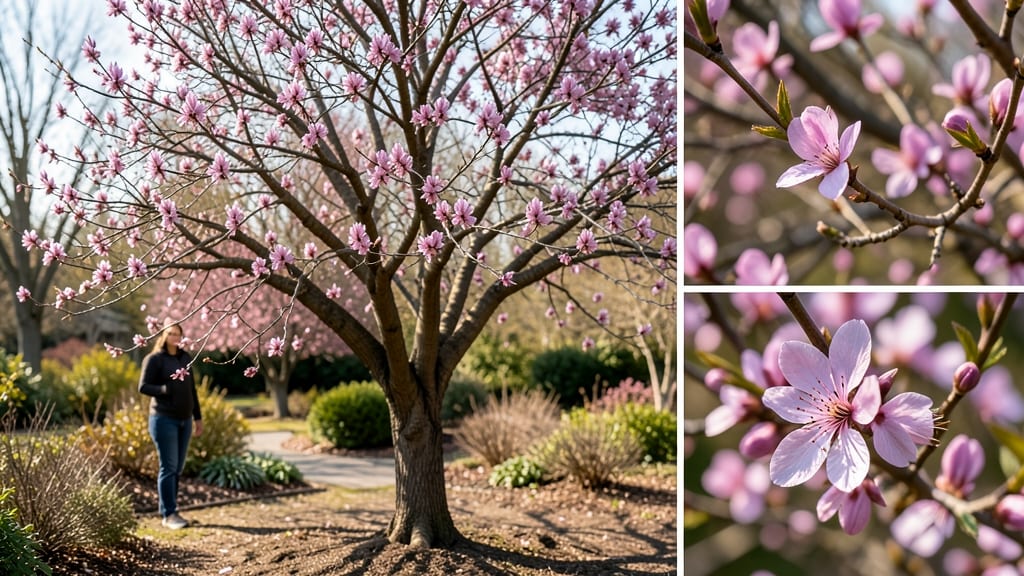
Wondering how tall does a redbud tree grow before it becomes that stunning spring centerpiece in your yard? This 🌳 beauty typically reaches heights between 10 and 30 feet, but the exact size depends on the variety you choose and where you plant it.
If you're dreaming of a compact tree that fits neatly in smaller spaces, some dwarf varieties stay under 10 feet, while standard types can stretch toward 30 feet when given plenty of room.
The good news? Redbuds adapt well to different conditions, making them a versatile choice for gardens of all sizes.
But here's the thing: sunlight plays a huge role in how tall your redbud grows. In full sun, it tends to reach its maximum height, while partial shade can keep it more manageable.
Whether you're planting in USDA Zone 6a or beyond, understanding these growth patterns helps you pick the perfect spot.
Ready to make an informed choice? I'll walk you through the exact height ranges for popular varieties and how to control growth naturally—so you can enjoy this spring bloomer without it outgrowing your space.
Dwarf
10-30 ft
Container friendly
Semi-Dwarf
10-30 ft
Most popular
Standard
15-30 ft
Full orchard size
Redbud tree height by variety: exact mature sizes for 10 popular types
The Eastern redbud (Cercis canadensis) is famous for its vibrant spring blooms, but its mature height can range from a compact 10-foot shrub to a towering 30-foot tree, depending on the variety.
Choosing the right type ensures your redbud fits your landscape perfectly—whether you want a small accent tree or a statement specimen.
Standard redbuds like the 'Eastern Redbud' typically reach 20-30 feet tall, while dwarf varieties like 'Covey' stay under 10 feet. Weeping forms, such as 'Lavender Twist', grow 15-20 feet but with a dramatic, cascading habit.
Below, I’ve broken down the exact mature heights of 10 popular redbud varieties to help you pick the best fit for your space.
🌱 Pro Tip: Always check the canopy spread too—some varieties grow wider than they do tall, like the 'Forest Pansy', which can reach 15 feet wide.
| Variety |
Mature Height (ft) |
Canopy Spread (ft) |
Growth Rate |
Unique Feature |
| Eastern Redbud |
20-30 ft |
25-35 ft |
Moderate |
Classic pink spring blooms |
| 'Forest Pansy' |
20-25 ft |
15-20 ft |
Slow to Moderate |
Deep purple foliage |
| 'Rubra' |
20-25 ft |
20-25 ft |
Moderate |
Deep red flowers |
| 'Covey' |
10-15 ft |
10-12 ft |
Slow |
Dwarf variety, compact habit |
| 'Lavender Twist' |
15-20 ft |
12-15 ft |
Moderate |
Weeping branches, lavender blooms |
| 'Whitewater' |
15-20 ft |
15-20 ft |
Moderate |
White flowers, disease-resistant |
| 'Merlot' |
12-15 ft |
10-12 ft |
Slow |
Dark foliage, compact size |
| 'Alice' |
15-20 ft |
15-20 ft |
How sunlight affects redbud tree growth: height differences in full sun vs. partial shade
The sunlight your redbud tree receives directly influences its height, canopy spread, and even flowering intensity. While the Eastern redbud thrives in full sun, it can also tolerate partial shade—but with noticeable differences in growth patterns.
Understanding these variations helps you plan for the perfect redbud tree height in your landscape.
In full sun (6+ hours daily), redbuds typically reach their maximum height of 20-30 feet, with a broad, rounded canopy that showcases vibrant spring blooms.
However, when planted in partial shade (3-5 hours of sun), growth slows, often resulting in a shorter stature of 15-20 feet and a denser, more compact form.
🌳
Sunlight Impact on Redbud Growth
Height & Canopy Development
🌞 Full Sun
Height: 20-30 ft
Canopy: 15-25 ft wide
Best for vibrant blooms
🌿 Partial Shade
Height: 15-20 ft
Canopy: 10-18 ft wide
Slower growth, denser form
Regional USDA growing zones (4-9) also play a role. In warmer climates (Zones 7-9), redbuds grow taller and faster due to longer growing seasons, while in cooler zones (4-6), growth may be slightly stunted but more compact.
For example, a 'Rubra' redbud in Zone 5 might max out at 18 feet in partial shade but reach 25 feet in full sun.
If you're aiming for a smaller redbud tree, prioritize partial shade and well-draining soil. However, for the most dramatic spring display, full sun is the way to go—just be prepared for a taller, broader tree that may need occasional pruning to maintain your desired height.
💡
Pro tip: Monitor your tree's growth in its first three years. If it's outgrowing your space, consider pruning in late winter to control height while preserving its stunning magenta blooms. Just avoid heavy pruning after flowering, as this can reduce next year's bloom production.
★★★★★4.5(13 reviews)
|