
How To
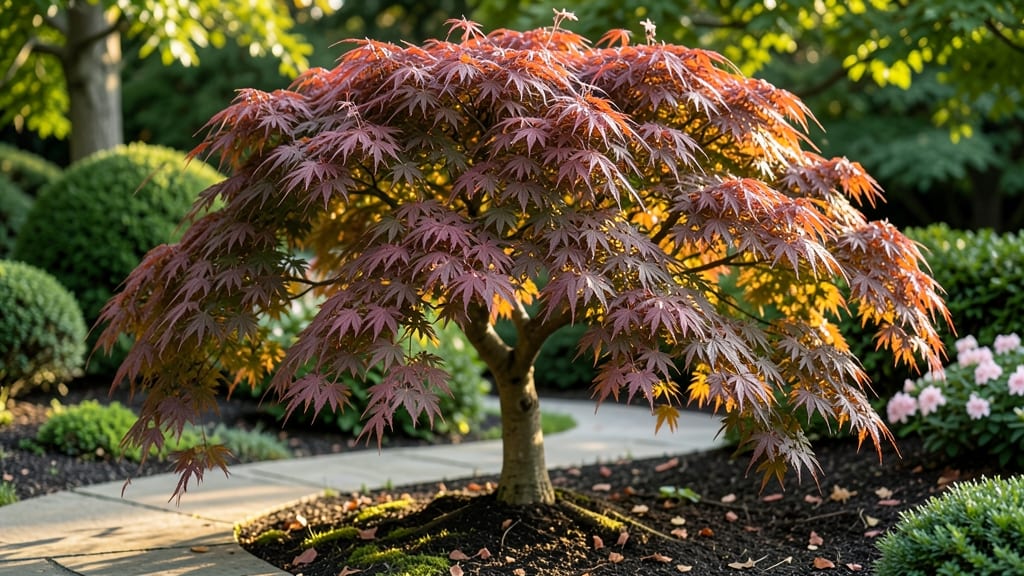
Wondering how tall Japanese Maple trees grow and whether that stunning 🌳 will fit in your yard? The answer depends more on the variety you choose than you might think—some stay compact enough for small gardens, while others reach towering heights that need careful planning.
If you're picturing a delicate, low-growing accent tree, dwarf varieties like 'Shishigashira' max out around 6 feet, making them perfect for containers or tight spaces. But if you're dreaming of a grand, weeping specimen, standard types like 'Bloodgood' can stretch 20 to 30 feet tall—taller than most two-story homes!
The good news? With the right care, you can influence their growth. Pruning techniques, sunlight exposure, and even soil quality play huge roles in keeping your Japanese Maple at your desired height. Whether you want a tiny tabletop tree or a majestic garden centerpiece, understanding these factors is key.
Let’s break down exactly what to expect from each variety, how fast they grow, and the simple maintenance tricks to shape them just right—so you can enjoy their beauty without the surprises.


Japanese maple height ranges by variety: small to towering options
Japanese maples (Acer palmatum) are famous for their stunning foliage and compact growth habits, but their mature heights can vary dramatically depending on the variety. Some stay small enough for container gardening, while others grow tall enough to rival oak trees.
Understanding these ranges helps you choose the perfect tree for your garden space and aesthetic goals.
The smallest varieties, like 'Bloodgood' or 'Dwarf Emblem', typically reach just 6–12 feet at maturity, making them ideal for small yards or patio planting. Meanwhile, standard varieties like 'Shishigashira' or 'Atropurpureum' can tower over 20–30 feet, requiring ample space and regular pruning to maintain.
Weeping varieties, such as 'Crimson Sentinel' or 'Viridis', often grow 15–25 feet tall but spread wider due to their cascading branches. This makes them perfect for focal points in larger gardens or near water features where their graceful form can shine.
Before planting, check your USDA hardiness zone—most Japanese maples thrive in zones 5–8. Some varieties, like 'Orangeola', are more cold-hardy, while others, like 'Koto no Niwa', prefer milder climates. Always match the variety to your local conditions for optimal growth.
Here’s a quick reference for mature height ranges by category to help you visualize their potential:
| Variety Type | Mature Height | Spread | Best For |
|---|---|---|---|
| Dwarf Varieties | 6–12 ft | 4–8 ft | Containers, small yards |
| Semi-Dwarf Varieties | 12–18 ft | 8–12 ft | Medium gardens, borders |
| Standard Varieties | 20–30 ft | 15–25 ft | Large gardens, focal points |
| Weeping Varieties | 15–25 ft | 10–20 ft | Water features, patios |
For example, the 'Dwarf Emblem' stays under 6 feet tall, perfect for a container garden on a balcony or patio. In contrast, the 'Shishigashira' can reach 25 feet, making it a stunning centerpiece for a backyard oasis or woodland garden.
Always consider your garden’s vertical space and nearby structures. Planting a tall variety too close to a house or power line can lead to costly pruning or even removal down the road. Measure your space carefully before selecting a variety.
If you’re unsure which size to choose, start with a dwarf or semi-dwarf variety—they’re easier to manage and still offer dramatic seasonal color. Over time, you can always transplant a young tree to a larger space if needed, but mature trees are much harder to relocate.
Another key factor is growth rate. Some varieties, like 'Bloodgood', grow slowly (1–3 inches per year), while others, like 'Orangeola', can grow 6–12 inches per year under ideal conditions. This affects how quickly your tree will fill out its space.
Finally, don’t forget about pruning. Even slow-growing varieties benefit from regular pruning to maintain shape, remove dead branches, and encourage healthy growth. With the right care, your Japanese maple can thrive for decades, becoming a cherished part of your landscape.
How fast Japanese maples grow: growth rates and time to maturity
Japanese maples are famously slow growers, which is part of their charm—but it also means patience pays off when planning your garden layout. Most varieties grow just 1 to 3 inches per year, though some faster-growing types like 'Bloodgood' can reach 6 to 12 inches annually under ideal conditions.
This deliberate growth rate ensures their delicate foliage develops vibrant colors and intricate branching patterns over time.
If you're impatient for height, don’t be! The first few years focus on establishing a strong root system and compact structure. For example, a 3-year-old 'Shishigashira' dwarf might only be 3 to 5 feet tall, while a standard 'Drummondii' could hit 10 feet in the same time.
Understanding these timelines helps you set realistic expectations and avoid over-pruning too early.
Growth speed depends heavily on three factors: sunlight exposure, soil quality, and pruning habits. Japanese maples thrive in partial shade (4–6 hours of morning sun), but too much direct sunlight can scorch leaves and slow growth.
Well-draining, acidic soil (pH 5.0–6.5) also fuels steady height gains, while poor soil or drought stress can stunt progress for years.
Here’s how sunlight affects growth rates:
- Partial shade: Ideal for most varieties (1–3 inches/year)
- Full sun: Can double growth but risks leaf burn (3–6 inches/year)
- Deep shade: Slows growth to <1 inch/year, weakens branches
📌 Key Growth Milestones by Variety
- Year 1: 1–2 ft (focus on root establishment)
- Year 3: 3–10 ft (varies by type—dwarfs lag, standards surge)
- Year 5: 50–70% of mature height reached
- Year 10: Near full height for slow growers (e.g., 'Shishigashira')
- Year 15+: Standard varieties (e.g., 'Bloodgood') hit peak height
🌱 Pro Tip: Mulch annually to retain moisture and encourage steady growth.
Pruning plays a surprising role in height control. If you avoid heavy pruning of the central leader (main upward stem), your maple will grow taller naturally. However, strategic pruning in late winter or early spring can redirect energy to side branches, creating a bushier, shorter silhouette.
Just remember: Never prune more than 1/3 of the canopy in a single session, or you’ll stress the tree.
For container-grown Japanese maples, growth slows dramatically due to root restriction. A potted 'Crimson Queen' might only gain 1 inch per year compared to its in-ground counterpart’s 3 inches. If you’re growing one in a pot, plan for annual repotting to accommodate root expansion and maintain healthy growth rates.
Patience truly is a virtue with Japanese maples. While their slow growth might feel frustrating at first, it’s what gives them their refined, sculptural forms and seasonal color transformations.
By year 10, your carefully chosen variety will reward you with the exact height and shape you envisioned—just give it time and the right conditions to thrive! ☀️