
How To
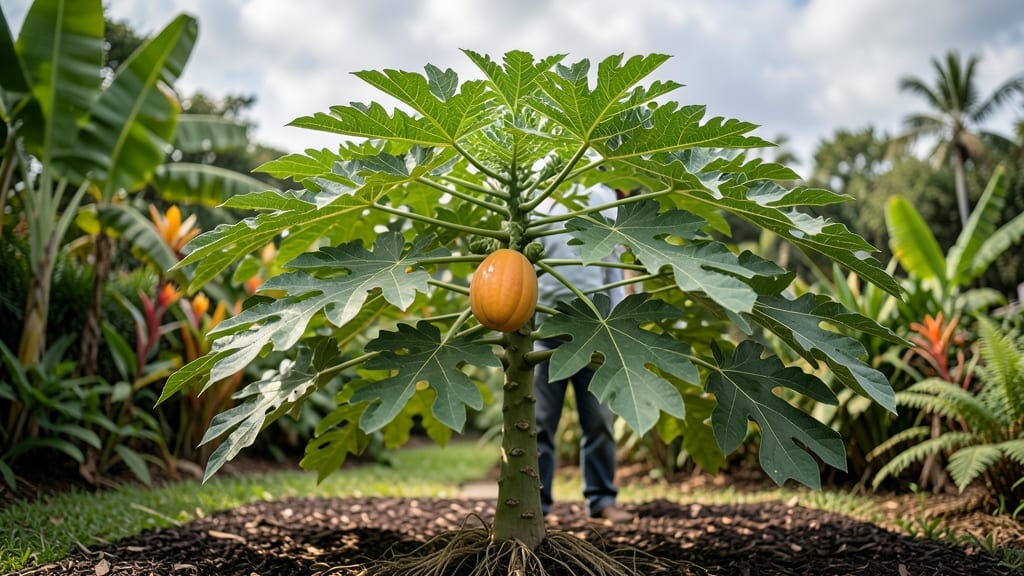
Ever wondered just how tall your 🍈 papaya tree could grow with the right care? The answer might surprise you—some varieties reach heights of 20 to 30 feet, towering like a tropical skyscraper in your backyard!
But here’s the catch: sunlight isn’t just a nice-to-have—it’s the game-changer that determines whether your tree stays compact or shoots up to its full potential. Whether you’re growing in USDA Zones 10-11 or a frost-free microclimate like Zone 9b, understanding sunlight needs is the key to unlocking that rapid growth.
In this guide, I’ll break down exactly how sunlight affects height, share pro tips for maximizing growth, and even cover when to step in and prune for manageable size.
By the end, you’ll know exactly how to nurture your papaya tree to reach its full height—or keep it at a more practical size—without sacrificing those sweet, juicy fruits.
Ready to turn your tropical garden into a papaya powerhouse? Let’s dive in and discover the secrets behind your tree’s skyward ambitions.


Papaya tree height growth stages: from seedling to sunlight-driven giant
When you plant a papaya seed, you’re not just growing a fruit-bearing plant—you’re cultivating a sunlight-powered giant. These trees undergo dramatic height transformations, especially when given optimal conditions.
Understanding each growth stage helps you predict how tall your papaya tree will grow and when it’ll reach its mature 10-30 ft height.
The journey from a tiny seedling to a towering tree happens in three distinct phases: the seedling stage (0-6 months), the juvenile phase (6-18 months), and the mature growth stage (18+ months).
Each phase responds differently to sunlight exposure, water, and nutrients, which directly influence how quickly—and how tall—your tree will grow.
Here’s how sunlight triggers rapid vertical growth: during the seedling stage, your papaya absorbs 6+ hours of sunlight daily, converting it into energy for stem elongation.
This phase can see your tree shoot up from just 2-6 inches tall to a 2-6 ft sapling in as little as 6 months. The key? Photosynthesis efficiency—more sun means faster growth hormones like gibberellins kick in, stretching those stems toward the light.
| Growth Stage | Timeframe | Height Range | Sunlight Needs | Key Growth Triggers |
|---|---|---|---|---|
| Seedling | 0-6 months | 2-6 ft | 6+ hours/day | Gibberellins (stem elongation), warm soil |
| Juvenile | 6-18 months | 6-15 ft | 8+ hours/day | Nutrient-rich soil, consistent watering |
| Mature | 18+ months | 15-30 ft | Full sun (10+ hours/day) | Fruiting triggers, pruning for structure |
During the juvenile phase, your papaya tree enters a growth spurt that can add 10+ feet in just 12 months if conditions are ideal. This is when you’ll see the most dramatic height increases, especially if your tree receives 8+ hours of direct sunlight daily.
In tropical climates, this phase can see trees reach 15 ft tall by their first birthday, while cooler regions might see slower growth.
By the time your papaya reaches mature height (typically 2-3 years), it can tower over your backyard, reaching 20-30 ft under perfect conditions. At this stage, sunlight isn’t just about height—it’s about fruit production.
Trees with 10+ hours of sunlight produce larger, sweeter papayas because their energy goes toward both growth and fruiting. Without enough light, you’ll see stunted growth and smaller yields.
One common misconception is that papaya trees grow at the same rate year-round. In reality, their growth rate accelerates during warm months (spring to fall) and slows in cooler seasons.
For example, a tree in USDA Zone 10 might grow 3-5 ft per season, while one in Zone 9b could see 1-2 ft per season due to shorter growing windows. Understanding these patterns helps you plan for height control and space management.
If you’re growing papayas in containers, expect slightly slower height growth due to root restriction. However, with proper pruning techniques and nutrient-rich potting mix, you can still achieve 10-15 ft heights in large containers.
The key is to ensure your tree gets full sun exposure, even if it’s potted, by placing it in a south-facing location or using reflective surfaces to maximize light.
For gardeners in temperate climates, extending the growing season with greenhouse cultivation or row covers can help your papaya reach its full height potential. Even a few extra months of warm weather can make the difference between a 10 ft tree and a 20 ft giant.
The goal is to mimic tropical conditions as closely as possible, especially during the critical first 18 months of growth.
As your papaya matures, you’ll notice its canopy spreads wider to capture more sunlight, which indirectly supports vertical growth. This is your tree’s way of optimizing energy intake—more leaves mean more photosynthesis, which fuels taller stems.
If you notice yellowing leaves or slow height growth, it’s often a sign of light deficiency or nutrient deficiency, particularly lack of nitrogen or potassium.
Sunlight requirements that double papaya tree height: the science behind the growth
Sunlight isn’t just fuel for papaya trees—it’s the primary driver of their explosive vertical growth. When exposed to 6–8+ hours of direct sunlight daily, these trees can grow 30–50% taller than those in partial shade.
The secret lies in photosynthesis efficiency, where abundant light triggers the production of auxin hormones, prompting rapid stem elongation. Without enough light, your papaya tree will stretch awkwardly, producing fewer fruits and weaker branches.
In tropical climates, where sunlight is intense year-round, papaya trees hit their maximum height potential (20–30 ft) within 2–3 years. However, in temperate zones, seasonal light variations can slow growth.
For example, during shorter winter days, trees may grow only 6–12 inches per month compared to 2–3 feet per month in peak summer. Understanding these patterns helps you adjust care routines to maintain steady growth.
Here’s how sunlight duration directly impacts height:
If you’re growing papaya trees in low-light conditions, such as greenhouses or shaded patios, you can supplement sunlight with LED grow lights (full-spectrum, 12–16 hours/day). Place lights 12–18 inches above the canopy and adjust height as the tree grows.
Reflective surfaces like white walls or aluminum foil can also bounce extra light onto leaves, boosting photosynthesis by up to 20%. For container-grown trees, rotate pots weekly to ensure even light exposure on all sides.
Pro tip: Monitor your tree’s leaf color—dark green leaves indicate healthy sunlight exposure, while pale or yellowing leaves signal light deficiency. In such cases, gradually increase light exposure over 2–3 weeks to avoid shocking the plant.
Over time, this adjustment can revitalize growth and help your papaya tree reach its full height potential.
Remember, the goal isn’t just height—it’s balanced growth. A taller papaya tree with weak branches will struggle to support fruit. Pair optimal sunlight with regular pruning and balanced fertilization to ensure your tree grows both tall and strong. 🌿☀️