
Trees
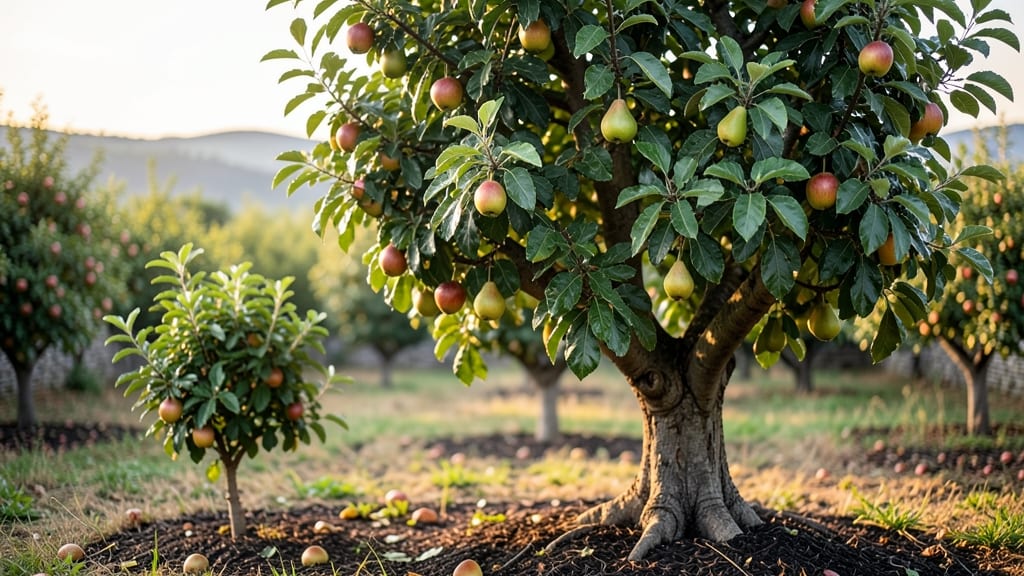
Mature heights of popular pear tree varieties: small to giant sizes
Pear trees come in a stunning range of heights, from dwarf varieties that fit cozy backyards to standard trees towering over fences. The variety you choose directly impacts your tree’s mature height, spacing needs, and even fruit production.
Let’s explore the most popular types and their growth potential to help you plan your orchard or backyard garden.
Understanding these height differences is key—some varieties stay compact while others grow like skyscrapers. For example, a Bartlett pear tree might reach 30 feet if left unpruned, while a dwarf Asian pear stays under 10 feet. Your choice depends on space, sunlight, and how much you’re willing to prune.
🌱
🍐 Pear Tree Varieties by Mature Height
| Variety | Type | Mature Height | Growth Rate | Spacing Needs |
|---|---|---|---|---|
| Bartlett | Standard | 25-35 ft | Moderate | 20-25 ft apart |
| Anjou | Standard | 20-30 ft | Slow to moderate | 18-22 ft apart |
| Bosc | Standard | 25-40 ft | Moderate | 20-25 ft apart |
| Hood (Dwarf) | Dwarf | 8-12 ft | Slow | 8-10 ft apart |
| Patten (Semi-Dwarf) | Semi-Dwarf | 12-18 ft | Moderate | 12-15 ft apart |
| Asian Pear (e.g., 'Chojuro') | Dwarf/Semi-Dwarf | 10-15 ft | Slow | 10-12 ft apart |
| Seckel | Dwarf | 8-10 ft | Slow | 6-8 ft apart |
If you’re working with limited space, dwarf and semi-dwarf varieties like 'Hood' or 'Seckel' are game-changers. They produce abundant fruit without dominating your yard, making them perfect for urban gardens or small homesteads.
Meanwhile, standard varieties like Bartlett or Bosc need room to stretch their branches—ideal for rural properties or orchards.
One often overlooked factor is rootstock. Dwarf trees are grafted onto dwarfing
How pruning and care affect pear tree height: controlling growth naturally
Pruning is the single most powerful tool to control your pear tree’s height—whether you want a compact bush or a tall standard tree. The right techniques can keep a 20-foot tree at 8 feet or encourage a dwarf variety to reach its full potential.
Timing and method matter just as much as the cuts you make.
Most pear trees grow using either an open-center form (spreading branches) or a central leader form (single trunk). Open-center varieties naturally stay shorter, while central leader trees need aggressive pruning to limit height. I’ve found that summer pruning (after harvest) is gentler than winter pruning, which can stress the tree.
For height control, focus on removing vertical water sprouts—those fast-growing, upward-shooting branches. These compete for energy and can add 6+ feet in a single season if left unchecked. Always cut back to a bud or lateral branch rather than leaving stubs, which invite disease.
Seasonal care also plays a role. Winter pruning (dormant season) is ideal for shaping, while summer pruning (June-July) helps control size by reducing vigorous new growth. I prune my Anjou pear tree in both seasons—winter for structure and summer to tame wild shoots before they take over.
Soil and sunlight affect height too. Well-draining, nutrient-rich soil encourages faster growth, while partial shade (though pears love sun) can slow vertical expansion.
If your tree is growing too tall for your space, consider topping (cutting the main trunk), but be prepared for a dense, bushy regrowth instead of a clean shape.
Remember: Patience is key. A properly pruned pear tree won’t just stay the right height—it’ll produce more fruit and live longer. Start young with training branches to guide growth, and you’ll avoid drastic cuts later. Even a 50-foot standard tree can be managed with consistent care!