
How To
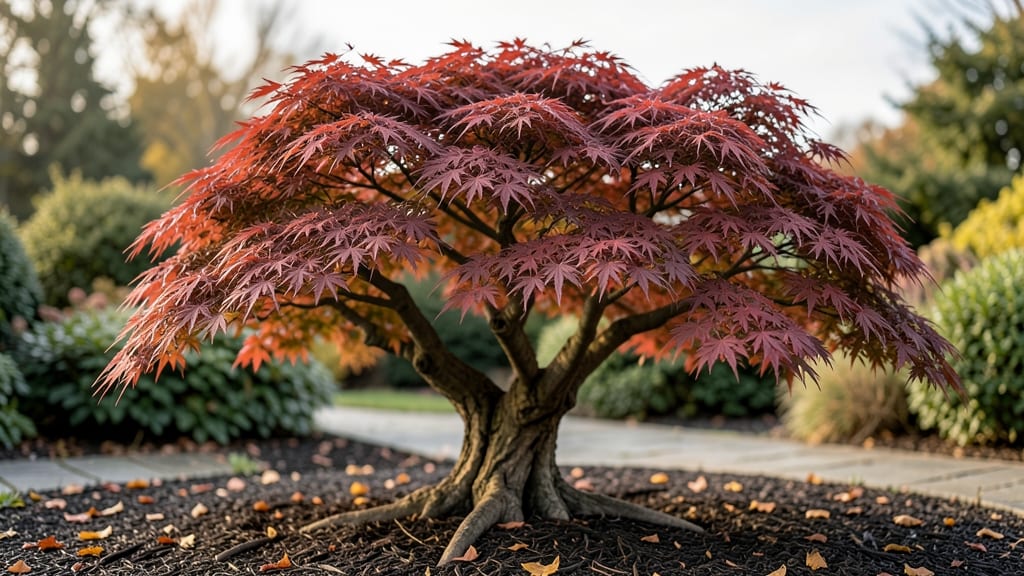
If you're wondering "japanese maple how tall do they grow", the answer might surprise you—these stunning 🌿 trees can range from a compact 6 feet to a majestic 30 feet, depending on the variety.
Whether you're planning a small backyard retreat or a grand landscape feature, knowing the mature height of your Japanese maple is key to creating the perfect space.
The beauty of Japanese maples lies in their diversity. Some varieties, like the dwarf types, stay small and manageable, while others, such as the towering Emperor I, can reach impressive heights. Understanding these differences helps you choose the right tree for your garden's size and style.
But it's not just about the variety—soil quality, sunlight exposure, and even your local climate play a huge role in how tall your Japanese maple will grow.
With the right care, you can guide its growth to fit your space perfectly, whether that means pruning for a smaller look or letting it flourish naturally.
Ready to transform your garden with a Japanese maple? Let’s explore how to pick the perfect size and care for it so it thrives for years to come.


Japanese maple height by variety: from dwarf to giant growth ranges
Japanese maples (Acer palmatum and Acer japonicum) offer an incredible range of mature heights, from tiny patio-sized specimens to towering shade trees. The variety you choose determines not just height but also growth rate, spread, and even foliage color.
For example, ‘Bloodgood’ can reach 25 feet tall, while ‘Taff’s Wonder’ stays under 6 feet. Understanding these differences helps you select the perfect tree for your space—whether it’s a small urban garden or a large landscape.
Most Japanese maples grow at a moderate pace of 6-12 inches per year, but some varieties like ‘Emperor I’ grow faster (12-18 inches annually). Others, such as ‘Shishigashira’, grow slowly (3-6 inches per year).
Always check the mature height range before planting, as even dwarf varieties can outgrow their space if given ideal conditions. For instance, a ‘Dwarf Cascade’ might only reach 8 feet in 10 years, but with perfect care, it could stretch to 12 feet.
Here’s how to use this comparison table: Match your garden size and design goals with the right variety. For example, if you have a small courtyard, prioritize dwarf or semi-dwarf varieties like ‘Taff’s Wonder’ or ‘Orangeola.’
For a large backyard, consider standard varieties like ‘Bloodgood’ or ‘Emperor I’ that provide dramatic height and shade.
| Variety | Mature Height | Spread | Growth Rate | Best For |
|---|---|---|---|---|
| ‘Bloodgood’ | 20-25 ft | 15-20 ft | 12-18 in/year | Large landscapes, shade |
| ‘Emperor I’ | 25-30 ft | 20-25 ft | 12-18 in/year | Bold focal points |
| ‘Shishigashira’ | 10-15 ft | 8-12 ft | 3-6 in/year | Medium gardens, containers |
| ‘Taff’s Wonder’ | 6-8 ft | 6-8 ft | 6-12 in/year | Small spaces, containers |
| ‘Dwarf Cascade’ | 8-12 ft | 6-10 ft | 6-10 in/year | Bonsai, small yards |
| ‘Orangeola’ | 10-15 ft | 8-12 ft | 8-12 in/year | Fall color, medium spaces |
| ‘Viridis’ | 15-20 ft | 12-15 ft | 10-14 in/year | Shade, privacy screens |
When selecting a Japanese maple, consider not just height but also spread and growth habit. For example, ‘Emperor I
How to estimate Japanese maple growth in your climate & soil conditions
Japanese maples don’t grow at the same rate in every garden—your local climate, soil type, and even pruning habits can shift a tree’s mature height by 50% or more.
For example, a ‘Bloodgood’ maple might reach 20 feet in a warm, humid zone like Zone 8, but only 15 feet in cooler Zone 5 with harsher winters. Understanding these factors helps you adjust spacing and care plans to avoid overcrowding or stunted growth.
Sunlight is the biggest wild card: Full sun (6+ hours daily) can push faster growth, while deep shade slows it down.
Most Japanese maples thrive in partial shade, but varieties like ‘Emperor I’ tolerate full sun better than delicate ‘Shishigashira’, which may stay shorter if deprived of morning light. Always match your variety to your site’s light conditions to hit the expected height range.
🌱 Key Takeaways: Calculating Mature Height
- Climate Zone: Subtract 2-3 feet per zone below Zone 7 (e.g., Zone 5 = 15-20 ft max).
- Soil pH: Ideal 5.0-6.5 promotes growth; alkaline soil (7.0+) stunts roots.
- Pruning: Heavy annual pruning can reduce height by 30% over 10 years.
- Watering: Drought stress slows growth; deep weekly watering adds 1-2 feet in 5 years.
Use this formula: Expected Height = Variety’s Max Height × (Zone Factor × Soil Factor × Pruning Factor)
Soil drainage and nutrient levels also play a critical role. Japanese maples despise waterlogged soil, which can stunt growth by 40% or more. Amend heavy clay with organic matter (compost or peat moss) to improve aeration.
A balanced fertilizer (10-10-10) applied in early spring and summer can boost height by 1-2 feet annually, but avoid overfeeding—too much nitrogen leads to weak, leggy growth that’s prone to breakage.
Your pruning approach directly impacts height. Regular structural pruning (removing crossing branches) keeps the tree healthy but won’t drastically reduce height. However, topping (cutting the main stem) can force bushier growth but often results in a weaker, shorter tree over time.
For varieties like ‘Crimson Queen’, which naturally grow 10-15 feet, aggressive pruning might keep them at 8 feet, but it sacrifices long-term vigor.
If you’re planting in a small-space garden, consider container-growing for dwarf varieties like ‘Bonfire’ or ‘Tamukeyama’. These stay under 10 feet even with minimal pruning, but they’ll need larger pots (20+ gallons) and annual root pruning to prevent root-bound stress.
Always leave 12-18 inches of space between the pot edge and the tree’s drip line to avoid overcrowding.
Finally, winter protection in colder zones can influence long-term height. Young trees (5 years old) wrapped in burlap or covered with snow fencing grow 20-30% faster because they focus energy on root and trunk development rather than cold damage repair.
Without protection, winter burn can set back growth by 1-2 years, delaying your maple’s full height potential.