
Watering
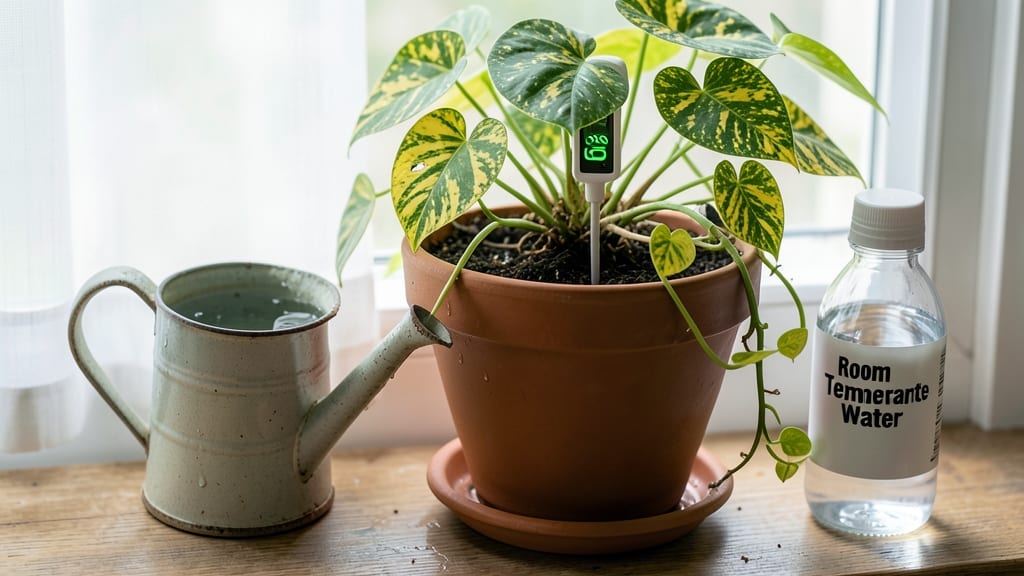
Money plant watering schedule: exact weekly frequency by season
Your money plant (Pachira aquatica) thrives on consistency—too much water causes root rot, while too little leads to crispy leaves. The key is checking the top 1-2 inches of soil before watering.
In spring and fall, aim for every 7-10 days, while summer’s heat demands weekly watering (or every 5-7 days). Winter slows growth, so stretch watering to every 2-3 weeks.
I’ve learned the hard way that humidity levels drastically change water needs. If your home feels dry (like 30% humidity or below), water 2-3 days earlier than the schedule.
A hygrometer helps track this—no guesswork! For tropical vibes, mist leaves 2-3 times weekly or place the pot on a pebble tray with water.
Here’s the seasonal watering breakdown for your money plant, including soil tests and visual cues to keep it happy:
| Season | Frequency | Soil Test | Visual Cues |
|---|---|---|---|
| Spring | Every 7-10 days | Top 1-2" dry | Bright green leaves |
| Summer | Every 5-7 days | Top 1" dry | Leaves may droop midday |
| Fall | Every 7-10 days | Top 1-2" dry | Growth slows slightly |
| Winter | Every 2-3 weeks | Top 2-3" dry | Leaves may yellow slightly |
Pro tip: Use your finger as a moisture gauge. Stick it into the soil—if it feels dry up to your first knuckle, it’s time to water.
For small pots (under 6 inches), water more frequently since they dry out faster. Larger pots (10+ inches) can wait 1-2 extra days between waterings.
Adjust your schedule if your money plant shows yellowing leaves or wilted stems. Yellow leaves often mean overwatering, while crispy edges signal underwatering. I once killed a money plant by ignoring these signs—now I check leaves weekly for early warnings!
Morning watering is ideal because it gives excess moisture time to evaporate before nightfall. Avoid watering at night, as damp leaves can lead to fungal issues. If you’re unsure, bottom-watering (placing the pot in a tray of water for 10-15 minutes) lets the plant drink only what it needs.
For low-humidity homes, group plants together or use a humidifier nearby. A money plant in dry air will drop leaves faster—so mimic its tropical habitat! If you notice leaves curling or wilting by afternoon, increase humidity or water slightly more often.
Remember: well-draining soil is non-negotiable. A mix of peat moss, perlite, and potting soil (50/30/20 ratio) prevents waterlogging. If your plant’s pot lacks drainage holes, upgrade it—root rot is silent but deadly.
💧
Money plant watering schedule: exact weekly frequency by season
Your money plant (Pachira aquatica) thrives on a predictable watering schedule, but that rhythm shifts with the seasons. In spring and summer, when growth is active, the soil dries faster—often every 5-7 days.
Meanwhile, fall and winter slow growth, so you can stretch watering to every 10-14 days. The key? Always check the top 1-2 inches of soil—if it’s dry, it’s time to water.
Indoor humidity plays a huge role. If your home feels dry (like 30% humidity or below), your money plant will need water more often. A quick fix? Place the pot on a pebble tray with water to boost moisture around the roots.
For tropical conditions (like 50%+ humidity), you can water 1-2 days later than the schedule below.
🌱 Pro Tip: Use your finger to test moisture—stick it in the soil up to your first knuckle. If it feels dry, water thoroughly until liquid drains from the pot’s holes. Never let it sit in water, or you’ll risk root rot.
| Season | Watering Frequency | Soil Test | Adjustments |
|---|---|---|---|
| Spring | Every 5-7 days | Top 1-2" dry | Increase if leaves droop |
| Summer | Every 5-7 days | Top 1-2" dry | Reduce if humidity >50% |
| Fall | Every 7-10 days | Top 2-3" dry | Cut back as temps drop |
| Winter | Every 10-14 days | Top 3" dry | Use room temp water |
For small pots (under 6 inches), water more frequently—these dry out 2-3 days faster than larger containers. If your money plant’s leaves start curling or yellowing, it’s a sign to adjust.
Yellow leaves often mean overwatering, while crispy edges signal underwatering. Both issues are fixable with a tweak to your schedule!
Morning watering is ideal because it mimics natural rainfall cycles and gives leaves time to dry overnight, reducing fungal risks. Avoid watering at night, as damp foliage can lead to brown spots.
If you’re unsure, err on the side of underwatering—money plants are more forgiving when thirsty than when drowning.
Finally, seasonal light changes affect water needs too. In winter, when light is dim, your plant grows slower and needs less water. Pair this with lower indoor temperatures, and you’ll see why the schedule shifts. Keep a watering journal to track what works best for your home’s unique conditions!