
Plants
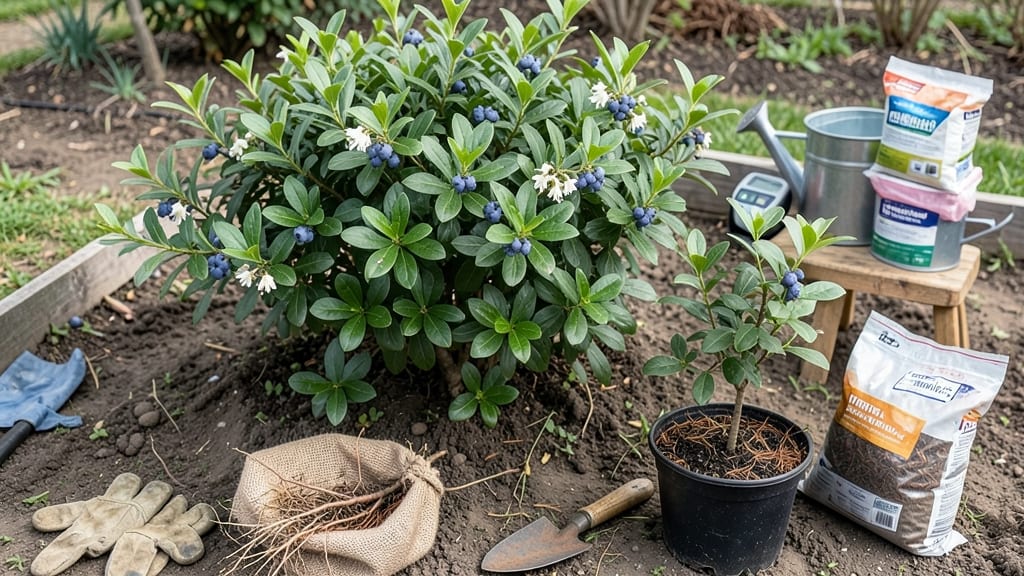
Timing your blueberry 🫐 planting just right in Southern California could mean the difference between a thriving shrub and a struggling one—especially when frost risk varies wildly from coastal 9b-11 zones to inland desert microclimates.
Most gardeners assume winter’s too chilly for planting, but the truth is, Southern California’s mild climate actually gives you a 6-month window to get your blueberries in the ground—from November through April. The key? Understanding how your specific microclimate affects soil temps and frost risk.
In this guide, I’ll break down the exact planting deadlines for your region, whether you’re growing highbush varieties in coastal areas or rabbiteye types in the desert. You’ll also learn how to prep your soil for maximum success and avoid common mistakes that derail even the most eager gardeners.
Ready to plant with confidence? Let’s dive into the zero-frost-risk strategy that’ll have your blueberries thriving in no time.
Southern California blueberry planting zones: microclimate deadlines by region
Southern California’s diverse microclimates mean your blueberry planting window can vary by hundreds of miles. Coastal areas like Malibu and Santa Barbara enjoy zero frost risk, while inland valleys like San Fernando may see light frosts in winter. Understanding these zones ensures your blueberries thrive year-round.
Most of Southern California falls within USDA zones 9b-11, but microclimates create exceptions. Coastal regions (e.g., San Diego, Ventura) stay frost-free year-round, while inland deserts (e.g., Palm Springs, Riverside) rarely see frost.
Valley areas (e.g., San Fernando, Santa Clarita) may experience light frosts in December-January, requiring careful timing.
For coastal regions, your planting window spans October through February, with November-January being ideal. Inland deserts can plant November through January, avoiding late-winter heatwaves. Valley areas should aim for October-November to establish roots before potential frost.
In coastal regions, you can plant bare-root blueberries as late as February because frost isn’t a concern. However, avoid planting after February 15—soaring temperatures stress young roots.
For inland deserts, prioritize November planting to beat winter heatwaves, while valley areas should plant by November 15 to avoid frost.
Soil temperature is another critical factor. Blueberries need soil temps below 60°F for root establishment. In coastal areas, this is typically met by October, while inland regions may need to wait until November. Use a soil thermometer to confirm—ideal temps are 50-55°F.
If you’re in a transition zone (e.g., Los Angeles Basin), err on the side of earlier planting. These areas can experience unpredictable microclimates, and young blueberries are vulnerable to heat stress if planted too late. Aim for October-November and protect with mulch to regulate soil temps.
Container planting extends your window in hotter microclimates. Unlike in-ground plants, potted blueberries can handle late-October starts in inland deserts because you control soil moisture and temperature. Just ensure your container has drainage holes and use acidic potting mix.
Pro tip: Check your local agricultural extension office for last-frost dates. For example, Santa Barbara averages its last frost around December 15, while Palm Springs rarely sees frost.
Use this data to fine-tune your planting deadline—even a few weeks can mean the difference between thriving bushes and struggling starts.
Remember, Southern Highbush varieties (like 'Duke' or 'O'Neal') are best for coastal zones, while Rabbiteye types (like 'Climax') tolerate inland heat. Match your variety to your microclimate for the best results.
How to choose the perfect planting time for your blueberry variety
Southern California’s blueberry varieties thrive best when planted during their dormant season, but not all types suit our mild winters. Southern Highbush varieties, like 'Duke' or 'O'Neal', need 300-400 chilling hours—easily met in coastal areas but challenging in desert climates.
Rabbiteye varieties, like 'Aliceblue', require 500+ chilling hours, making them risky unless you live in higher-elevation valleys.
For container-grown blueberries, your planting window expands slightly—October through December works well since pots moderate soil temps. Bare-root plants, however, demand cooler soil temps (below 60°F), so aim for November to February.
If you miss these windows, late-winter planting (March) is possible but increases stress on the plant.
🌱
| Variety | Chilling Hours Needed | Best Planting Window | SoCal Suitability |
|---|---|---|---|
| Southern Highbush (e.g., 'Duke', 'O'Neal') | 300-400 hrs | Nov-Feb (dormant) or Oct-Dec (containers) | Excellent (coastal/inland valleys) |
| Rabbiteye (e.g., 'Aliceblue', 'Centennial') | 500+ hrs | Nov-Jan (high-elevation only) | Limited (valleys >3,000 ft) |
| Low-Chill (e.g., 'Top Hat', 'Jubilee') | 150-250 hrs | Oct-Mar (flexible) | Best for deserts (e.g., Palm Springs) |
If you’re in a desert microclimate like Palm Springs, prioritize low-chill varieties like 'Top Hat' or 'Jubilee', which thrive with minimal chilling. These can even handle spring planting (March) if you provide afternoon shade during their first summer.
For coastal gardeners, Southern Highbush varieties are foolproof—just plant before January 31st to avoid heat stress.
Pro tip: Check your local frost dates (e.g., Santa Barbara’s last frost is December 15th), but remember—blueberries hate soggy soil. If rains are forecasted, delay planting until the ground dries slightly.
A soil thermometer ($10 at garden centers) is your best friend for nailing 60°F soil temps.
💧 For container growers, extend your window by using 5-gallon pots with acidic potting mix. These stay cooler longer and let you plant up to March 15th in most of SoCal. Just move containers to partial shade during 100°F+ days to prevent root stress.
✂️